Introduction
The landscape of software development is undergoing a significant transformation. In earlier times, security was treated as a separate task that was performed at the final stage of a project. However, this method often led to delays and hidden risks. Today, a new way of working is required where security is built into every part of the process. DevSecOps Certified Professional Online Training is designed to provide the skills needed for this modern approach.
What is DevSecOps Certified Professional Online Training?
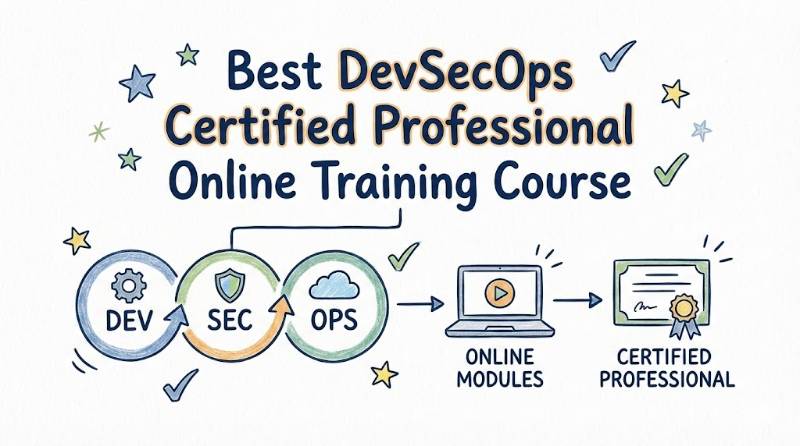
This training program is a specialized course where the integration of security into the development and operations cycle is taught. It is focused on the idea that security should not be a roadblock but a part of the daily routine for every engineer. By taking this course, a deep understanding of how to protect software from the very first line of code is gained. It is intended to help professionals move away from traditional, slow security checks toward a model where safety is automated and continuous.
Why it matters in today’s software, cloud, and automation ecosystem
In the current environment, software is expected to be delivered at a very high speed. Cloud platforms and automated tools are used by almost every organization to meet these demands. When speed is increased, the chance of making security mistakes also grows. If a security flaw is found after a product is launched, a lot of money and trust can be lost. Therefore, the DevSecOps approach is favored because it allows for fast delivery while keeping the system safe. Security is treated as a shared responsibility by everyone involved in the project, rather than just one department.
Why certifications are important for engineers and managers
Certifications are viewed as a formal way to validate the knowledge of a professional. For an engineer, being certified means that their skills are recognized by the industry. It shows that the time has been taken to learn the best practices and standard tools. For managers, certifications are used to ensure that the team is capable of handling complex security challenges. When a team is certified, a higher level of confidence is felt by the clients and the leadership. It is a clear sign that the professional is committed to their career growth and stays updated with the latest methods.
Certification Overview Table
| Track | Level | Who it’s for | Prerequisites | Skills Covered | Recommended Order |
| Security | Professional | Engineers & Managers | Basic DevOps Knowledge | CI/CD Security, SCA, DAST, SAST | After DevOps Foundation |
Why choose DevOpsSchool?
A very important decision for any learner is where the training is received. At DevOpsSchool, the education is provided by instructors who have spent a long time working in the real world. A huge focus is placed on practical exercises rather than just reading from a book. The curriculum is updated regularly so that the most relevant information is always shared with the students. Additionally, support is offered to help learners overcome any technical difficulties they face during their study. Choosing this institution is seen as a way to ensure that the learning is both deep and useful for a long-term career.
Certification Deep-Dive
DevSecOps Certified Professional (DSOCP)
What is this certification?
The DevSecOps Certified Professional (DSOCP) is a high-level program where the primary focus is the “Shift Left” philosophy. In this program, the methods for moving security checks to the earlier stages of the software development lifecycle are explained in a simple manner.
Who should take this certification?
This course is intended for those who work as software developers, system administrators, or security analysts. It is also highly recommended for project leads and engineering managers who wish to understand how a secure automation pipeline is managed.
Skills you will gain
- The ability to automate security scans within a delivery pipeline is developed.
- Knowledge about checking third-party libraries for known vulnerabilities is acquired.
- Skills in performing static and dynamic analysis of code are mastered.
- The way to secure cloud-based infrastructures using code is understood.
- Expertise in managing secrets and credentials in an automated environment is gained.
- Methods for securing containers and microservices are learned in detail.
Real-world projects you should be able to do after this certification
- A complete automated pipeline where security tests are run every time code is changed can be built.
- A system for scanning container images for security flaws before they are used in production can be set up.
- Automated reports that show the security health of a project can be generated for the management team.
- Policies that automatically block insecure code from being deployed can be implemented.
Preparation plan
- 7–14 days plan: The first two weeks should be spent on understanding the core definitions and the flow of the DevSecOps model. The main tools used in the industry should be identified and their basic functions should be reviewed.
- 30 days plan: During this period, hands-on practice should be prioritized. Small security tools should be integrated into a local project. The various types of security scans, such as SAST and DAST, should be practiced daily.
- 60 days plan: The final month is used for mastering advanced topics like compliance as code and cloud security. Practice exams should be taken to ensure that all concepts are fully understood. The focus should be on solving real-world problems and fine-tuning the automated scripts.
Common mistakes to avoid
- A common error is focusing only on the tools and forgetting about the cultural changes needed in a team.
- Too much theory is sometimes studied while the practical application is neglected.
- The importance of traditional security basics is often overlooked by new learners.
- Many people try to automate everything at once, which can lead to confusion and errors.
Best next certification after this
- Same track: Advanced Security Architect Certification.
- Cross-track: Site Reliability Engineering (SRE) Practitioner.
- Leadership / management: IT Director or Engineering Leadership programs.
Choose Your Learning Path
The DevOps Path
This path is designed for individuals who want to master the art of fast and reliable software delivery. It is best suited for those who are starting their journey and want to learn about automation and collaboration.
The DevSecOps Path
This is the choice for those who believe that security is the most important part of any system. It is ideal for professionals who want to protect their organizations from digital threats by using automation.
The Site Reliability Engineering (SRE) Path
This track is followed by those who care about the stability and performance of systems. It is perfect for engineers who want to learn how to keep large websites running without any downtime.
The AIOps / MLOps Path
This path is taken by those interested in the future of technology. It focuses on using data science and artificial intelligence to manage and improve IT operations.
The DataOps Path
This is a specialized path for people who manage large amounts of data. It ensures that the data used by an organization is accurate, safe, and delivered quickly to the people who need it.
The FinOps Path
This path is chosen by those who want to manage the financial side of the cloud. It is designed to teach how to keep the cloud costs low while maintaining high performance.
Role → Recommended Certifications Mapping
DevOps Engineer
For this role, the DevOps Professional and the DevSecOps Certified Professional certifications are recommended. This combination ensures that both delivery speed and security are mastered.
Site Reliability Engineer (SRE)
The SRE Practitioner and the AIOps Foundation certifications should be obtained. These provide the necessary skills for maintaining high system availability.
Platform Engineer
A focus should be placed on Kubernetes Professional and DevSecOps training. This helps in building a secure and scalable platform for the entire development team.
Cloud Engineer
The Cloud Security Specialist and the DevSecOps certifications are suggested. These are vital for protecting the data and services that are hosted in the cloud.
Security Engineer
The DevSecOps Certified Professional and Advanced Pentesting certifications should be completed. This allows the professional to think like a protector and a tester at the same time.
Data Engineer
DataOps Professional and Cloud Architect certifications are advised. These are needed to manage the complex flow of data in a secure way.
FinOps Practitioner
The Certified FinOps Associate and Cloud Cost Management certifications are recommended to balance the budget with technical needs.
Engineering Manager
Leadership in Tech and the DevSecOps Overview are the best choices. These help a manager understand the technical work being done by their team.
Next Certifications to Take
The following certifications are recommended for further growth after completing the DevSecOps course:
- One same-track certification: Cloud Security Expert.
- One cross-track certification: Site Reliability Engineering Professional.
- One leadership-focused certification: Technical Management Professional.
Training & Certification Support Institutions
DevOpsSchool
This organization is recognized for its wide range of technical training programs. A variety of courses are offered that focus on real-world automation and security. The learning is supported by a team of experts who provide guidance throughout the certification journey.
Cotocus
A personalized approach to training is provided by this institution. It is known for helping professionals gain specific skills that are in high demand by employers. The focus is always kept on practical workshops and career readiness.
ScmGalaxy
This platform serves as a massive knowledge hub for the global engineering community. A large collection of blogs, tutorials, and certification guides is maintained here. It is used by thousands of professionals to stay updated with the latest industry changes.
BestDevOps
Direct and effective training solutions are provided at this center. The curriculum is designed to be very simple and easy for beginners to understand. The primary goal is to help learners get the skills they need for their next job.
devsecopsschool.com
This is a dedicated place where all resources are focused on the security aspect of DevOps. Deep technical knowledge and specialized training for security automation are provided here for advanced learners.
sreschool.com
This institution is entirely focused on the principles of system reliability. It is a great resource for anyone looking to learn about monitoring, incident management, and system health.
aiopsschool.com
The connection between artificial intelligence and IT operations is explored in this school. It is designed for those who want to learn how to use smart algorithms to manage complex systems.
dataopsschool.com
The management of data pipelines is the main focus here. Training is provided on how to apply DevOps principles to the world of data to ensure speed and quality.
finopsschool.com
This school is dedicated to teaching the financial management of cloud resources. It helps professionals understand how to optimize spending without losing any performance or security.
FAQs Section
General FAQs
- Is the DevSecOps certification difficult?
While the concepts are advanced, the course is structured to be very simple and easy to follow. - How much time is required to finish the training?
Usually, the entire program is completed in four to eight weeks by most students. - Are there any prerequisites?
A basic understanding of the software development process is helpful but not strictly required. - In what sequence should I take certifications?
It is often recommended that the DevOps Foundation is completed before starting the DevSecOps track. - What is the career value of this certification?
A high increase in job opportunities is often seen because companies are looking for security-minded engineers. - Can an Engineering Manager take this?
Yes, it is very beneficial for managers who need to oversee secure projects. - Is the exam taken online?
Yes, the exam can be scheduled and taken from the comfort of your home. - Will this help in a salary hike?
Many professionals report that their salary is increased after they show proof of their specialized skills. - What roles can I apply for?
You can apply for roles like DevSecOps Engineer, Security Architect, or Cloud Consultant. - How long is the certification valid?
The certification is typically valid for a period of two years before a renewal is suggested. - Are lab environments provided?
Yes, hands-on labs are included so that tools can be practiced in a safe environment. - Is there community support?
Yes, access is given to a community where questions can be asked and ideas can be shared.
DevSecOps Certified Professional Specific FAQs
- Does this course cover container security?
Yes, the security of Docker and Kubernetes is a major part of the training. - Are tools like SonarQube taught?
Yes, several industry-standard tools for code analysis are covered in the modules. - Is coding knowledge required?
Some basic knowledge of scripts is useful, but the training starts with the basics. - What is the focus of DSOCP?
The main focus is the automation of security throughout the software lifecycle. - Are real-world cases discussed?
Yes, examples of real security challenges are used to explain the lessons. - Is there any support after the training?
Many students are given guidance on how to improve their resumes after the course. - Can I take the training while working?
Yes, the online format is designed to be flexible for working people. - What makes DSOCP different?
It combines the speed of DevOps with the safety of modern security practices in one course.
Testimonials
- Aarav: “The training was found to be very helpful for my daily work. The way security is integrated into the pipeline was explained in a very simple manner.”
- Ananya: “A lot of new skills were gained through the hands-on labs. The instructors are very knowledgeable and the support provided was excellent.”
- Ishaan: “My career path became much clearer after completing this certification. The complex topics were broken down into short and easy lessons.”
- Meera: “The confidence to handle security tasks was built during this course. It is highly recommended for anyone who wants to grow in the field of DevOps.”
- Kabir: “Practical application of the tools was the best part of the training. The knowledge gained here is being used by me every day at my job.”
Conclusion
The DevSecOps Certified Professional Online Training is considered a vital milestone for any software professional. As the world moves more toward automation and the cloud, the importance of security will only increase. By following this guide and gaining the certification, a very strong foundation for the future is established. Long-term career benefits are seen by those who plan their learning strategically. Continuous improvement is encouraged so that one can remain a valuable part of the global tech market.