Introduction
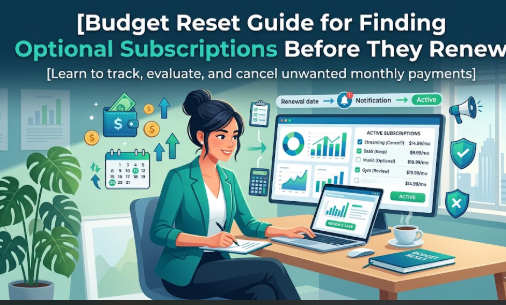
Small monthly subscriptions often look harmless because each one feels affordable on its own, but together they can quietly weaken your budget, reduce your savings, and create unnecessary money pressure. Many beginners focus only on rent, groceries, loan EMIs, school fees, fuel, or utility bills while ignoring recurring expenses such as streaming platforms, app renewals, cloud storage, premium newsletters, fitness apps, paid tools, food memberships, trading alerts, gaming passes, or unused software plans. Therefore, learning How to Identify Optional Subscriptions in Your Budget matters because it helps you understand where your money is going every month before you blame your income, salary, or financial situation. This topic is especially important for salaried people, students, freelancers, small business owners, loan seekers, new investors, crypto learners, and anyone trying to build better personal finance habits. Beginners often feel confused because subscriptions are usually small, automatic, and easy to forget. However, when several small charges repeat every month, they become spending leaks. Poor tracking can also lead to missed savings goals, weak emergency funds, higher credit card bills, and emotional financial decisions. This blog will guide you through a practical subscription audit, explain how to separate needs from wants, show how to cancel unused subscriptions, and help you build a simple monthly budget review system. Instead of giving extreme advice like “cancel everything,” this guide focuses on smarter decision-making. Some subscriptions save time, improve learning, support work, or provide genuine family value. Others only drain money because they are rarely used. By the end, you will know how to review recurring expenses with confidence, reduce waste, and make thoughtful budget decisions without guilt, panic, or confusion.
Understanding How to Identify Optional Subscriptions in Your Budget in Simple Words
How to Identify Optional Subscriptions in Your Budget means reviewing all recurring payments and deciding which ones are necessary, useful, optional, unused, or wasteful.
A subscription becomes optional when your life, work, health, study, or essential financial stability will not suffer if you pause, downgrade, share legally, or cancel it.
For example, your mobile plan or basic internet may be necessary because you need them for work and communication. However, three streaming apps, two music apps, an unused fitness app, and a premium tool you opened once last month may be optional.
This topic works through a simple process. First, you list every recurring expense. Then, you check its purpose, usage, cost, value, renewal cycle, and impact on your budget. After that, you decide whether to keep, cancel, downgrade, pause, or replace it.
People search for this topic because they often feel that their income disappears too quickly. They may not notice one large problem. Instead, they find many small expenses that repeat silently.
In real life, subscription tracking connects directly with money management, savings, debt control, investment planning, loan repayment, tax record awareness, crypto safety, trading discipline, and even content business costs. A beginner trader may subscribe to paid charting tools without using them properly. A crypto learner may pay for several communities without understanding risk. A finance blogger may buy multiple SEO tools without tracking return on use.
A common misunderstanding is that every subscription is bad. That is not true. A subscription is only a problem when it gives less value than it costs or when it blocks your financial priorities.
Practical takeaway: Do not cancel emotionally. Review logically. Keep what supports your goals and remove what quietly damages your budget.
Why How to Identify Optional Subscriptions in Your Budget Is Important
Identifying optional subscriptions is important because recurring expenses affect your financial life every month, even when you are not actively thinking about them.
For savings, optional subscriptions can reduce the money available for emergency funds, investments, family goals, education, or debt repayment. Even small monthly amounts matter when they repeat regularly.
For borrowing, unused subscriptions can increase credit card bills and make repayment harder. If you already have EMIs, personal loans, or credit card dues, every unnecessary recurring payment adds pressure.
For investing, optional subscriptions can reduce your monthly investment capacity. A beginner may delay SIPs, emergency savings, or long-term investing because money is being spent on low-value recurring services.
For trading, subscriptions can become dangerous when beginners pay for tips, signals, premium groups, or tools without proper learning. Paid access does not remove market risk.
For tax planning or small business finance, subscriptions should be tracked properly because business-related tools may need documentation, while personal subscriptions should not be mixed with business expenses casually.
For crypto decisions, paid communities, wallet tools, or exchange-related services should be reviewed carefully because crypto already involves volatility, platform risk, and fraud risk.
For casino content creators, subscriptions for SEO tools, content tools, or affiliate platforms should be reviewed with responsible content standards and clear business purpose.
A practical scenario is simple. A salaried person earns regularly but saves very little. After reviewing subscriptions, they may find several unused apps, memberships, and renewals. By cancelling only low-value services, they can improve monthly cash flow without changing their lifestyle drastically.
The common mistake is ignoring small payments because they look too minor to matter. The better approach is to review every recurring payment during a monthly budget review.
The Real Problem Readers Face With Optional Subscriptions
The real problem is not only subscription cost. The bigger problem is lack of awareness.
Many people do not know how many recurring expenses they have. Some subscriptions renew through debit cards, credit cards, UPI autopay, wallets, app stores, business accounts, or family accounts. As a result, people lose track.
Another problem is confusing advice online. Some people say cancel everything. Others recommend paid apps, premium tools, financial platforms, investment subscriptions, trading signals, or productivity software without explaining whether the reader truly needs them.
Emotional decision-making also plays a major role. People subscribe during discounts, free trials, festival offers, influencer promotions, urgent work pressure, or fear of missing out. Later, they forget to cancel.
Poor planning makes the issue worse. When a person does not have a clear monthly budget, every subscription feels manageable. However, without a written expense list, the total impact remains hidden.
Weak comparison is another common issue. A person may pay for multiple services that do nearly the same thing. For example, multiple streaming platforms, cloud storage plans, finance apps, or online learning platforms may overlap.
Unrealistic expectations can also create waste. Beginners may believe a paid course, paid trading tool, crypto group, or premium finance newsletter will automatically improve results. However, tools cannot replace learning, discipline, and risk awareness.
Many readers also ignore terms and conditions. They may not know when free trials convert into paid plans, whether cancellation is easy, whether the price changes later, or whether renewal is monthly or annual.
Depending only on social media advice is risky. Influencers may promote tools without understanding your budget, income, debt, goals, or spending pressure.
The right next step is a subscription audit. You do not need complicated software. You need clarity, categories, usage review, and honest decision-making.
How How to Identify Optional Subscriptions in Your Budget Works Step by Step
Step 1: Collect All Payment Records
This means checking bank statements, credit card bills, UPI autopay records, wallet history, app store subscriptions, and email renewal receipts.
It matters because many subscriptions are forgotten after the first payment. Without collecting records, you may miss hidden recurring expenses.
To apply this, review at least the last three months of payment history. Look for repeated charges, app names, platform names, and small automatic deductions.
For example, you may find a music app, cloud storage plan, movie platform, paid newsletter, and editing tool renewing every month.
The common mistake is checking only one bank account. The better approach is to review all payment sources together.
Step 2: Create a Subscription List
This means writing down every recurring payment in one place.
It matters because scattered information creates confusion. A written list gives you control.
To apply this, note the subscription name, amount, payment date, payment method, purpose, and usage frequency.
For example, write “Video streaming app — monthly — used twice last month — entertainment — paid by credit card.”
The common mistake is keeping the list only in memory. The better approach is to use a simple expense sheet or notes app.
Step 3: Separate Needs, Wants, and Optional Services
This means dividing subscriptions into essential, useful, optional, and unnecessary categories.
It matters because not every paid service deserves the same treatment. Some services support work, study, health, or family needs. Others are only lifestyle extras.
To apply this, ask: “Will this affect my daily life, income, health, or important goals if I cancel it?”
For example, internet may be essential, but an unused premium entertainment app may be optional.
The common mistake is feeling guilty about every subscription. The better approach is to judge based on value, not emotion.
Step 4: Check Actual Usage
This means reviewing how often you used each subscription recently.
It matters because a subscription may feel useful emotionally but may not be used practically.
To apply this, check app usage, login history, watch history, course progress, project usage, or family usage.
For example, if you paid for an online course platform but did not watch lessons for two months, it may be paused until you are ready.
The common mistake is keeping subscriptions because “I may use it later.” The better approach is to keep only what you use now or have a clear plan to use.
Step 5: Compare Cost Against Value
This means asking whether the subscription gives enough benefit for its cost.
It matters because a low-cost subscription can still be wasteful if it adds no real value.
To apply this, compare the subscription with your income, savings goal, debt burden, and usage frequency.
For example, a paid design tool may be valuable for a freelancer who uses it daily. The same tool may be unnecessary for someone who uses it once a month.
The common mistake is judging only by price. The better approach is to judge by value, usage, and budget impact.
Step 6: Look for Overlap
This means checking whether two or more subscriptions perform the same function.
It matters because overlapping services are one of the easiest ways to waste money.
To apply this, group subscriptions by category such as entertainment, learning, finance, storage, productivity, health, and business tools.
For example, if you have three cloud storage plans, you may need only one after organizing your files.
The common mistake is subscribing to similar platforms without comparison. The better approach is to keep the best-fit service and remove duplicates.
Step 7: Decide Keep, Cancel, Pause, or Downgrade
This means taking action after reviewing each subscription.
It matters because awareness without action does not improve your budget.
To apply this, mark every subscription with one decision: keep, cancel, pause, downgrade, replace, or review later.
For example, you may keep internet, downgrade cloud storage, cancel unused streaming, and pause a fitness app.
The common mistake is delaying cancellation. The better approach is to act during the review itself.
Step 8: Schedule a Monthly Subscription Review
This means checking recurring expenses every month before they renew.
It matters because subscriptions change as your lifestyle, income, goals, and needs change.
To apply this, set one monthly review day near your salary date or before major renewals.
For example, review subscriptions on the first weekend of every month and update your budget sheet.
The common mistake is doing one review and forgetting it. The better approach is to make subscription review a monthly money habit.
Key Factors That Influence Optional Subscriptions in Your Budget
Income
Your income decides how much flexibility you have. A subscription that feels affordable for one person may create pressure for another.
The common mistake is copying someone else’s lifestyle. The better approach is to judge subscriptions based on your own income and responsibilities.
Expenses
Fixed expenses such as rent, EMI, groceries, school fees, and utilities should come before optional subscriptions.
The common mistake is spending on subscriptions before calculating essentials. The better approach is to budget essentials first.
Needs vs Wants
Needs support daily life, income, safety, or basic responsibilities. Wants improve comfort, entertainment, or convenience.
The common mistake is calling every want a need. The better approach is to honestly classify each expense.
Savings
Savings should not depend only on leftover money. If subscriptions consume the leftover amount, savings suffer.
The common mistake is saving after spending. The better approach is to save first, then spend from the remaining amount.
Emergency Fund
An emergency fund protects you from sudden expenses. Optional subscriptions should not stop emergency savings.
The common mistake is keeping luxury renewals while having no backup fund. The better approach is to build emergency savings before lifestyle upgrades.
Debt Control
If you carry credit card dues or loans, optional subscriptions should be reviewed more strictly.
The common mistake is paying for unused services while interest or late fees build up. The better approach is to reduce waste and improve repayment capacity.
Lifestyle Inflation
Lifestyle inflation happens when spending rises as income rises. Subscriptions are a common part of this pattern.
The common mistake is adding new subscriptions after every salary increase. The better approach is to increase savings before increasing lifestyle expenses.
Monthly Review
A monthly budget review keeps your spending visible. Without review, optional subscriptions become invisible.
The common mistake is checking expenses only when money runs short. The better approach is to review before problems appear.
Detailed Breakdown of Optional Subscriptions in Your Budget
Income Tracking
Income tracking means knowing how much money actually reaches your account after deductions. This includes salary, freelance income, business income, side income, or irregular payments.
It matters because subscription decisions should be based on real available money, not expected money.
The common mistake is budgeting based on gross income. The better approach is to budget using net usable income.
Expense Categories
Expense categories help you understand where money goes. Common categories include housing, food, transport, utilities, debt, insurance, savings, investments, learning, entertainment, health, and subscriptions.
It matters because subscriptions often hide inside different categories.
The common mistake is grouping all subscriptions under “miscellaneous.” The better approach is to create a clear recurring expenses category.
Needs vs Wants
This is one of the most important budgeting habits. Needs are essential. Wants are optional. Some subscriptions may sit between both.
For example, a professional software subscription may be a need for a freelancer but a want for a casual user.
The common mistake is judging emotionally. The better approach is to judge by purpose and usage.
Emergency Fund
An emergency fund should protect you from sudden medical costs, job loss, urgent travel, repairs, or family needs.
Optional subscriptions should never take priority over basic financial safety.
The common mistake is paying for entertainment subscriptions while having no emergency savings. The better approach is to set a minimum emergency fund goal first.
Saving Habits
Good saving habits depend on consistency. Optional subscriptions reduce consistency when they consume money automatically.
The common mistake is saving only when extra money remains. The better approach is to automate savings before optional spending.
Debt Control
Debt control means managing EMIs, credit card bills, personal loans, education loans, or business borrowing responsibly.
If subscriptions are paid through credit cards, they can quietly increase debt burden.
The common mistake is ignoring small card charges. The better approach is to review every card statement carefully.
Monthly Review
Monthly review means checking income, expenses, savings, debts, and subscriptions at least once every month.
It matters because even a well-planned budget becomes outdated when new subscriptions are added.
The common mistake is reviewing only after financial stress begins. The better approach is to review regularly.
Goal-Based Planning
Goal-based planning connects money decisions with real goals such as emergency savings, education, travel, home purchase, business growth, investment, or debt freedom.
A subscription should support or fit around these goals.
The common mistake is spending without linking money to goals. The better approach is to ask, “Does this subscription support my current priority?”
Small Spending Leaks
Small spending leaks are low-value expenses that repeat often. Optional subscriptions are one of the most common examples.
The problem is not one small payment. The problem is repeated automatic spending without awareness.
The common mistake is ignoring small amounts. The better approach is to review total monthly and yearly impact.
Financial Discipline
Financial discipline does not mean avoiding all comfort. It means spending intentionally.
A useful subscription can remain in your budget. An unused subscription should not.
The common mistake is making extreme decisions. The better approach is balanced financial control.
Common Mistakes Beginners Make With Optional Subscriptions
Following Random Advice
Beginners may subscribe to tools, apps, courses, trading groups, crypto communities, or finance services because someone online recommended them.
This is risky because the recommendation may not fit your budget or goals.
Instead, check your need, usage, and financial capacity before subscribing.
Ignoring Risk
Some subscriptions relate to trading, crypto, investing, casino content, or financial tools. These areas require risk awareness.
The risk is that a paid tool may create false confidence.
Instead, learn the basics before paying for advanced tools.
Not Comparing Options
People often subscribe to the first platform they see.
This can lead to overpaying or choosing a service that does not fit.
Instead, compare features, cancellation policy, usage, and budget impact.
Trusting Fake Profit Claims
Some paid groups may promise high returns, easy income, guaranteed trading success, or quick crypto profits.
This is risky because no tool or group can remove market risk.
Instead, avoid guaranteed claims and focus on education, risk control, and verified information.
Ignoring Hidden Charges
Some services offer free trials, annual renewals, add-ons, or price changes.
The risk is paying more than expected.
Instead, read terms, renewal dates, and cancellation rules.
Making Emotional Decisions
People subscribe during stress, boredom, excitement, fear, or social pressure.
This can create waste.
Instead, wait before subscribing and check whether it fits your budget.
Using Emergency Money for Risky Activities
Some beginners spend emergency funds on trading tools, crypto communities, or entertainment subscriptions.
This is risky because emergency money should remain safe and available.
Instead, keep emergency funds separate from optional spending.
Sharing Sensitive Information
Some apps or platforms may ask for financial details, card information, personal data, or account permissions.
This can create privacy and fraud risks.
Instead, use trusted platforms and avoid unnecessary data sharing.
Ignoring Tax, Legal, or Compliance Responsibilities
Small business owners and content creators may mix personal and business subscriptions without proper records.
This can create accounting confusion.
Instead, keep proper records and consult a qualified professional when needed.
Depending Only on Social Media Advice
Social media content can be useful, but it may be incomplete, biased, or promotional.
Instead, use social media only as a starting point and verify details yourself.
Acting in Panic, Greed, or Pressure
Limited-time offers can push people into unnecessary subscriptions.
Instead, ask whether you would still pay for the service without the discount.
Don’t Do This Checklist
- Do not keep subscriptions you never use.
- Do not subscribe only because of influencer advice.
- Do not ignore free trial end dates.
- Do not pay for similar services without comparison.
- Do not use credit cards for subscriptions you cannot afford.
- Do not believe guaranteed return or quick-profit claims.
- Do not share personal financial data casually.
- Do not mix business and personal expenses without records.
- Do not delay cancellation after deciding.
- Do not ignore monthly budget reviews.
Practical Real-Life Examples of Optional Subscriptions in Budgeting
Example 1: Salaried Person Managing Month-End Expenses
A salaried employee feels short of money before month-end. After checking recurring expenses, they find multiple streaming apps and a food delivery membership.
The better action is to keep one frequently used service and cancel the rest.
The learning is simple: small recurring expenses can affect monthly cash flow.
Example 2: Student Paying for Unused Learning Apps
A student subscribes to three online learning platforms but actively studies from only one.
The better action is to keep the platform that supports current exams and pause others.
The learning is that more subscriptions do not always mean better learning.
Example 3: Beginner Investor Following Paid Tips
A beginner investor pays for stock tips, premium groups, and market alerts without understanding risk.
The better action is to focus on basic financial education and avoid claims of guaranteed profit.
The learning is that paid access cannot replace research and discipline.
Example 4: Small Business Owner Using Too Many Tools
A small business owner pays for design tools, email tools, storage, accounting software, and project apps. Some tools overlap.
The better action is to review usage and keep only tools that support daily work.
The learning is that business subscriptions need regular cost review.
Example 5: Family Reviewing Entertainment Costs
A family has several entertainment subscriptions, but most members use only one or two.
The better action is to discuss usage openly and remove low-value services.
The learning is that family budgeting works better when everyone understands shared expenses.
Two Useful Tables for Better Understanding
Table 1: Optional Subscription Review Framework
| Review Point | What to Check | Better Decision |
|---|---|---|
| Usage | How often you use the service | Keep only if usage is regular |
| Purpose | Work, study, health, entertainment, or convenience | Prioritize essential and high-value use |
| Cost | Monthly or annual payment | Check total budget impact |
| Overlap | Similar apps or services | Keep one best-fit option |
| Renewal | Auto-renewal date and billing method | Set reminder before renewal |
| Cancellation | Easy or difficult cancellation process | Avoid unclear terms |
| Value | Benefit compared with cost | Cancel or downgrade low-value plans |
Table 2: Beginner Mistake vs Better Approach
| Beginner Mistake | Why It Hurts Budget | Better Approach |
|---|---|---|
| Ignoring small renewals | Repeated costs become spending leaks | Track all recurring expenses |
| Keeping unused apps | Money goes out without value | Cancel or pause unused services |
| Trusting paid tips blindly | Creates false confidence | Learn and verify before paying |
| Forgetting free trials | Trial converts into paid plan | Set cancellation reminders |
| Paying for duplicate tools | Multiple services do the same job | Compare and keep one |
| Using credit cards carelessly | Can increase debt pressure | Pay only for affordable plans |
| Not reviewing monthly | Expenses become invisible | Schedule a monthly budget review |
Tools, Methods, and Frameworks Readers Can Use
Budget Tracker
A budget tracker is a simple system to record income, expenses, savings, and subscriptions.
It helps beginners because it makes spending visible.
You can use a notebook, spreadsheet, or budgeting app. The mistake it helps avoid is guessing where money went.
Subscription Audit Sheet
A subscription audit sheet lists all recurring payments in one place.
It helps because you can compare cost, usage, renewal date, and value.
Beginners can create columns for service name, amount, purpose, usage, decision, and next review date. It helps avoid forgotten renewals.
Monthly Money Review System
A monthly money review is a fixed habit of checking your financial position every month.
It helps because your budget changes when income, expenses, or goals change.
Beginners can do this after salary day. It helps avoid last-minute money stress.
Needs vs Wants Filter
This method separates essential expenses from optional expenses.
It helps because emotional spending becomes easier to control.
Beginners can ask, “Will this affect my basic life or income if I cancel it?” It helps avoid lifestyle inflation.
Goal Planner
A goal planner connects your money with specific goals.
It helps because subscriptions become easier to judge when compared with savings priorities.
Beginners can set goals like emergency fund, loan repayment, education, investment, or family needs. It helps avoid spending without direction.
Risk Checklist
A risk checklist helps you review safety before paying for finance, trading, crypto, or business subscriptions.
It helps because paid tools may involve data privacy, misleading claims, or financial risk.
Beginners can check platform trust, cancellation policy, payment safety, and unrealistic promises. It helps avoid fraud and overconfidence.
Expense Sheet
An expense sheet records daily and monthly spending.
It helps because subscriptions are only one part of the budget.
Beginners can divide expenses into fixed, variable, savings, debt, and optional categories. It helps avoid poor planning.
Expert Tips to Make Better Decisions
1. Review Every Recurring Payment Monthly
This matters because recurring payments become invisible over time.
Apply it by checking bank, card, wallet, and app store records once a month.
2. Cancel Services You Have Not Used Recently
This matters because unused services give no practical value.
Apply it by checking actual usage before renewal.
3. Keep Emergency Money Separate
This matters because emergencies should not depend on leftover money.
Apply it by saving emergency funds before optional spending.
4. Avoid Subscriptions Based on Pressure
This matters because limited-time offers can push emotional spending.
Apply it by waiting one day before subscribing.
5. Compare Similar Services
This matters because overlapping subscriptions waste money.
Apply it by grouping apps by purpose and keeping the best-fit option.
6. Read Renewal Terms Carefully
This matters because free trials and annual plans can surprise beginners.
Apply it by checking billing dates and cancellation rules.
7. Downgrade Before Cancelling Useful Services
This matters because some subscriptions are useful but too expensive.
Apply it by checking lower plans before removing the service completely.
8. Avoid Guaranteed Profit Claims
This matters for trading, investing, crypto, and finance subscriptions.
Apply it by rejecting any service that promises fixed profits or risk-free income.
9. Track Business and Personal Subscriptions Separately
This matters for freelancers and small business owners.
Apply it by keeping separate records for work tools and personal apps.
10. Protect Personal Data
This matters because subscription platforms may store payment details.
Apply it by using secure payment methods and avoiding unknown apps.
11. Set Reminders Before Annual Renewals
This matters because annual subscriptions are easy to forget.
Apply it by setting calendar reminders before renewal dates.
12. Focus on Value, Not Just Cost
This matters because a cheap subscription can still be wasteful.
Apply it by asking whether the service improves work, learning, health, or daily life.
13. Discuss Family Subscriptions Openly
This matters because shared subscriptions affect the household budget.
Apply it by reviewing usage with family members before renewing.
14. Keep Written Records
This matters because memory is unreliable for budgeting.
Apply it by maintaining a simple subscription list.
15. Review Your Plan When Income Changes
This matters because income changes should update spending decisions.
Apply it by revising subscriptions after salary changes, job changes, or new financial responsibilities.
Case Studies: How Better Understanding Changes Decisions
Case Study 1: Salaried Employee With Silent Spending Leaks
Profile: Rohan is a salaried employee who feels his salary disappears quickly every month.
Situation: He pays for streaming apps, music, cloud storage, premium delivery, and a finance newsletter.
Problem: He does not track recurring expenses and assumes only big expenses affect his budget.
Wrong approach: He tries to cut groceries and transport while ignoring automatic subscription deductions.
Better approach: He creates a subscription audit sheet and checks actual usage. He keeps two useful subscriptions and cancels unused ones.
Result or learning: He gains better monthly control without extreme lifestyle cuts.
Key takeaway: Budget improvement starts with visibility, not panic.
Case Study 2: Beginner Trader Paying for Too Many Tools
Profile: Meena is new to stock trading and wants to learn quickly.
Situation: She subscribes to paid signals, charting tools, market news apps, and premium groups.
Problem: She depends on tools before understanding risk, position sizing, and emotional control.
Wrong approach: She assumes more paid tools will automatically improve trading decisions.
Better approach: She cancels low-value services, keeps one learning resource, and focuses on risk management education.
Result or learning: She reduces confusion and avoids depending blindly on random advice.
Key takeaway: Paid tools should support knowledge, not replace it.
Case Study 3: Small Business Owner With Overlapping Software Costs
Profile: Arjun runs a small online business.
Situation: He pays for multiple design, email, storage, accounting, and productivity tools.
Problem: Several tools overlap, and some are used only once or twice a month.
Wrong approach: He keeps all subscriptions because he thinks every tool may be useful someday.
Better approach: He reviews actual usage, separates business-critical tools from optional tools, and downgrades unnecessary plans.
Result or learning: He improves business expense discipline and keeps better records.
Key takeaway: Business subscriptions should be reviewed like any other operating cost.
Risk Awareness: What Readers Must Check First
Financial Leakage Risk
This means money leaves your account regularly without clear benefit.
It matters because small recurring costs can reduce savings.
Reduce this risk by tracking all subscriptions monthly.
Credit Card Debt Risk
This happens when subscriptions are charged to credit cards and not paid fully.
It matters because unpaid card balances can create repayment pressure.
Reduce this risk by subscribing only to services you can afford from current income.
Fraud Risk
This means paying unknown platforms or sharing payment details with unsafe services.
It matters because personal and financial data can be misused.
Reduce this risk by checking platform trust and avoiding suspicious offers.
Misinformation Risk
This is common in finance, trading, crypto, and casino-related content.
It matters because poor advice can lead to bad financial decisions.
Reduce this risk by verifying claims and avoiding guaranteed outcome promises.
Emotional Risk
This means subscribing because of excitement, stress, boredom, fear, or social pressure.
It matters because emotional decisions often create regret.
Reduce this risk by waiting before subscribing and reviewing your budget first.
Data Privacy Risk
Some apps collect personal, financial, or behavioral data.
It matters because privacy loss can create long-term problems.
Reduce this risk by reading permissions and avoiding unnecessary data sharing.
Compliance Risk
Small business owners, freelancers, and finance content creators should track subscriptions properly.
It matters because poor records can create accounting or tax confusion.
Reduce this risk by keeping invoices and consulting a qualified professional where needed.
Over-Borrowing Risk
If subscriptions increase monthly expenses, borrowing may feel necessary.
It matters because loans should not be used to support avoidable lifestyle costs.
Reduce this risk by cutting optional expenses before borrowing.
Readers should always verify details, understand terms, and consult qualified financial, tax, legal, or investment professionals when decisions involve major money, compliance, borrowing, or risk.
Checklist Before Taking Action
- Have I listed all recurring subscriptions?
- Have I checked bank, card, UPI, wallet, and app store payments?
- Do I know the purpose of every subscription?
- Have I checked actual usage?
- Have I compared similar services?
- Have I identified needs, wants, and optional services?
- Have I checked renewal dates?
- Have I read cancellation terms?
- Have I reviewed charges, fees, or repayment impact?
- Have I protected my personal and payment data?
- Have I avoided guaranteed profit or quick-money claims?
- Have I kept emergency funds separate?
- Have I reviewed tax, legal, or business record impact where relevant?
- Have I prepared a written plan?
- Have I avoided panic, greed, or social pressure?
- Have I considered professional advice where needed?
Use this checklist before subscribing, renewing, downgrading, or cancelling. The goal is not to remove every paid service. The goal is to make every recurring payment intentional, affordable, useful, and aligned with your financial priorities.
Strategic Insights for Better Decision-Making
Lifestyle Inflation
Lifestyle inflation happens when income increases and spending rises immediately.
Subscriptions make lifestyle inflation easy because they feel small and convenient.
A beginner-friendly example is adding several entertainment, delivery, and premium app plans after a salary hike. The better approach is to increase savings first.
Spending Triggers
Spending triggers are emotions or situations that push you to subscribe.
Common triggers include boredom, stress, discounts, influencer recommendations, peer pressure, and fear of missing out.
The better approach is to identify your triggers and wait before paying.
Saving Automation
Saving automation means moving money into savings before spending begins.
This helps because optional subscriptions then compete with remaining lifestyle money, not your future security.
For example, save first after salary day, then review optional subscriptions.
Emergency Fund Planning
Emergency fund planning protects you from sudden expenses.
Subscriptions should not delay emergency savings.
A practical approach is to set a minimum monthly emergency contribution before approving optional renewals.
Goal-Based Budgeting
Goal-based budgeting gives your money a purpose.
When goals are clear, low-value subscriptions become easier to identify.
For example, if your goal is debt repayment, unused subscriptions should be cancelled faster.
Habit-Based Money Management
Good budgeting is a habit, not a one-time activity.
Monthly review, written tracking, and mindful spending help you stay consistent.
The better approach is to build a simple system you can follow every month.
Subscription Rotation
Subscription rotation means using one service for a period, then pausing it before using another.
This works well for entertainment, learning, and software tools.
The mistake is paying for everything at once. The better approach is to pay only for what you actively use.
Value-Based Spending
Value-based spending means spending on services that genuinely improve your life, work, health, or learning.
This helps avoid guilt-based budgeting.
The better approach is to keep meaningful subscriptions and remove silent waste.
Key Terms Explained for Beginners
- Subscription: A subscription is a recurring payment for a product or service. It may renew monthly, quarterly, or annually.
- Optional Subscription: An optional subscription is a paid service that you can pause, cancel, downgrade, or replace without harming your essential needs.
- Recurring Expense: A recurring expense is any payment that repeats regularly. Subscriptions, rent, EMIs, and utility bills are common examples.
- Budget: A budget is a plan for how you will use your income. It helps you control spending, savings, debt, and goals.
- Spending Leak: A spending leak is money that goes out regularly without giving enough value. Unused subscriptions often become spending leaks.
- Needs: Needs are essential expenses required for basic living, work, health, safety, or responsibilities.
- Wants: Wants are non-essential expenses that improve comfort, entertainment, or convenience.
- Emergency Fund: An emergency fund is money kept aside for unexpected situations such as medical expenses, repairs, job loss, or urgent family needs.
- Auto-Renewal: Auto-renewal means a subscription renews automatically unless you cancel it before the billing date.
- Free Trial: A free trial allows temporary access without payment, but it may convert into a paid plan after the trial period.
- Downgrade: Downgrading means moving from a higher-cost plan to a lower-cost plan instead of cancelling completely.
- Subscription Audit: A subscription audit is a detailed review of all recurring payments to decide what to keep, cancel, pause, or reduce.
- Lifestyle Inflation: Lifestyle inflation happens when spending increases as income rises, often without improving financial security.
- Financial Discipline: Financial discipline means making thoughtful money decisions instead of emotional or impulsive spending choices.
- Debt Burden: Debt burden means the pressure created by loans, credit card dues, or repayment obligations.
Who Should Read This Blog
Beginners
Beginners should read this blog because it explains budgeting in simple language without complicated finance terms.
Students
Students can use this guide to manage learning apps, entertainment platforms, and limited monthly money.
Salaried Employees
Salaried employees can identify silent spending leaks and improve monthly savings.
Small Business Owners
Small business owners can review software, tools, and business subscriptions more responsibly.
New Investors
New investors can avoid wasting money on paid tips or tools before learning basic risk management.
Traders
Traders can review paid charting tools, signal groups, and market subscriptions carefully.
Loan Seekers
Loan seekers can reduce optional expenses before borrowing and improve repayment planning.
Crypto Learners
Crypto learners can avoid unnecessary paid communities, fake schemes, and risky subscription-based advice.
Casino Content Creators
Casino content creators can review SEO tools, content tools, and affiliate-related subscriptions while maintaining responsible content practices.
Finance Bloggers
Finance bloggers can manage business tools, keyword tools, writing tools, and research subscriptions with better cost control.
People Improving Money Awareness
Anyone trying to understand personal finance habits can use this blog to build a simple monthly review system.
People Trying to Avoid Financial Mistakes
This blog helps readers avoid emotional spending, hidden renewals, over-borrowing, and poor financial planning.
Frequently Asked Questions
1. What is How to Identify Optional Subscriptions in Your Budget?
How to Identify Optional Subscriptions in Your Budget means reviewing recurring payments and deciding which services are necessary, useful, optional, or wasteful. It helps you understand where money goes every month. The goal is to keep valuable subscriptions and remove unnecessary ones.
2. Why is How to Identify Optional Subscriptions in Your Budget important for beginners?
Beginners often ignore small recurring payments because each charge looks minor. However, several small subscriptions can reduce savings and create budget pressure. This process helps beginners build awareness and better money habits.
3. How can I start a subscription audit safely?
Start by checking your bank statements, credit card bills, UPI autopay, wallets, and app store subscriptions. Write every recurring payment in one list. Then review usage, value, renewal date, and cancellation terms.
4. What is the biggest mistake to avoid with optional subscriptions?
The biggest mistake is keeping subscriptions you rarely use. Many people keep them because they think they may use them later. A better approach is to cancel or pause now and restart only when needed.
5. Is this useful for salaried people?
Yes, salaried people can benefit because subscriptions often renew automatically after salary day. A monthly review helps them protect savings, manage bills, and avoid unnecessary credit card pressure.
6. Should I cancel every optional subscription?
No, you do not need to cancel everything. Some subscriptions support work, study, health, or family needs. The right approach is to remove low-value subscriptions and keep those that serve a clear purpose.
7. How often should I review subscriptions?
You should review subscriptions every month. You should also check before annual renewals, after income changes, before taking a loan, or when your savings goals are not progressing.
8. Can optional subscriptions affect loan repayment?
Yes, optional subscriptions can reduce available cash for EMIs and other obligations. If you are planning to borrow, review recurring expenses first. This can improve repayment comfort and reduce unnecessary financial pressure.
9. How does this help with financial planning?
It helps by making spending visible. Once you know your recurring costs, you can plan savings, debt repayment, investments, emergency funds, and lifestyle spending more clearly.
10. What risks should I check before subscribing to finance or trading tools?
Check whether the platform makes unrealistic claims, asks for sensitive data, or promises guaranteed returns. Paid tools cannot remove market risk. Learn the basics and verify information before paying.
11. Can How to Identify Optional Subscriptions in Your Budget help small business owners?
Yes, it helps small business owners review software, tools, storage, marketing, and productivity subscriptions. It also supports cleaner records and better cost control.
12. What is the best next step after reading this blog?
The best next step is to create a simple subscription list today. Add every recurring payment, check actual usage, and decide what to keep, cancel, pause, or downgrade.
Conclusion and Next Steps
Learning How to Identify Optional Subscriptions in Your Budget is one of the simplest ways to improve financial awareness without making extreme lifestyle changes. Optional subscriptions are not always bad, but they become harmful when they renew automatically, remain unused, overlap with other services, or quietly reduce savings. Beginners should remember that budgeting is not about guilt or restriction. It is about clarity, control, and better decision-making. When you review recurring expenses, you start seeing your money more honestly. You understand which services support your work, learning, health, family, or personal goals and which services only create spending leaks. Therefore, your next step should be practical. Collect your payment records, create a subscription audit sheet, separate needs from wants, check actual usage, compare overlapping services, and take clear action. Keep useful subscriptions, cancel unused ones, pause uncertain ones, and downgrade expensive ones where possible. Also, protect your emergency fund, avoid using credit cards carelessly, and stay away from subscriptions that promise guaranteed trading profits, quick crypto income, or unrealistic financial results. If a subscription involves tax records, business expenses, legal terms, investing, borrowing, or sensitive data, verify details carefully and take professional advice when needed. Over time, this habit can improve your monthly budget review, reduce emotional spending, support savings goals, and strengthen long-term financial discipline. The purpose is not to live without comfort. The purpose is to spend with intention. When every recurring payment has a clear reason, your budget becomes easier to manage, your money decisions become calmer, and your financial planning becomes more realistic. Start small, review honestly, and build the habit month by month.