Introduction
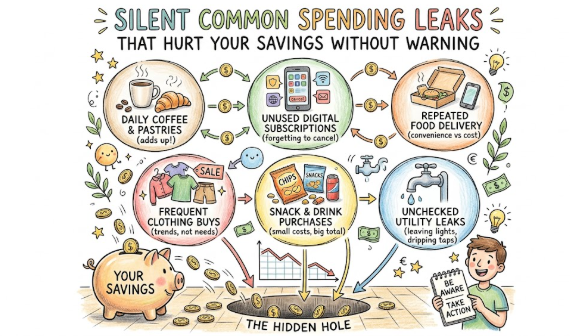
Earning your own money brings an incredible sense of freedom, but it often comes with a puzzling monthly routine: looking at a rapidly dwindling bank balance and trying to figure out exactly how it disappeared. You paid your rent, covered your utilities, and avoided major luxury splurges, yet your savings failed to grow. This common financial cycle is rarely caused by one big, reckless purchase. Instead, it is typically the result of small, unrecorded daily expenses that silently drain your account.
To break this cycle, you need a clear, actionable way to see exactly where your cash goes. Utilizing a Money Leak Analyzer: A Beginner’s Guide to Smarter Spending is a smooth, logical process that helps you audit your financial behavior without judgment. By taking a close look at the small cracks in your daily routine, you can identify hidden money leaks, adjust your spending habits, and protect your hard-earned income.
Whether you are a salaried professional, a student, or a freelancer, implementing personal finance tracking does not have to be restrictive. It is simply about building financial awareness so you can direct your money toward the goals that matter most to you.
What Is a Money Leak Analyzer?
In simple words, a money leak analyzer is a structured framework used to identify micro-expenses that occur automatically or without conscious thought. While traditional budgeting systems focus heavily on planning major categories like rent, insurance, and loan repayments, a money leak analyzer looks backward at the small gaps between those categories. It shines a spotlight on the minor, low-value transactions that slip through standard monthly expense tracking setups.
For beginners, gaining this level of spending visibility is a critical step in building financial security. When you pay a small convenience fee on an app, buy a premium snack on your commute, or let a digital trial auto-renew, it feels like an isolated, minor event. However, personal finance is entirely cumulative, meaning small daily choices grow into massive monthly numbers.
Understanding the distinction between standard budgeting and money leak analysis makes tracking much easier:
- Budgeting is forward-looking; it outlines your intentions before the month begins.
- Money leak analysis is a forensic review of past human behavior to see where your original intentions clashed with reality.
Using this diagnostic approach provides a clearer smarter spending guide that can be adjusted based on your actual income, obligations, and lifestyle. Gaining deep visibility over your patterns prevents you from feeling restricted by a budget because you see the direct value of optimizing your hard-earned money.
Why Money Leaks Happen
Money leaks rarely occur due to a lack of intent; rather, they thrive because digital payment systems are designed to remove friction from the transaction process. When you can buy an item with a single tap, swipe, or glance at your phone, money leaves your account before your brain has time to register the impact. This seamless environment makes it incredibly easy for hidden money leaks to accumulate silently.
Recognizing the root causes of these small financial drains helps you build better systems to block them. Here are the primary reasons why money leaks happen to beginners:
- Untracked daily spending: Omitting small cash or digital transactions from your records, leaving you with an inaccurate financial picture by week’s end.
- Food delivery and convenience spending: Relying heavily on delivery apps where platform fees, service charges, delivery premiums, and tips double the base cost of a meal.
- Unused subscriptions: Signing up for free trials, streaming platforms, fitness apps, or professional tools and letting them bill you monthly without use.
- Impulse shopping: Reacting to flash sales, targeted online advertisements, or limited-time discounts for items you did not plan to buy.
- Lifestyle inflation: Automatically increasing your daily spending every time your income increases, rather than increasing your baseline savings rate.
- Credit card dependency: Treating available credit lines as flexible cash reserves, which can result in rolling balances and avoidable interest charges.
- Small bank charges and fees: Disregarding minor deductions like out-of-network ATM convenience fees or checking account maintenance charges.
- Emotional spending: Using casual shopping, premium dining, or entertainment upgrades as an immediate coping mechanism for stress or boredom.
- Poor budget review: Setting up a financial plan at the start of the year but failing to check your real bank statements to see if you actually followed it.
- Lack of a savings-first habit: Spending cash on variable lifestyle desires first and only trying to save whatever small change happens to be left over on payday eve.
Common Money Leaks and Fixes
To give you an immediate starting point, we have compiled a list of the most frequent financial leaks that beginners face, alongside practical methods to resolve them. Your exact circumstances may vary depending on your income and expenses, so consider these options as flexible templates to adjust based on your lifestyle and goals.
| Money Leak | How It Affects Your Budget | Beginner-Friendly Fix |
| Unused subscriptions | Deducts money every month silently | Review and cancel unused plans |
| Food delivery | Increases daily spending quickly | Plan meals and set weekly limits |
| Impulse shopping | Creates unnecessary expenses | Wait before buying non-essential items |
| Credit card interest | Adds extra cost to purchases | Pay bills on time and avoid rolling balance |
| Small daily purchases | Adds up over the month | Track small expenses weekly |
| Lifestyle upgrades | Raises spending with income | Increase savings before upgrading lifestyle |
How a Money Leak Analyzer Works
Running a manual money leak analysis is a straightforward exercise that relies entirely on reviewing your real-world transaction data. It requires no complex mathematical formulas or advanced software. Here is the step-by-step framework to analyze your cash flow like an expert:
- List your monthly income: Document your total net take-home pay from all sources, ensuring you use actual post-tax figures.
- Separate fixed and variable expenses: Group your rigid commitments (such as rent and insurance) away from your flexible choices (such as dining and shopping).
- Track small daily spending: Log absolutely every transaction for 30 consecutive days, regardless of how minor it appears.
- Review bank, UPI, card, and cash transactions: Collect your real electronic statements at the end of the month to catch automatic payments or small fees.
- Identify repeated low-value expenses: Look for recurring trends, such as premium parking choices or daily vending machine snacks.
- Check subscriptions and auto-payments: Audit your smartphone app store profiles and banking portals to map out exactly who has automated withdrawal permissions.
- Separate needs, wants, and waste: Divide your past transactions into distinct priority tiers to see where your cash conflicts with your true values.
- Calculate your monthly money leaks: Add up the total cost of all items categorized as pure waste to see the exact value disappearing from your wallet.
- Set spending limits: Establish clear, weekly maximum spending thresholds for high-risk variable categories to keep yourself on track.
- Review progress every month: Re-evaluate your transaction history every 30 days to ensure old habits are not quietly returning.
Hidden Expenses Beginners Often Miss
When trying to answer the question of where your money goes, it is easy to overlook micro-transactions because they don’t look dangerous on a daily statement. True financial leaks are quiet, repetitive, and deeply embedded in modern service conveniences.
Paying attention to these specific areas can significantly increase the accuracy of your monthly expense tracking:
- Delivery charges: The added markup costs required to bring groceries, apparel, or hot food straight to your doorstep instead of picking them up.
- Convenience fees: Small service premiums tacked on when booking movie tickets online, using specific payment portals, or processing immediate digital transactions.
- Late payment fees: Easily avoidable financial penalties hit on credit cards, utility bills, or gym memberships due to basic organizational oversight.
- App subscriptions: Recurring payments for cloud storage upgrades, premium dating apps, productivity tools, or design software you rarely open.
- Unused memberships: Ongoing automated charges for local warehouse clubs, physical gyms, or professional associations you stopped visiting months ago.
- Bank charges: Monthly maintenance fees assessed by financial institutions when a checking or savings account drops below its mandatory minimum balance.
- ATM charges where applicable: Transactional penalties incurred when withdrawing cash from an out-of-network terminal simply because it was the closest option.
- Small online orders: Quick e-commerce purchases for low-cost household gadgets, clothing accessories, or digital assets that individually feel cheap but accumulate rapidly.
- Weekend spending: The massive concentration of eating out, social gatherings, entertainment admissions, and daytime excursions that occurs between Friday afternoon and Sunday night.
- Credit card interest: Compounding interest costs applied to your statement balance when you fail to clear the full amount before the grace period ends.
- Unplanned travel: Unexpected rideshare pricing surges during bad weather or sudden fuel stops and parking expenses from spontaneous road trips.
- Replacement purchases: Buying cheap charging cables, umbrellas, or water bottles repeatedly because the low-quality versions break or get lost easily.
The Psychology Behind Money Leaks
Developing a sustainable approach to budgeting for beginners requires acknowledging that money management is driven more by human psychology than strict math. People rarely overspend because they cannot add numbers together; they overspend because buying things satisfies a temporary emotional need or simplifies an exhausting day.
Understanding your personal spending triggers makes it much easier to stop wasting money. Consider how these psychological habits might be contributing to your current money leaks:
- Stress spending: Utilizing retail purchases, electronics upgrades, or premium dining as an immediate emotional release after an exhausting day at work or school.
- Reward spending after payday: Celebrating a fresh paycheck by immediately indulging in luxury spending, which leaves you scrambling for cash later in the month.
- Fear of missing out: Agreeing to attend premium social dinners, trips, or concerts that you cannot comfortably afford because you want to stay included in your friend group.
- Social media comparison: Upgrading your wardrobe, electronics, or home environment simply to match the polished, curated images displayed on your social feeds.
- “Small amount does not matter” mindset: Convincing yourself that a four-dollar purchase is too small to impact your life, ignoring that fifty such choices cost two hundred dollars.
- Emotional shopping: Browsing online stores out of sheer boredom, loneliness, or frustration, leading to orders for items you didn’t know existed an hour prior.
- Convenience habit: Paying massive premiums for outsourced labor—such as pre-cut groceries or short rideshare trips—even when you have ample time to do it yourself.
- Lack of spending awareness: Swiping digital cards or scanning codes mindlessly without ever checking the declining balance until your statement arrives.
Needs, Wants, and Waste: The Smarter Spending Framework
An excellent strategy for beginners is to bypass over-complicated budget tracking tools that feature dozens of tiny categories. Instead, try filtering your financial life through a simple three-tier model known as the Smarter Spending Framework. This method strips away the stress of modern finance and focuses on the underlying value of every transaction.
- Needs are essential expenses: These are the non-negotiable costs required to maintain your baseline survival, health, and employment. This includes standard housing payments, basic groceries, core utilities, minimum debt payments, and essential healthcare.
- Wants are comfort or lifestyle expenses: These expenses enhance your day-to-day experience but are not required to live. Examples include vacation travel, entertainment media, hobbies, social events, and specialty dining.
- Waste is spending that gives little or no real value: This is the core target of your money leak analyzer. Waste includes subscriptions you forgot you owned, interest on lifestyle debt, late fees, and impulse purchases that sit unused in a corner.
Filtering your transaction history through this framework helps clear up confusion. It removes the stress or guilt associated with spending money on your “Wants,” provided you have successfully identified and plugged the leaks categorized as “Waste.” This deliberate classification process clarifies exactly how your daily lifestyle choices interact with your financial security.
Step-by-Step Guide to Smarter Spending
Transforming your financial daily routine requires an intentional system that builds momentum over time. Here is a practical, numbered path to optimize your cash flow safely:
- Track spending for at least one full month: Write down every single financial transaction in a notebook or basic spreadsheet to establish an honest baseline.
- Mark every expense as need, want, or waste: Review your ledger every weekend and place a corresponding tag (N, W, or Waste) next to each entry.
- Identify your top 5 money leaks: Calculate which five items in your waste list cost you the most cash over the past month.
- Set a weekly spending limit: Divide your monthly variable lifestyle budget into four clear blocks, ensuring you do not burn through your funds early.
- Cancel unused subscriptions: Look through your smartphone account subscription settings and immediately cancel any app you haven’t opened in a month.
- Reduce high-frequency small spending: Instead of quitting habits cold turkey, scale them back—for example, bring lunch to work three days a week instead of ordering out daily.
- Save first before spending: Set up an automatic transfer that routes a realistic portion of your income into a savings account the morning you get paid.
- Keep emergency money separate: Hold your emergency funds in an account at a completely different bank to reduce the urge to spend it on non-essentials.
- Review expenses every weekend: Take ten minutes every Sunday to evaluate your card statements, keeping your financial awareness sharp.
- Adjust your budget based on real behavior: Update your allocations to reflect your true lifestyle needs rather than holding onto an unachievable, perfect financial plan.
Real-Life Example: How Small Money Leaks Reduce Savings
To see how these concepts play out in real life, let us follow the example of a professional named Sarah. Sarah earns a stable income and feels like she doesn’t spend excessively. However, she constantly finishes the month with almost nothing left to put into savings.
When Sarah used a money leak analyzer to audit her last 30 days of transactions, she discovered a series of minor, recurring habits that were quietly eroding her financial margin:
- Daily Commute Specialty Coffee: $5.50 per day, 20 days a month = $110
- Twice-Weekly Food Delivery Convenience Fees & Tips: $15 extra per week = $60
- Forgotten Streaming Video Membership: $15 per month = $15
- Unused Boutique Gym Membership: $65 per month = $65
- Weekend Rideshare Upgrades (Surge Pricing): $25 per week = $100
- Impulse App & Online Retail Purchases: $50 per month = $50
Total Monthly Money Leak: $400
Total Annual Money Leak: $4,800
By running this analysis, Sarah realized that $400 was leaving her account every month on items that did not bring her long-term happiness or value. By making minor structural adjustments—such as brewing coffee at home, canceling the gym plan she wasn’t using, and ordering takeout directly instead of via third-party delivery apps—she saved an extra $250 a month to put straight into her emergency fund without dramatically changing her quality of life.
Money Leak Analyzer Checklist
| Checklist Point | Status |
| Monthly income reviewed | Yes/No |
| Fixed expenses listed | Yes/No |
| Daily spending tracked | Yes/No |
| Subscriptions checked | Yes/No |
| Credit card charges reviewed | Yes/No |
| Needs, wants, and waste separated | Yes/No |
| Top money leaks identified | Yes/No |
| Weekly spending limit set | Yes/No |
| Savings transferred first | Yes/No |
| Monthly review completed | Yes/No |
Common Smarter Spending Mistakes Beginners Make
When starting a personal finance journey, it is incredibly easy to make simple mistakes that can cause frustration and lead to giving up on tracking entirely. Avoiding these twelve common traps will keep your progress smooth and sustainable:
- Tracking only big expenses: Paying attention only to major costs like rent or car payments while entirely ignoring the small daily transactions that break your budget.
- Ignoring small daily purchases: Convincing yourself that purchases under five dollars don’t matter, which ignores the compounding reality of micro-spending.
- Saving only what is left: Waiting until the final days of the month to see what remains before saving, which usually results in saving nothing at all.
- Keeping unused subscriptions: Holding onto memberships you don’t use out of a vague hope that you might use them later, draining your account silently.
- Using credit cards without a repayment plan: Treating credit cards as extra income instead of transactional tools, which creates costly interest bills over time.
- Not reviewing bank statements: Relying entirely on memory or rough estimations rather than looking at real, cold transaction data.
- Confusing wants with needs: Labeling comfort items, streaming services, or daily outsourced convenience apps as non-negotiable survival tools.
- Making emotional purchases: Failing to see that fatigue, frustration, or social anxiety are driving your impulse to spend money online.
- Not planning for yearly expenses: Forgetting to set aside funds for annual insurance fees, car maintenance, seasonal gifts, or medical renewals.
- Comparing lifestyle with others: Trying to copy the visible consumption habits of peers or online creators whose real incomes and debts are invisible to you.
- Not keeping emergency savings: Moving every spare dollar into debt payoff or long-term investments without holding liquid cash back, forcing you to take on new debt when an emergency occurs.
- Trying an unrealistic budget: Restricting your lifestyle so harshly that you eliminate all entertainment, which leads to burnout and overspending later.
Practical Tips to Stop Money Leaks
Plugging your financial gaps does not require you to live a life of extreme deprivation. Small, intentional adjustments to your daily habits can help save a surprising amount of money over time. Consider testing these beginner-friendly changes to see what fits your lifestyle:
- Save first, spend later: Make saving a non-negotiable step by automating a direct transfer right on payday morning.
- Track small expenses weekly: Spend five minutes every Friday updating your records while your transactions are still fresh in your mind.
- Use a simple budget method: Try clear strategies like the 50/30/20 framework, adjusting the target percentages based on your specific income and debt levels.
- Cancel unused subscriptions: If you haven’t opened a streaming app or visited a platform in 30 days, cancel it. You can always resubscribe later if you genuinely miss it.
- Set food delivery limits: Delete delivery apps during the workweek and treat them as an occasional weekend luxury.
- Avoid impulse buying: Leave non-essential items in your digital shopping cart for 48 hours before buying. Often, the initial impulse will fade away entirely.
- Keep one account for spending: Transfer your weekly flexible allowance to a separate account or debit card, and stop spending once that specific balance hits zero.
- Plan purchases before payday: Map out your upcoming needs a week before you get paid to prevent unexamined celebration spending.
- Use cash or spending limits where helpful: If digital payments make overspending too easy, switch to a cash-envelope system for high-risk categories like nightlife or clothing.
- Review your money every weekend: Regular touchpoints remove financial anxiety and help you spot billing errors before they turn into major headaches.
- Build an emergency fund slowly: Setting aside even ten or twenty dollars a week builds a vital safety net that protects you from unexpected costs.
- Avoid lifestyle upgrades without savings growth: When you earn a raise, prioritize increasing your automated savings rate before looking for ways to expand your lifestyle.
How to Build a Smarter Spending Habit
Shifting from careless spending to intentional money management is a marathon, not a sprint. True financial clarity comes when evaluating your cash flow becomes a normal, low-stress part of your weekly routine rather than an exhausting chore.
- Start with awareness, not guilt: The purpose of a money leak analyzer is simply to provide objective data about your habits, not to make you feel bad about past choices.
- Change one spending habit at a time: Focus your energy on resolving one leak first—such as managing your takeout spending—before trying to overhaul your entire lifestyle.
- Make savings automatic: Take human willpower out of the equation by using your banking app to schedule automatic transfers directly to savings on payday.
- Review spending without blaming yourself: Look at your transaction histories with curiosity, treating your finances like an interesting puzzle you are trying to solve.
- Use simple rules instead of complex systems: If color-coded apps feel too overwhelming, stick to a basic paper notebook or a clean spreadsheet. The best tracking tool is the one you actually use consistently.
- Celebrate small improvements: Acknowledge small wins, like reducing your monthly leak total by fifty dollars compared to the previous month.
- Keep spending aligned with goals: Remind yourself regularly why you are tracking your cash. You are cutting back on waste to fund meaningful travel, buy a home, or build a life free from chronic financial stress.
When Should You Take Financial Help?
While utilizing a money leak analyzer guide is an excellent way to build financial awareness, self-guided frameworks have real practical limits. Everyone’s situation varies based on baseline income, local cost of living, debt balances, and family size. Sometimes, persistent issues require specialized assistance.
Consider seeking professional financial guidance if you find yourself facing any of these challenges:
- You spend more than your total net monthly income even after cutting out all non-essential waste.
- You cannot control debt or reduce high-interest consumer balances, which climb month after month.
- You depend on credit cards monthly or rely on short-term loans to cover basic needs like rent, utilities, or groceries.
- You cannot build savings or establish an emergency reserve over an extended period of time.
- You feel stressed about money constantly or experience severe anxiety whenever you open your banking apps or review your bills.
- You do not know where your money goes every month, despite trying multiple expense tracking methods.
- You need help with budgeting or debt repayment and require formal, professional debt-management planning.
- You have irregular income and need planning support to safely smooth out your seasonal peaks and valleys.
Frequently Asked Questions
1. What is a money leak analyzer in personal finance?
Answer: A money leak analyzer is a systematic framework used to find and track small, unnoticeable, or forgotten variable expenses that quietly drain your income without providing real value.
2. How can I find hidden money leaks in my budget?
Answer: You can find them by gathering your bank statements, card bills, and digital transaction history from the last 30 days and reviewing them to spot recurring automated charges, impulse buys, and extra convenience fees.
3. What is the quickest way to stop wasting money on convenience apps?
Answer: The fastest method is to remove your saved credit card details from food delivery and online shopping platforms, which adds helpful transaction friction that stops immediate impulse spending.
4. Can budgeting for beginners allow room for fun and dining out?
Answer: Yes, absolutely. A responsible budget is not about living in deprivation; it is about cutting out absolute “waste” so you can comfortably afford the “wants” that bring genuine value to your life.
5. How often should I perform a monthly expense tracking audit?
Answer: While checking your comprehensive budget once a month is standard, taking 5 to 10 minutes every weekend to track your small purchases keeps your awareness high and prevents data backlog.
6. What is the difference between a need and a want in smarter spending?
Answer: A need is an essential expense required for basic survival and employment, like rent or basic food. A want is a comfort or lifestyle upgrade that is optional, like streaming apps or restaurant dining.
7. How does lifestyle inflation contribute to hidden money leaks?
Answer: Lifestyle inflation occurs when your casual spending grows automatically alongside your income, which causes unexamined daily upgrades to absorb your raises and stall your savings progress.
8. Is credit card interest considered a money leak?
Answer: Yes, credit card interest is a destructive money leak. Carrying a balance from month to month adds expensive financing penalties to items you’ve already bought, draining your monthly cash flow.
9. How many monthly subscriptions are considered too many for a beginner?
Answer: There is no fixed number, as it depends on your specific income. However, any subscription service that you have not actively used or derived real value from in the past 30 days is a leak that should be cut.
10. What should I do if my income is too low to find any real money leaks?
Answer: If an honest audit shows zero waste, your challenge is an income shortfall rather than a spending leak. In this scenario, focusing on upskilling, career growth, or side projects is more effective than further spending cuts.
Conclusion
Using a Money Leak Analyzer: A Beginner’s Guide to Smarter Spending is a clear, step-by-step process to transform your relationship with money. It moves away from overly strict rules and focuses instead on basic financial awareness and behavior alignment. By consistently auditing your real statements, categorizing your expenses honestly, and automating your savings, you can confidently stop the cycle of the disappearing paycheck.
Sustainable money management is a personalized process that depends on your unique income, debt, family structure, and long-term goals. Be patient with your progress and focus on steady consistency over absolute perfection. We invite you to explore more personal finance, budgeting, savings, spending control, and money management guides on Moneyvoid.com to continue growing your financial confidence.