Introduction
Many salaried professionals, first-time earners, students, and freelancers frequently discover that their money vanishes into thin air before the month ends. It is incredibly common to experience a large, unexplained gap between what you earned and what you actually have left in your bank account. This frustrating financial pattern happens because small, unrecorded transactions slip through the cracks on a daily basis. Without a clear system to monitor cash flow, keeping tabs on your changing balance becomes nearly impossible.
Learning how to track where your money actually goes is the foundational step toward achieving financial peace of mind. This practice is not about restricting your lifestyle or cutting out every ounce of fun; rather, it is about gaining complete visibility over your financial choices. When you track expenses effectively, you transform money from a source of anxiety into a tool that works for your future goals. This comprehensive personal budgeting guide will show you how to spot hidden money leaks, choose the right finance tracking tools, and build a sustainable habit that aligns your spending with your personal priorities.
In this deep-dive guide, you will learn the exact mechanics of modern money tracking. We will break down why your current cash management might be failing, how to categorize your monthly expense tracking, and how to identify the subtle drains on your wallet. By the end of this article, you will have a practical, step-by-step roadmap to regain control of your bank account, optimize your savings, and make smarter spending choices every single day.
What Is a Money Tracker?
A personal finance tracker is any system, tool, or method used to log, categorize, and analyze the money flowing into and out of your life. At its core, it serves as a financial mirror, reflecting your true behavioral habits rather than what you think you spend. For a beginner, a money tracker can be as straightforward as a pocket notebook, a customized digital spreadsheet, or a dedicated mobile application that syncs securely with your bank accounts. The primary purpose is to eliminate guesswork by providing accurate, historical data about your cash flow.
For those diving into budget management for beginners, understanding this concept is vital because you cannot manage what you do not measure. A reliable tracking system does not judge your choices; it merely categorizes them into clear buckets like housing, food, transportation, and entertainment. By consistently capturing this data, you establish a baseline that may help understand spending habits over time. It shifts your financial posture from reactive—wondering where your money went—to proactive, allowing you to decide exactly where your money will go next.
Why People Lose Track of Money
It is incredibly easy to lose sight of your financial trajectory in a modern economy designed around frictionless payments. With the rise of tap-to-pay cards, digital wallets, and one-click online shopping, physical currency rarely changes hands. This digital detachment removes the psychological “pain of paying,” making it feel as though you haven’t actually spent real money until the monthly statement arrives.
However, several distinct behavioral patterns and systemic traps cause people to lose track of their funds:
- Untracked Cash and Minor Digital Transactions: Small purchases, such as a quick coffee, a vending machine snack, or a digital parking meter fee, seem inconsequential at the moment. Because they are minor, we rarely write them down, yet they accumulate significantly over thirty days.
- The Sneaky Subscription Trap: Automated monthly subscriptions for streaming platforms, cloud storage, gym memberships, and premium apps run quietly in the background. Many people continue to pay for services they haven’t used in months simply because the deduction is automated.
- Impulse Purchasing Behavior: E-commerce notifications and targeted social media ads create artificial urgency. Buying an item on a whim without checking your budget framework makes it difficult to maintain a steady monthly expense tracking routine.
- Overlooking Convenience and Service Fees: ATM fees, food delivery service charges, processing fees, and occasional late penalties are often dismissed as cost-of-living adjustments. In reality, they represent pure financial waste.
- Unmanaged Lifestyle Inflation: As your income grows through a raise or a new freelance client, your spending naturally expands to match it. You buy nicer clothes, eat at pricier restaurants, or upgrade your living space without intentionally adjusting your savings goals first.
Common Money Leaks Table
| Money Leak | How It Affects Your Budget | How to Fix |
| Unused subscriptions | Deducts money automatically every month, draining your passive balance. | Audit your bank statement and cancel unused subscriptions immediately. |
| Food delivery | Adds up daily due to inflated menu prices, service charges, and tips. | Plan meals ahead of time, cook at home, and limit orders to special occasions. |
| Impulse shopping | Introduces unplanned, volatile expenses that eat into your savings cushion. | Implement a 48-hour cooling-off rule before clicking the buy button. |
| Credit card interest | Adds a heavy, recurring extra cost to every purchase you delay paying off. | Commit to paying your full statement balance on time every single month. |
| Small daily purchases | Accumulate over time into massive structural gaps in your monthly cash flow. | Set a small weekly cash allowance or track these micro-expenses weekly. |
| Lifestyle upgrades | Increases spending permanently, leaving zero room for growing wealth. | Practice “pay yourself first” by increasing your savings goals before spending a raise. |
How to Track Where Your Money Goes
To successfully master how to track where your money actually goes, you need a structured, repetitive approach that fits your lifestyle. It does not require hours of complex math, but it does demand consistency.
Here is the operational framework required to map your cash flow accurately:
- Record Every Single Stream of Income: Document all money entering your ecosystem. This includes your core salary, freelance payouts, side hustle tips, investment dividends, or casual gift cash. Knowing your exact net income sets the ceiling for your total monthly outflow.
- Categorize Your Expenses Uniformly: Group your transactions into clear, distinct buckets. Divide them fundamentally into fixed essentials (rent, insurance, loan payments) and variable lifestyle choices (groceries, dining out, movie tickets, hobbies).
- Track Expenses on a Daily or Weekly Basis: Do not wait until the end of the month to review your accounts. Spend two minutes every evening or ten minutes every weekend logging your transactions while your memory is fresh.
- Reconcile with Bank Statements Monthly: At the end of the month, match your tracked logs against your official bank and credit card statements. This step ensures that no automated transactions, interest payments, or hidden fees were left out.
- Identify Structural Money Leaks: Look closely at the data you collected. Spot the areas where your actual spending exceeded your expectations, such as excessive spending on weekend rideshares or premium coffee blends.
- Set Flexible, Realistic Budgets: Use your historical data to build realistic boundaries for the upcoming month. Avoid creating an overly restrictive budget that you cannot realistically maintain, as this leads to burnout.
- Review and Adjust Regularly: Treat your tracking system as an evolving project. Your spending needs will change depending on seasonal events, holidays, changes in income, and evolving lifestyle priorities.
Hidden Expenses Beginners Often Miss
When people start using a personal finance tracker, they generally remember to write down large expenses like utility bills and car payments. However, a budget rarely breaks down because of fixed rent; it usually falls apart because of the uncounted, micro-transactions that fly under the radar.
[Total Monthly Income] ➔ [Fixed Expenses] ➔ [Hidden Micro-Fees] ➔ [Remaining Savings?]
                                                 ↓
                                      (Where the leak occurs!)
Beginners should watch out for these subtle hidden expenses:
- Delivery Fees and Driver Tips: Ordering a meal online doesn’t just cost the price of the food. Once you add service fees, distance delivery surcharges, and tips, a basic meal can cost up to 50% more than eating at the restaurant.
- In-App Purchases and Micro-Transactions: Cloud storage upgrades, extra video game lives, premium dating app features, or ad-free versions of software often cost just a few dollars each. Because they are tiny, they slip past your mental radar but add up over time.
- Convenience Charges and Banking Fees: Using an out-of-network ATM, paying a processing fee to buy movie tickets online, or maintaining an account that charges a monthly maintenance fee quietly chips away at your bottom line.
- Annual and Semi-Annual Bills: Software licenses, car registration renewals, professional membership dues, and holiday gifts occur infrequently. If you don’t break these down into monthly savings targets, they will feel like financial emergencies when the bill arrives.
Understanding Your Spending Patterns
Tracking your money gives you raw numbers, but analyzing those numbers reveals your underlying psychological relationship with money. True financial clarity comes from understanding your spending patterns, which allows you to make conscious adjustments rather than relying on sheer willpower.
Needs vs. Wants
The classic pillar of budget management for beginners is distinguishing between absolute needs (items required for survival and basic employment, like shelter, basic groceries, utilities, and debt minimums) and wants (items that enhance your comfort, such as dining out, designer clothes, and streaming upgrades). Tracking reveals if your “wants” are disguised as “needs” in your daily routine.
Fixed vs. Variable Expenses
Fixed expenses stay constant every month, making them easy to plan around. Variable expenses, like groceries, gas, and entertainment, fluctuate wildly based on your daily choices. Your variable expenses are the primary area where smart spending tips can make an immediate, positive impact.
Emotional Spending Triggers
Many people spend money based on how they feel. You might notice that a stressful week at work leads to expensive weekend retail shopping, or feeling tired cooking leads to consecutive nights of ordering takeout. Identifying these emotional triggers allows you to find healthier, lower-cost ways to unwind.
Irregular and Seasonal Costs
Your spending is rarely identical from month to month. Summer vacations, winter holiday shopping, back-to-school expenses, and quarterly insurance premiums can distort your financial picture. Recognizing these seasonal cycles prevents you from being caught off guard.
Step-by-Step Guide to Money Tracking
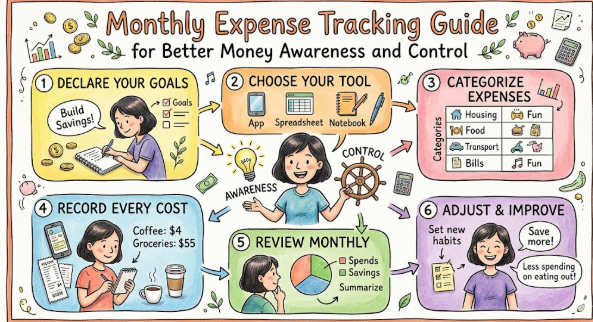
Step 1: Define Your Financial Goals
Before looking at a spreadsheet, clarify why you are tracking your money. Do you want to pay off credit card debt, build an emergency fund, save for a house down payment, or simply reduce stress? Having a clear goal gives your daily tracking purpose and keeps you motivated.
Step 2: Choose Your Method or Tool
Select a personal finance tracker that matches your tech comfort level. If you love physical writing, use a dedicated notebook. If you prefer deep data analysis, build a customized spreadsheet. If you want speed and automation, download a reputable money tracking app that categorizes transactions automatically.
Step 3: Record Daily and Categorize Accurately
Commit to spending just two minutes every evening logging whatever you spent that day. Assign every transaction to a specific bucket, such as housing, transportation, food, medical, or entertainment. Don’t let days pile up, or tracking will start to feel like an exhausting chore.
Step 4: Analyze Your Cash Flow Weekly
Pick a fixed time every week—like Sunday morning over coffee—to review your progress. Total up your spending in each category and compare it to your expected monthly targets. Catching an overspending trend in week one allows you to adjust your choices before the month is over.
Step 5: Adjust Your Daily Habits
Use the insights gained from your weekly reviews to make small, stress-free adjustments to your behavior. If you notice you’ve spent your entire monthly dining-out budget by the second week, challenge yourself to try new home-cooked recipes or host a casual potluck instead of going to a restaurant.
Step 6: Prioritize Saving First
Shift from a mindset of “saving whatever is left over at the end of the month” to a “pay yourself first” strategy. As soon as your income hits your account, automatically route a fixed, realistic percentage into a separate savings or investment account, then comfortably live off the rest.
Real-Life Example: The Cost of the Small Stuff
Let’s look at Sarah, a salaried marketing professional earning $4,500 a month after taxes. Sarah felt stressed because despite earning a good salary, her bank account consistently hovered near zero by the 28th of every month. She assumed her rent and student loans were the primary culprits, but she decided to use money tracking tips to find out for sure.
Sarah began tracking every dollar for thirty days using a mobile spreadsheet. Here is what she discovered about her minor daily habits:
- Daily Specialty Coffee: $6.50 every workday morning ($130/month)
- Mid-Day Food Delivery: Ordering lunch via apps 3 times a week, including delivery charges ($240/month)
- Unused Premium Subscriptions: A streaming service, an advanced fitness app, and a beauty box she forgot about ($65/month)
- Weekend Rideshares: Taking rideshares instead of the subway out of convenience ($120/month)
These four minor habits added up to $555 every single month—more than 10% of her entire net take-home pay.
By discovering these hidden money leaks, Sarah didn’t have to radically change her life or stop having fun. Instead, she chose to brew coffee at home on weekdays, pack her lunch twice a week, and cancel the apps she wasn’t using. These simple adjustments freed up over $300 a month, which she used to build an emergency fund, proving that tracking your money can be incredibly useful for smarter budgeting without ruining your lifestyle.
Money Tracking Checklist Table
| Checklist Point | Status (Yes/No) | Operational Focus |
| Monthly income recorded | Yes | Log core salary, freelance payouts, side-hustle earnings, and cash gifts. |
| Fixed expenses listed | Yes | Document non-negotiable bills like rent, debt minimums, and utilities. |
| Daily spending tracked | Yes | Take two minutes every evening to record miscellaneous cash and card purchases. |
| Subscriptions reviewed | Yes | Audit bank statements to identify and cancel services you no longer use. |
| Credit card charges checked | Yes | Verify all transaction lines weekly to guard against hidden fees or errors. |
| Needs vs wants analyzed | Yes | Evaluate whether luxury lifestyle choices are creeping into your essential budget. |
| Top money leaks identified | Yes | Spot recurring patterns like excessive food delivery fees or convenience costs. |
| Weekly review done | Yes | Spend ten minutes every weekend assessing your total category balances. |
| Savings allocated first | Yes | Move a designated percentage of your earnings to savings before spending. |
| Monthly summary reviewed | No | Pending — This will be checked at the final day of the calendar month. |
Common Mistakes in Money Tracking
Even with the best intentions, many beginners make predictable mistakes that cause them to abandon their money tracking efforts within the first few weeks. Recognizing these traps ahead of time helps you build a more resilient financial habit.
- Tracking Only Large Expenses: Many people log their rent, car payment, and major grocery trips but ignore cheap snacks, parking meters, or digital app purchases. These unrecorded micro-expenses add up over time, resulting in an inaccurate final calculation at the end of the month.
- Setting Overly Restrictive Budgets: It’s a mistake to go from zero tracking to a hyper-restrictive budget that eliminates all fun. If your budget doesn’t leave any room for dining out, hobbies, or entertainment, you’ll quickly experience budget burnout and abandon the habit altogether.
- Ignoring Small Daily Purchases: Dismissing a four-dollar purchase as irrelevant is a slippery slope. These small amounts are precisely where most hidden money leaks live, and they must be tracked if you want an honest picture of your finances.
- Keeping Unused Subscriptions Active: Leaving recurring payments on auto-pilot because you “might use them next month” is a direct drain on your savings. If you haven’t used a service in the past thirty days, cancel it; you can always resubscribe later if you genuinely need it.
- Failing to Review Data Regularly: Collecting transaction data is only half the battle. If you log everything perfectly but never sit down to analyze the trends, adjust your habits, and learn from your patterns, your tracker is just a list of past mistakes rather than a tool for growth.
Practical Tips for Smarter Spending
Once you have a clear view of where your money is going, you can use practical, smart spending tips to get more value out of every dollar you earn. These habits aren’t about self-deprivation; they are about intentional, conscious spending.
- Automate Your Savings Goals: Remove human error and temptation from the equation. Set up an automatic transfer through your bank that moves a portion of your paycheck into a separate savings or investment account the morning you get paid.
- Implement a Cooling-Off Period: To curb impulse shopping, introduce a mandatory 24-to-48-hour waiting period for non-essential online purchases. Often, the initial emotional urge to buy will fade, and you’ll realize you didn’t actually need or even want the item.
- Audit Subscriptions Once a Quarter: Set a recurring reminder on your calendar every three months to go through your statements line by line. Cancel any trial memberships, streaming packages, or app access options that no longer bring you active joy or value.
- Shop with a Dedicated, Precise List: Whether you are buying groceries, clothing, or home electronics, never browse without a plan. Writing down exactly what you need beforehand keeps you focused and prevents impulse buys triggered by store displays or sales.
- Calculate Costs in Hours Worked: When debating an expensive luxury purchase, translate the dollar amount into your actual labor hours. Asking yourself, “Is this new pair of shoes worth twelve hours of my time at my desk?” offers a powerful shift in perspective.
Building a Habit of Expense Tracking
The ultimate success of your personal finance journey does not depend on finding a perfect app; it depends on your ability to build a consistent, daily habit. Treat expense tracking like going to the gym or learning a new language—it takes time for the behavior to become second nature.
Start with simple awareness rather than aiming for perfection. If you forget to log your expenses for a few days, don’t beat yourself up or throw away the whole system. Simply look up your online banking portal, fill in the blanks as best as you can, and keep moving forward. The goal is to gradually gather enough data to see your true financial trends.
Focus on making small, steady improvements over time. As you stick with the habit, you will find that spending two minutes to log your daily expenses becomes a natural part of your evening routine. This regular practice builds deep financial self-awareness, allowing you to gradually adjust your habits in a way that feels natural, sustainable, and empowering.
When Should You Seek Financial Help
While a personal finance tracker is an excellent tool for self-improvement, there are times when self-tracking alone isn’t enough. It’s important to recognize when your financial situation requires professional guidance to navigate safely.
Please consider speaking with a certified financial planner or a professional credit counselor if you experience any of the following situations:
- Your essential monthly spending consistently exceeds your total net income.
- You are dealing with high-interest consumer debt that feels impossible to manage.
- You have highly irregular freelance or business income and struggle to map out a safe baseline budget.
- Managing your money causes you constant anxiety, stress, or relationship tension.
There is no shame in asking for professional help. A certified expert can provide unbiased guidance, help you build a personalized debt payoff strategy, and offer advanced tools tailored to your specific financial situation and long-term life goals.
Frequently Asked Questions
What is the best method for a beginner to start tracking expenses?
The best method is whichever one you can stick with consistently. For complete beginners, using a dedicated mobile money tracking app is often easiest because it automates data collection. However, if you are concerned about digital security or prefer a hands-on approach, a simple notebook or a basic excel spreadsheet can be incredibly useful for smarter budgeting.
How often should I review my money tracker to stay on top of things?
You should aim to log your transactions daily, which takes just a couple of minutes, and review your total category balances once a week. A weekly review allows you to spot overspending early and adjust your habits for the rest of the month before any major damage is done to your savings.
Will tracking my money guarantee that I will save a lot of cash?
No, tracking your expenses regularly for insights does not guarantee automatic wealth or instant savings. A money tracker simply acts as an educational tool that shows you the objective reality of your financial choices. The actual savings happen when you actively use that data to cut out money leaks and change your daily spending habits.
What is a good way to separate my needs from my wants?
A need is anything absolutely required for basic survival, health, and maintaining your employment—such as rent, basic groceries, utilities, insurance, and minimum loan payments. A want is anything that simply adds comfort or entertainment to your life, such as dining out, hobbies, subscription services, and vacations.
How can I track my expenses if I prefer using physical cash?
If you prefer using physical cash, make it a habit to ask for a receipt for every single purchase you make, or write down the transaction in a pocket notebook or phone memo app immediately. At the end of the day, log those cash transactions into your main tracking system so your data remains complete.
How do I handle irregular or unexpected expenses like car repairs?
The most effective approach is to create a “buffer category” or an emergency fund within your budget. Look at what you spent on irregular costs over the past year, divide that total by twelve, and save that amount every month so you have dedicated cash ready when those unavoidable bills arrive.
Why do I keep failing every time I try to start a new budget?
Most budgets fail because they are too restrictive, or because people try to track too many details all at once without building the baseline habit first. To avoid budget burnout, start by simply tracking what you currently spend without placing heavy restrictions on yourself, then make small, gradual adjustments over time.
Is it safe to connect my bank accounts to personal finance apps?
Most reputable modern finance tracking tools use bank-level encryption, read-only access, and security protocols identical to major financial institutions. However, you should always research an app’s security track record before signing up, or stick to manual spreadsheets if you prefer keeping your data completely offline.
What should I do if my partner and I have completely different spending habits?
Open, non-judgmental communication is key. Sit down together to map out shared financial goals, such as saving for a vacation or paying off a joint loan. Consider using a hybrid approach where you pool funds for shared household needs while maintaining separate individual accounts for personal, guilt-free spending.
When does it make sense to pay for professional financial advice?
You should consider seeking professional guidance if your monthly debts feel unmanageable, if your spending regularly exceeds your income, or if you want a personalized plan for long-term investments. A certified financial professional can offer tailored strategies that depend heavily on your unique income, lifestyle, and risk tolerance.
Conclusion
Learning how to track where your money actually goes is one of the most empowering choices you can make for your future. It removes the mystery from your bank statement and replaces financial anxiety with clear, actionable data. Remember that tracking your expenses isn’t about punishing yourself or cutting out everything you enjoy. It’s about building deep self-awareness, identifying hidden money leaks, and making sure your hard-earned money is being directed toward the things that matter most to you.
Developing a sustainable tracking routine depends entirely on your personal income, lifestyle, and financial goals. Be patient with yourself as you build this new habit, start with simple tools, and focus on making small, steady improvements rather than aiming for overnight perfection. If you want to dive deeper into personal finance tracker methods, discover advanced budget management for beginners, or explore smart spending tips that fit your lifestyle, we are here to help.