Introduction
Many people work hard throughout the month, receive their salary or business income, pay their regular bills, and still wonder where their money disappeared. At first, they may blame grocery bills, travel expenses, shopping, or unexpected spending. But often, the real problem is hidden in automatic payments that quietly continue every month.
A streaming app, music subscription, cloud storage plan, gym membership, learning platform, mobile recharge, insurance premium, loan EMI, website tool, software subscription, or app-based service may not look expensive alone. However, when five, ten, or fifteen such payments are active together, they can create a serious impact on monthly savings.
This is why learning How to Audit Your Monthly Recurring Payments is important for beginners. A recurring payment audit means carefully reviewing every payment that repeats automatically or regularly. The goal is not to stop every subscription. The goal is to understand what you are paying for, why you are paying, whether you still use it, and whether it is helping your life, work, business, or financial plan.
Beginners usually face confusion because recurring payments are not always visible in one place. Some payments may be linked to a debit card, some to a credit card, some to UPI autopay, some to wallets, some to app stores, and some to bank mandates. A person may cancel an app from the phone but forget that the actual subscription is still active in billing settings.
Poor understanding of recurring payments can cause financial mistakes. You may keep paying for unused services. You may forget annual renewals. You may miss important bills because your account balance was used by non-essential subscriptions. You may also underestimate your monthly expenses and create an unrealistic savings target.
For salaried people, recurring payment audits help protect monthly savings. For students, they prevent free trial deductions. For freelancers, they help manage irregular income. For small business owners, they reduce unnecessary software and service costs. For families, they help organize household bills and digital subscriptions.
This blog will explain recurring payments in a simple and practical way. You will learn how to collect payment records, identify repeated deductions, divide them into useful and wasteful categories, check real usage, cancel unnecessary plans, and build a monthly money review habit.
The purpose of this guide is not to create fear around spending. Spending is part of life, and many recurring payments are genuinely useful. But every payment should have a clear purpose. When your money is going somewhere every month, you should know why.
A practical recurring payment audit gives you control. It helps you make better financial decisions, reduce waste, improve savings, avoid hidden charges, and build long-term financial discipline.
Understanding Monthly Recurring Payments in Simple Words
Monthly recurring payments are payments that happen again and again at regular intervals. These payments may happen monthly, weekly, quarterly, or annually, but they are usually connected to a continuing service, obligation, membership, or subscription.
In simple words, recurring payments are expenses that repeat automatically unless you stop them or complete the payment obligation. Some recurring payments are necessary, such as rent, EMIs, electricity bills, mobile bills, broadband bills, and insurance premiums. Others may be optional, such as streaming apps, fitness apps, premium tools, gaming subscriptions, or paid learning platforms.
Recurring payments usually happen through debit cards, credit cards, UPI autopay, bank mandates, wallets, app stores, or online payment gateways. Because they are automatic, people often forget about them after subscribing. This is where the problem starts.
People search for How to Audit Your Monthly Recurring Payments because they want clarity. They may see money being deducted but may not remember the reason. They may feel that their income is good, but their savings are still weak. They may also want to reduce unnecessary spending without making major lifestyle sacrifices.
Recurring payments are closely connected with personal finance budgeting, saving money, loan repayment, small business expenses, digital tools, investing readiness, and financial planning. If your recurring payments are not under control, your monthly budget becomes weak.
For example, a person may pay for broadband, two streaming apps, one music app, a gym membership, cloud storage, mobile plan, insurance, loan EMI, and one paid finance tool. Individually, these payments may look manageable. But together, they create a fixed burden every month.
The common misunderstanding is that recurring payments are harmless because they are small. In reality, small payments become powerful when they repeat every month. A ₹299 monthly payment may not look serious, but if there are ten such payments, the total becomes meaningful.
The practical takeaway is simple: every recurring payment should be visible, reviewed, and justified. If you use it regularly and it supports your life, work, safety, or goals, it may be worth keeping. If it is unused, duplicated, or forgotten, it should be reviewed seriously.
Why Auditing Monthly Recurring Payments Is Important
Auditing monthly recurring payments is important because it helps you understand your true financial position. Many people know their salary, but they do not know how much money is already committed before the month even begins. This creates confusion while budgeting.
When you audit recurring payments, you can clearly see what portion of your income goes toward fixed commitments, essential bills, subscriptions, EMIs, memberships, and digital services. This awareness helps you make better decisions about saving, borrowing, investing, and spending.
Savings
Recurring payments directly affect savings. If too many automatic payments are active, your savings reduce before you even notice. A person may plan to save a certain amount every month, but forgotten subscriptions can silently reduce that amount.
The better approach is to treat savings as a priority and then review which recurring payments truly deserve space in your monthly budget. This helps you avoid financial leakage and build consistent saving habits.
Borrowing
Before taking a loan, you must understand your current monthly obligations. If your recurring payments are already high, a new EMI can create repayment pressure. This may lead to stress, late payments, or increased debt burden.
A recurring payment audit helps you understand your repayment capacity. It shows whether you have enough room in your budget for a new financial commitment.
Investing
Investing requires surplus money, patience, and discipline. If your monthly recurring payments are uncontrolled, you may not have stable money available for investment. This can lead to inconsistent investing or withdrawing investments early.
A better approach is to first understand your monthly cash flow. After essential payments and savings are planned, you can decide how much money can be invested responsibly.
Trading
Trading involves risk and emotional pressure. If a person trades using money needed for recurring bills or EMIs, the pressure becomes even higher. This can lead to panic decisions and poor risk management.
Before trading, it is important to separate essential money from risk capital. A recurring payment audit helps you know which money is already committed.
Tax Planning
For small business owners and freelancers, recurring payments may include software tools, hosting, internet, office services, and professional tools. These payments should be properly recorded because they may be relevant for accounting and tax review.
The better approach is to maintain invoices, payment records, and business expense categories. For tax-related decisions, a qualified tax professional should be consulted.
Risk Awareness
Recurring payments can create hidden risks such as unwanted renewals, duplicate services, failed payment charges, card misuse, or billing errors. Reviewing them regularly protects your money and personal data.
Better Planning
When you know your recurring payments, you can plan monthly spending more accurately. You can set realistic savings goals, avoid overspending, and prepare for annual renewals.
Emotional Decision-Making
Financial stress often comes from unclear money flow. When you do not know where money is going, you may feel anxious or make sudden decisions. A recurring payment audit brings clarity and helps you stay calm.
Practical Scenario
Imagine a salaried person who earns regularly but cannot save. After checking statements, they find three entertainment subscriptions, one unused gym membership, two paid apps, and one annual renewal. By reviewing and adjusting these payments, they reduce unnecessary spending without affecting essential needs.
The Real Problem Readers Face With Recurring Payments
The real problem with recurring payments is not only the amount. The deeper problem is lack of awareness and weak tracking. Many people do not know how many automatic payments are active in their name.
Some payments are deducted from bank accounts. Some are deducted from credit cards. Some are linked to UPI autopay. Some are connected to app stores. Some are annual subscriptions that people forget about until the deduction happens.
Lack of Awareness
Most people remember big payments like rent, EMI, or school fees. But they forget small digital payments. These small payments may include apps, cloud tools, memberships, premium features, and trial renewals.
The better approach is to review all payment channels together. Looking only at one account can hide the complete picture.
Too Much Confusing Advice Online
Online advice is often extreme. Some people say you should cancel every subscription, while others say automation is always good. Both views are incomplete.
Automation is helpful for essential payments, but it should be monitored. The right approach is not to avoid recurring payments but to manage them intelligently.
Emotional Decision-Making
Many subscriptions start during emotional moments. A discount, limited-time offer, free trial, influencer recommendation, or fear of missing out can push people to subscribe quickly.
The problem is that emotional subscriptions often continue long after the excitement ends. A better approach is to wait, compare, and subscribe only when there is a real need.
Poor Planning
If recurring payments are not included in the budget, the budget becomes unrealistic. Many people plan savings without deducting active subscriptions, which creates frustration later.
A better approach is to treat recurring payments as fixed commitments during budgeting.
Weak Comparison
Some people keep old plans because they never compare alternatives. They may be paying for a premium plan when a basic plan is enough.
The better approach is to review whether the current plan matches actual usage. If usage is low, downgrade or cancel.
Unrealistic Expectations
Many people subscribe to tools thinking they will become more productive, fitter, smarter, or financially successful. But a subscription does not create results unless it is used consistently.
The better approach is to measure actual usage. If you are not using the service, the payment is not helping you.
Ignoring Risk
Auto-payments may continue even during low-income months. If your account balance is low, payments may fail or push you into credit card debt.
A better approach is to review upcoming payments before the month begins.
Not Reading Terms and Conditions
Many services have auto-renewal rules, cancellation deadlines, refund conditions, or annual billing terms. Beginners often ignore these details and later face unexpected deductions.
The safer approach is to check billing terms before subscribing.
Depending Only on Social Media Advice
Paid tools, finance apps, trading services, crypto platforms, or premium communities are often promoted online. But what works for one person may not be suitable for another.
The better approach is to judge every payment based on your own budget, needs, and risk level.
Not Knowing the Right Next Step
Many people know they are overspending but do not know where to start. A recurring payment audit is a practical first step because it gives immediate visibility and control.
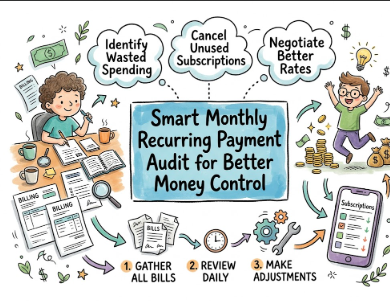
How to Audit Your Monthly Recurring Payments Step by Step
Step 1: Collect All Bank, Card, Wallet, and UPI Statements
The first step is to collect all payment records from every place where money may be deducted. This includes bank accounts, debit cards, credit cards, UPI autopay, mobile wallets, app stores, and payment apps. Many people make the mistake of checking only one account, but recurring payments are often spread across different platforms.
This step matters because you cannot manage what you cannot see. If a subscription is linked to your credit card but you only check your bank statement, you may miss it. Similarly, if a payment is linked to UPI autopay, it may not appear clearly as a normal subscription.
To apply this step, review at least the last three months of statements. If you want a stronger audit, check the last twelve months so you can find annual renewals. Annual payments are easy to miss because they do not appear every month.
For example, you may discover that a cloud storage plan renews once a year, or a learning platform charges annually after a free trial. The common mistake is relying only on SMS alerts or memory. The better approach is to download or open actual statements and review them carefully.
Step 2: Highlight Every Repeated Payment
After collecting payment records, the next step is to highlight every repeated payment. Look for the same merchant name, same amount, similar date, or words like subscription, membership, renewal, EMI, premium, autopay, or mandate.
This step matters because recurring payments can hide inside normal transaction lists. A payment of ₹199 or ₹499 may look small, but if it appears every month, it deserves attention. Small repeated payments are often the biggest source of unnoticed money leakage.
To apply this step, mark payments that happen monthly, quarterly, or annually. Also check payments that are slightly different in amount because some subscriptions include taxes or variable charges.
For example, if the same app deducts money on the 5th of every month, it is clearly a recurring payment. The common mistake is ignoring small amounts because they do not feel important. The better approach is to highlight every repeated payment first and judge its value later.
Step 3: Categorize Payments Into Essential, Useful, and Wasteful
Once you have listed recurring payments, divide them into three categories: essential, useful, and wasteful. Essential payments are necessary for life, safety, work, or financial responsibility. Useful payments provide value but can still be reviewed. Wasteful payments are unused, duplicated, forgotten, or not worth the cost.
This step matters because not all recurring payments are bad. Cancelling an insurance premium or loan EMI without understanding the impact can create serious problems. At the same time, keeping unused apps or duplicate entertainment plans can damage savings.
To apply this step, ask simple questions. Do I need this? Do I use it regularly? Does it support my work, health, learning, family, safety, or business? Is there a cheaper alternative?
For example, broadband may be essential for work. A learning app may be useful if you use it weekly. An unused gym membership may be wasteful. The common mistake is making emotional decisions. The better approach is to classify payments calmly before taking action.
Step 4: Check Usage and Real Value
After categorizing payments, check how much you actually use each service. A payment should not continue only because it was useful in the past or because you may use it someday. It should provide current value.
This step matters because many subscriptions continue due to habit, not usefulness. People often pay for premium features they rarely use. They may also keep tools because cancelling feels like losing something, even when they are not using it.
To apply this step, check app usage, login history, service frequency, business need, and family usage. Ask whether the payment saves time, improves work, supports health, provides necessary access, or gives meaningful value.
For example, if you pay for a fitness app but have not opened it for two months, it may not deserve renewal. The common mistake is keeping services based on future hope. The better approach is to pay for actual use and real value.
Step 5: Identify Duplicate Services
Duplicate services are subscriptions that solve the same problem. Many people have multiple streaming apps, cloud storage plans, productivity tools, finance apps, or business software tools that overlap.
This step matters because duplicate services increase monthly spending without increasing value. A person may use only one service regularly but continue paying for two or three similar services.
To apply this step, compare each service by purpose. Ask whether two tools are doing the same job. If yes, keep the one that gives better value, better features, better reliability, or more frequent usage.
For example, if you use two cloud storage platforms but only one is active for work, the second one may be unnecessary. The common mistake is keeping multiple tools because each has one small extra feature. The better approach is to choose the service that meets most of your needs.
Step 6: Review Auto-Renewal and Cancellation Rules
Auto-renewal means a service continues charging unless you cancel it before the renewal date. This is common with app subscriptions, streaming services, software tools, hosting, cloud storage, and learning platforms.
This step matters because many people forget renewal dates. They may uninstall an app and assume the payment has stopped, but the subscription may still be active in billing settings.
To apply this step, visit the subscription section of the app, app store, payment platform, bank mandate, or UPI autopay settings. Check renewal date, billing amount, plan type, cancellation rules, and refund policy.
For example, a free trial may convert into an annual plan if not cancelled before the trial ends. The common mistake is assuming that deleting an app cancels payment. The better approach is to cancel from the official billing or subscription settings and save confirmation.
Step 7: Create a Monthly Recurring Payment Tracker
A recurring payment tracker is a simple written record of all automatic payments. It can be made in a notebook, spreadsheet, finance app, or budgeting tool. The format does not need to be complicated.
This step matters because memory is unreliable. A tracker helps you remember payment dates, amounts, service names, payment methods, renewal cycles, and cancellation decisions.
To apply this step, include columns such as payment name, amount, due date, payment method, category, usage level, decision, and next review date. This gives you full visibility in one place.
For example, you can set a reminder five days before an annual renewal and decide whether to continue. The common mistake is creating a tracker once and never updating it. The better approach is to review it monthly.
Step 8: Take Action and Review Every Month
The final step is to take action. After reviewing payments, decide whether to continue, cancel, pause, downgrade, negotiate, or replace each service. An audit is useful only when it leads to better decisions.
This step matters because many people identify waste but delay cancellation. By the time they act, another billing cycle may happen. Taking action quickly prevents unnecessary deductions.
To apply this step, cancel unused plans, downgrade premium plans, combine family plans, remove old mandates, update payment methods, and set reminders for future renewals.
For example, you may switch from three individual plans to one family plan or cancel a tool that your business no longer uses. The common mistake is delaying action after deciding. The better approach is to act immediately and review again next month.
Key Factors That Influence Monthly Recurring Payments
Income
Income is the foundation of your monthly budget. A recurring payment that is affordable for one person may be heavy for another. This is why every payment should be judged according to your actual income, not someone else’s lifestyle.
If your income is fixed, you need to be more careful because repeated payments reduce available money every month. If your income is irregular, as in freelancing or small business, recurring payments need even closer review.
Expenses
Recurring payments are only one part of expenses. You also need to consider food, rent, transport, education, healthcare, family needs, and personal spending. When recurring payments are too high, they reduce flexibility in other areas.
A better approach is to review total monthly expenses together. This helps you understand whether subscriptions and auto-payments are creating pressure.
Needs vs Wants
Needs are payments required for basic life, safety, work, and responsibility. Wants are payments that improve comfort, convenience, or entertainment. Both can be part of life, but they should not be confused.
For example, internet may be a need if you work from home. A premium entertainment app may be a want. The better approach is to protect needs first and adjust wants based on budget.
Savings
Recurring payments should not block savings. If your subscriptions are increasing but savings are not improving, your budget needs review. Savings are important for emergencies, goals, and long-term stability.
The better approach is to set a savings target first and then manage optional recurring payments within the remaining budget.
Emergency Fund
An emergency fund protects you from sudden expenses like medical needs, job loss, repairs, or urgent travel. If recurring payments are preventing you from building an emergency fund, you need to reduce non-essential payments.
Emergency money should not be used for entertainment subscriptions, risky investments, trading tools, or unnecessary memberships.
Debt Control
Loan EMIs, credit card bills, and repayment obligations are serious recurring payments. Missing them can create penalties, interest burden, or credit-related problems.
Before starting new subscriptions or taking new loans, check how much income is already committed to debt repayment.
Lifestyle Inflation
Lifestyle inflation happens when your spending rises as your income rises. People often add more apps, premium plans, memberships, and upgrades after earning more.
This can feel harmless at first, but over time it reduces savings. A recurring payment audit helps you control lifestyle inflation before it becomes a habit.
Monthly Review
A monthly review keeps your financial life updated. New payments may be added, old plans may increase in price, annual renewals may come closer, and some services may stop being useful.
Reviewing every month helps you take action early instead of noticing problems after money is already deducted.
Detailed Breakdown of Monthly Recurring Payment Audits
Income Tracking
Income tracking means knowing how much money comes in every month. For salaried people, this may be simple because salary is fixed. For freelancers or business owners, income may change, so tracking becomes even more important.
The mistake many people make is planning expenses based on expected income. This can create problems if income is delayed or lower than expected. A better approach is to plan recurring payments based on confirmed and reliable income.
Expense Categories
Dividing expenses into categories helps you see where your money is going. Fixed expenses include rent and EMIs. Variable expenses include groceries and travel. Recurring payments include subscriptions, memberships, premiums, and bills.
This categorization matters because each type of expense needs a different strategy. You may not be able to reduce rent quickly, but you can cancel an unused subscription immediately.
Needs vs Wants Review
A needs vs wants review helps you separate essential payments from optional spending. This does not mean wants are bad. Entertainment, comfort, learning, and convenience also matter. But wants should be controlled.
The better approach is to keep wants that give real value and remove wants that are unused, duplicated, or only kept because of habit.
Emergency Fund Connection
Your recurring payments should not weaken your emergency fund. An emergency fund gives confidence and protects you from borrowing during sudden problems.
If you are unable to save emergency money, review optional recurring payments first. Small changes can help you redirect money toward safety.
Saving Habits
Good saving habits are not built by waiting for money to remain at the end of the month. They are built by planning savings first. Recurring payment audits support this habit by removing wasteful spending.
When unnecessary deductions are reduced, you can move that money toward savings, debt repayment, or important goals.
Debt Control
Debt-related recurring payments should always be handled carefully. EMIs, credit card dues, and repayment plans are not like optional subscriptions. They carry financial responsibility.
Before adding new recurring payments, check whether your debt payments are already taking too much of your income. If yes, avoid adding more pressure.
Monthly Review Habit
A recurring payment audit should not be a one-time activity. Your subscriptions and financial needs change over time. A monthly review helps you stay updated.
During the review, check new subscriptions, cancelled payments, upcoming renewals, increased charges, and inactive services.
Goal-Based Planning
Every recurring payment should be compared with your financial goals. If your goal is to save for education, business, travel, emergency fund, or debt repayment, your monthly payments should support that goal.
If a payment does not support your present life or future goals, it may need to be cancelled or paused.
Lifestyle Inflation Control
As income grows, it is natural to improve lifestyle. But if every income increase leads to more recurring payments, financial progress may remain slow.
A better approach is to increase savings and investments first, then upgrade lifestyle carefully.
Small Spending Leaks
Small spending leaks are tiny payments that continue unnoticed. These may include app subscriptions, premium features, paid tools, newsletters, memberships, and auto-renewals.
Each payment may look small, but together they create a meaningful monthly burden. A recurring payment audit helps you close these leaks.
Financial Discipline
Financial discipline means making money decisions with awareness, not impulse. A recurring payment audit builds discipline because it forces you to check whether each payment has value.
Over time, this habit improves budgeting, saving, planning, and confidence.
Common Mistakes Beginners Make With Monthly Recurring Payments
Following Random Advice
Many beginners subscribe to apps, paid communities, finance tools, learning platforms, or premium services because someone recommended them online. The recommendation may not be wrong, but it may not match your need.
This is risky because your income, goals, experience, and budget are different. A better approach is to ask whether the service solves your real problem before paying.
Ignoring Risk
Auto-payments can continue even when your financial situation changes. If income drops or expenses increase, old recurring payments can create pressure.
The safer approach is to review active payments regularly and adjust them based on current financial condition.
Not Comparing Options
Many people continue old plans without checking alternatives. Sometimes a lower plan, family plan, annual plan, or different provider may offer better value.
The better approach is to compare based on usage, price, features, support, and cancellation flexibility.
Trusting Fake Profit Claims
Some paid finance, trading, or crypto services may use claims that sound too attractive. Beginners should be careful with subscriptions that promise easy income, fixed profit, or risk-free success.
The better approach is to avoid guaranteed-return claims and focus on education, risk awareness, and verified information.
Ignoring Hidden Charges
Some services add taxes, service fees, renewal charges, late fees, add-on charges, or premium upgrades. The displayed price may not always be the final amount.
Always check the complete billing amount before subscribing and during every review.
Making Emotional Decisions
Emotional spending often happens during discounts, festivals, stress, boredom, or social pressure. A person may subscribe quickly and then forget to use the service.
The better approach is to pause before subscribing and check whether the service is genuinely needed.
Using Emergency Money for Risky Activities
Emergency money should be protected. It should not be used for risky trading, crypto speculation, casino-related spending, or non-essential subscriptions.
A safer approach is to keep emergency funds separate and never link them to optional payments.
Not Reading Terms and Conditions
Terms and conditions explain renewal, cancellation, refund, billing cycle, and service rules. Ignoring them can lead to unexpected deductions.
Before subscribing, always check how to cancel and whether the plan renews automatically.
Sharing Sensitive Personal or Financial Information
Entering card or bank details on unknown platforms can create data privacy and fraud risks. Beginners should be careful while saving cards online.
The better approach is to use trusted platforms, review saved payment methods, and remove cards from unused services.
Ignoring Tax, Legal, or Compliance Responsibilities
Small business owners and freelancers may need proper records for recurring business expenses. Ignoring invoices and documentation can create problems during accounting or tax review.
A better approach is to keep payment receipts and consult qualified professionals where required.
Depending Only on Social Media Advice
Social media content may be useful, but it should not be the only basis for financial decisions. Many recommendations are general or promotional.
The better approach is to verify information and apply it according to your own situation.
Acting in Panic, Greed, or Pressure
Panic may make you cancel important payments. Greed may make you subscribe to risky schemes. Pressure may make you pay for services you do not need.
The better approach is to decide calmly after reviewing facts.
Don’t Do This Checklist
- Do not ignore small recurring payments because they can become a large monthly burden when combined.
- Do not keep unused subscriptions just because you may use them someday.
- Do not subscribe only because of discounts, urgency, or influencer promotion.
- Do not forget annual renewals because they can create sudden deductions.
- Do not cancel essential insurance, EMI, or utility payments without understanding the impact.
- Do not save card details on unknown or low-trust platforms.
- Do not use emergency funds for risky or optional recurring payments.
- Do not depend only on memory; always keep a written tracker.
- Do not delay cancellation after deciding a service is not useful.
- Do not ignore business records if the payment is related to work or tax documentation.
Practical Real-Life Examples of Monthly Recurring Payment Audits
Example 1: Salaried Person Managing Month-End Expenses
A salaried employee was earning a stable income but still faced money pressure near the end of every month. After checking bank and credit card statements, they found multiple streaming services, a music app, and an unused gym membership. The better action was to keep only the services used regularly and cancel the rest. The learning is that a stable salary does not guarantee savings if recurring payments are not tracked.
Example 2: Student Avoiding Free Trial Deductions
A student signed up for free trials of learning apps, note-taking tools, and entertainment platforms. Because they forgot cancellation dates, some trials converted into paid subscriptions. The better action was to set reminders before every trial ended and use a separate tracker. The learning is that free trials are only useful when they are monitored carefully.
Example 3: Small Business Owner Reducing Software Waste
A small business owner used different tools for invoicing, design, storage, communication, and marketing. During a review, they realized some tools had overlapping features and were not used regularly. The better action was to keep essential tools, downgrade some plans, and cancel duplicates. The learning is that business subscriptions should be judged by actual business value.
Example 4: Loan Seeker Checking Repayment Capacity
A loan seeker wanted to apply for a personal loan but first reviewed monthly recurring payments. They found existing EMIs, insurance premiums, subscriptions, and credit card auto-payments. The better action was to reduce non-essential payments before adding a new EMI. The learning is that recurring payments directly affect borrowing comfort and repayment capacity.
Example 5: Crypto Beginner Avoiding Paid Hype Tools
A crypto beginner subscribed to paid signal groups, market tools, and premium analysis services without understanding risk. These payments created pressure and encouraged emotional decisions. The better action was to cancel unnecessary tools and focus on learning basics, wallet safety, and risk awareness. The learning is that paid tools cannot replace financial understanding.
Two Useful Tables for Better Understanding
Table 1: Recurring Payment Categories and Better Action
| Payment Type | Common Example | Risk If Ignored | Better Action |
|---|---|---|---|
| Essential Bills | Mobile, internet, electricity | Service disruption and late charges | Track due dates and keep funds ready |
| Financial Obligations | EMI, insurance premium | Penalties, policy issues, or credit pressure | Prioritize and review affordability |
| Entertainment | Streaming, music apps | Wasteful spending if unused | Keep only regularly used plans |
| Productivity Tools | Cloud storage, software | Duplicate or unnecessary expenses | Compare usage and remove overlap |
| Free Trial Renewals | Apps, learning tools | Unexpected deduction after trial | Set cancellation reminders |
| Business Subscriptions | CRM, accounting tools | Higher business operating cost | Review monthly business value |
Table 2: Beginner Mistake vs Correct Approach
| Beginner Mistake | Why It Happens | Correct Approach |
|---|---|---|
| Forgetting subscriptions | No written tracker is maintained | Maintain a recurring payment list |
| Ignoring small charges | Amount looks too small to matter | Add all small payments together |
| Keeping unused plans | Hope of future use | Cancel or pause until needed |
| Not checking annual renewals | Payment happens rarely | Review 12-month payment history |
| Using many payment methods | Convenience during signup | Track all card, UPI, and wallet mandates |
| Cancelling important payments | Panic-based saving decision | Separate essential and non-essential payments |
Tools, Methods, and Frameworks Readers Can Use
Budget Tracker
A budget tracker helps you record income, expenses, savings, and recurring payments in one place. Beginners can use a simple notebook, spreadsheet, or budgeting app. The main purpose is not to create a complicated system but to make money visible. This helps avoid the mistake of guessing where money is going.
Recurring Payment Sheet
A recurring payment sheet is a dedicated list of all automatic payments. It should include the payment name, amount, date, payment method, category, usage, and next review date. This method is useful because it gives you one clear view of all repeated deductions. It helps prevent forgotten renewals and duplicate subscriptions.
Monthly Money Review System
A monthly money review system means choosing one fixed day every month to review your finances. On this day, check subscriptions, bills, EMIs, card payments, and upcoming renewals. This habit keeps you updated and prevents small problems from growing. It also helps you make calm decisions before deductions happen.
Subscription Cancellation Reminder
A cancellation reminder is useful for free trials, annual renewals, and temporary subscriptions. You can set reminders in your calendar a few days before renewal. This prevents unexpected deductions and gives you time to decide whether the service is still useful. It is especially helpful for students and digital service users.
Expense Sheet
An expense sheet helps you understand your spending pattern. It shows how much money goes toward needs, wants, subscriptions, debt, and savings. This method helps beginners identify spending leaks and improve monthly budgeting. It also makes financial discussions easier for families and small business owners.
Goal Planner
A goal planner connects your money decisions with financial goals. For example, if your goal is building an emergency fund, every unused subscription you cancel can support that goal. This makes saving more meaningful because you can see what your money is working toward. It helps avoid random spending.
Risk Checklist
A risk checklist helps you review safety before starting any recurring payment. It includes questions about affordability, cancellation terms, platform trust, data privacy, and real need. This prevents emotional subscriptions and protects your money. It is useful for finance apps, trading tools, crypto platforms, and unknown websites.
Card Mandate Review
Card mandate review means checking which services are allowed to charge your debit or credit card. Many people save card details on multiple platforms and forget about them. Reviewing mandates helps remove old permissions and reduce unwanted billing risk. This is also useful for protecting personal financial data.
Business Expense Review
Small business owners should review recurring business expenses like hosting, software, design tools, accounting tools, email services, and CRM platforms. These payments should be judged by business value, not habit. If a tool is not used or does not support revenue, operations, or productivity, it should be reviewed. Proper invoices should also be maintained.
Expert Tips to Make Better Decisions
1. Review Payments Before Salary Day
Reviewing payments before salary day helps you understand upcoming deductions before new income arrives. This prevents overconfidence and gives you a realistic picture of the next month. You can apply this by checking all due payments, EMIs, subscriptions, and renewals a few days before salary. This habit helps you plan savings better.
2. Track Small Payments Seriously
Small payments are easy to ignore, but they can create a meaningful total when repeated every month. A ₹99, ₹199, or ₹499 subscription may look harmless alone, but several such payments can reduce savings. Add every small payment to your tracker. This helps you understand the real cost of convenience.
3. Separate Essential and Non-Essential Payments
Essential payments should be protected, while non-essential payments should be reviewed. This matters because panic-based cost cutting can lead to wrong decisions. For example, cancelling insurance without understanding consequences may be risky. Apply this by marking every payment as essential, useful, or optional.
4. Avoid Subscribing During Emotional Moments
Many subscriptions happen because of stress, boredom, discounts, or social pressure. Emotional decisions often lead to unused payments. Before subscribing, wait for some time and ask whether you will use the service regularly. This small pause can prevent unnecessary monthly deductions.
5. Check Annual Renewals Carefully
Annual renewals are dangerous because they are easy to forget. A service may charge once a year, but the amount may be much higher than a monthly plan. Review your last twelve months of statements to find annual deductions. Set reminders before renewal dates so you can decide in time.
6. Use Fewer Payment Methods for Subscriptions
Using too many payment methods makes tracking difficult. If some subscriptions are on debit card, some on credit card, some on UPI, and some on wallets, you may miss payments. Where possible, organize recurring payments through limited and trackable methods. This improves visibility and control.
7. Cancel Immediately After Deciding
Once you decide a service is not useful, cancel it immediately. Delaying cancellation often leads to another billing cycle. Many people say they will cancel later but forget. A better habit is to take action during the audit itself and save the cancellation confirmation.
8. Keep Emergency Money Separate
Emergency money should not be mixed with optional spending. If your emergency fund is linked to subscriptions or risky activities, it may not be available when needed. Keep emergency money in a separate account or clearly protected category. This gives financial safety during unexpected situations.
9. Read Billing Terms Carefully
Billing terms explain renewal dates, cancellation rules, refund policies, and plan changes. Ignoring these terms can lead to surprise charges. Before starting a subscription, check whether it renews automatically and how cancellation works. This is especially important for free trials and annual plans.
10. Review Family Plans
Family plans can sometimes reduce duplicate payments, especially for entertainment, cloud storage, and learning services. Instead of multiple individual subscriptions, one shared plan may be more practical. However, check whether the plan is actually useful for all members. Do not upgrade only because it looks cheaper per person.
11. Avoid Duplicate Tools
Duplicate tools increase spending without adding equal value. For example, two storage platforms, two note-taking apps, or multiple paid finance apps may not be necessary. Compare features and usage before keeping them. Choose the tool that solves most of your needs.
12. Protect Personal Data
Recurring payments often require card, bank, email, or personal information. Saving these details on unknown platforms can create privacy and fraud risks. Use trusted platforms and remove saved cards from unused accounts. This protects both your money and your identity.
13. Keep Records for Business Payments
If a recurring payment is related to business, maintain proper records. Save invoices, receipts, payment confirmations, and plan details. This helps with accounting, expense review, and professional tax discussion. Poor record keeping can create confusion later.
14. Do Not Chase Every New App
New apps and tools often look attractive, especially when promoted online. But every new paid app becomes another recurring commitment. Before subscribing, check whether your existing tools already solve the problem. This prevents digital clutter and unnecessary spending.
15. Review Your Audit Monthly
A one-time audit is helpful, but monthly review creates lasting discipline. Your financial needs, subscriptions, income, and goals can change. Reviewing every month helps you stay in control. It also makes future audits faster and easier.
Case Studies: How Better Understanding Changes Decisions
Case Study 1: The Salaried Employee With Hidden Subscriptions
Profile: A salaried employee living in a city with fixed monthly income.
Situation: The person was earning regularly but could not understand why monthly savings were low. Bank balance reduced quickly after salary, even though there were no major purchases.
Problem: After reviewing statements, the person found several active subscriptions, including streaming apps, a music app, an unused gym membership, and a cloud storage plan.
Wrong approach: Earlier, the person blamed food and travel expenses without checking automatic deductions. This created confusion because the real issue was hidden in repeated small payments.
Better approach: The person created a recurring payment tracker, cancelled unused services, kept only frequently used subscriptions, and set reminders for annual renewals.
Result or learning: The person gained better control over monthly expenses and improved money awareness. The biggest learning was that hidden subscriptions can reduce savings silently.
Key takeaway: Even stable income needs proper tracking because recurring payments can quietly weaken monthly savings.
Case Study 2: The Freelancer With Business Tool Overlap
Profile: A freelancer who used digital tools for design, communication, storage, invoicing, and client work.
Situation: Income was good in some months and low in others, but software subscriptions continued every month. This created pressure during low-income periods.
Problem: The freelancer had subscribed to multiple tools with overlapping features. Some tools were used rarely, but payments continued automatically.
Wrong approach: The freelancer kept every tool active because of fear that it might be needed someday. This increased fixed monthly cost without clear business value.
Better approach: The freelancer reviewed actual usage, cancelled duplicate tools, downgraded some plans, and kept records for important business subscriptions.
Result or learning: Monthly business expenses became more manageable, and cash flow pressure reduced during slow months.
Key takeaway: Business subscriptions should be reviewed based on actual value, not fear or habit.
Case Study 3: The Beginner Investor With Paid Market Tools
Profile: A beginner interested in investing and trading.
Situation: The person subscribed to paid market apps, signal groups, and analysis tools after seeing online recommendations.
Problem: These recurring payments created financial pressure and encouraged emotional decisions. The person believed that more paid tools would automatically lead to better results.
Wrong approach: Instead of learning basics, risk management, and research methods, the person depended heavily on paid tips and tools.
Better approach: The person cancelled unnecessary subscriptions, focused on education, kept emergency money separate, and used only basic tools that were actually understood.
Result or learning: The person became more cautious and realized that tools cannot replace knowledge, discipline, and risk awareness.
Key takeaway: Paid finance tools should be used carefully, especially by beginners who are still learning.
Risk Awareness: What Readers Must Check First
Financial Leakage Risk
Financial leakage means small amounts of money leaving your account without giving real value. This risk matters because it slowly reduces savings and weakens monthly budgeting. You can reduce this risk by reviewing every recurring payment and cancelling services that are unused or duplicated.
Credit Card Debt Risk
If recurring payments are linked to a credit card, they can increase your monthly bill without immediate notice. If the full bill is not paid on time, it may create interest burden. Reduce this risk by checking credit card statements regularly and removing unnecessary auto-payments.
Over-Borrowing Risk
Recurring payments reduce your available income. If you take new loans without checking existing obligations, repayment can become difficult. Reduce this risk by reviewing EMIs, subscriptions, insurance premiums, and other fixed payments before borrowing.
Fraud Risk
Unknown apps or websites may misuse payment details or continue billing without clear communication. This risk matters because it can lead to unauthorized deductions or data misuse. Reduce the risk by using trusted platforms and checking saved payment methods regularly.
Data Privacy Risk
Many subscriptions require personal information, card details, email addresses, or billing addresses. If you leave this information on unused platforms, privacy risk increases. Reduce this risk by deleting old accounts, removing saved cards, and avoiding suspicious platforms.
Emotional Risk
People often subscribe because of urgency, fear, greed, boredom, or social pressure. Emotional spending creates recurring payments that may not match real needs. Reduce this risk by waiting before subscribing and reviewing whether the service fits your budget.
Tax and Compliance Risk
For freelancers and small business owners, recurring business payments may need proper records. Missing invoices or unclear payment purpose can create accounting confusion. Reduce this risk by saving receipts and consulting a qualified tax professional where needed.
Misinformation Risk
Online advice may not be suitable for your financial situation. This is especially important for finance apps, trading tools, crypto services, and paid communities. Reduce this risk by verifying information and avoiding decisions based only on social media.
Platform Risk
Apps and services may change prices, features, terms, or billing rules. If you do not review them, you may continue paying more than expected. Reduce this risk by reading billing emails and checking account settings regularly.
Checklist Before Taking Action
Before cancelling, continuing, or starting any recurring payment, check the following points carefully:
- I clearly understand what the payment is for and why it exists.
- I know the exact amount, billing date, and renewal cycle.
- I know whether the payment is linked to bank, card, wallet, or UPI autopay.
- I have checked whether the payment is essential, useful, optional, or wasteful.
- I have reviewed whether I actually use the service regularly.
- I have checked if another service already provides the same benefit.
- I have reviewed cancellation rules, refund policy, and auto-renewal terms.
- I have checked whether this payment affects my savings goal.
- I have checked whether this payment affects loan repayment or EMI comfort.
- I have avoided fake profit claims, guaranteed returns, or misleading promises.
- I have kept emergency money separate from optional payments.
- I have protected personal and financial data.
- I have reviewed tax or business documentation needs, if relevant.
- I have written down my decision instead of relying on memory.
- I have avoided panic, pressure, greed, or emotional decision-making.
- I have considered professional advice where the decision is financial, tax, legal, or investment-related.
This checklist should be used before starting any new subscription and during every monthly payment review. It helps you avoid rushed decisions and gives you a clear process. Instead of asking only “Can I afford this today?”, ask “Does this payment deserve to continue every month?”
Strategic Insights for Better Decision-Making
Lifestyle Inflation
Lifestyle inflation happens when income increases and spending automatically increases with it. People may upgrade plans, add premium services, and subscribe to more tools because they feel they can afford them. The problem is that savings may not grow even when income grows. A better approach is to increase savings first and upgrade lifestyle slowly.
Spending Triggers
A spending trigger is a situation that pushes you to spend. It may be boredom, stress, discounts, peer pressure, social media, or fear of missing out. Understanding triggers helps you avoid unnecessary recurring payments. Before subscribing, ask whether the need is real or emotional.
Saving Automation
Saving automation means setting aside money for savings before spending begins. This helps because savings are protected before optional payments happen. Once savings are separated, you can manage subscriptions from the remaining budget. This creates discipline without depending only on willpower.
Emergency Fund Planning
An emergency fund should be treated as a financial safety tool. If recurring payments prevent you from building it, your budget needs adjustment. A practical approach is to cancel low-value subscriptions and redirect that money toward emergency savings. This gives long-term security.
Goal-Based Budgeting
Goal-based budgeting connects spending with purpose. If your goal is education, business growth, travel, debt repayment, or emergency savings, every recurring payment should be checked against that goal. This makes financial decisions easier because you can see which payments support progress and which slow it down.
Habit-Based Money Management
Strong personal finance is built through repeated habits. A monthly recurring payment audit is one such habit. When repeated consistently, it improves awareness, reduces waste, and builds confidence. The goal is not perfection but regular improvement.
Payment Method Discipline
Using too many payment methods creates confusion. If you subscribe through different cards, wallets, banks, and apps, tracking becomes difficult. A disciplined payment method system helps you monitor deductions easily. It also reduces the chance of missing unwanted renewals.
Quarterly Deep Review
A monthly review is useful, but a deeper review every few months is even better. During this review, check annual plans, unused accounts, business tools, app renewals, and price changes. This deeper review catches payments that monthly checks may miss.
Key Terms Explained for Beginners
- Recurring Payment: A recurring payment is a payment that repeats automatically or regularly. It may be monthly, quarterly, or annually. Examples include subscriptions, EMIs, memberships, insurance premiums, and utility bills.
- Subscription: A subscription is a paid service that continues until you cancel it. It is common for apps, streaming platforms, cloud storage, learning tools, and software. Subscriptions should be reviewed regularly to ensure they are still useful.
- Auto-Renewal: Auto-renewal means a service renews automatically after the billing period ends. This is convenient but risky if you forget the renewal date. Always check whether a service renews monthly or annually.
- UPI Autopay: UPI autopay allows automatic recurring payments through UPI after approval. It is useful for regular payments but should be reviewed often. Old autopay permissions should be removed if they are no longer needed.
- Mandate: A mandate is permission given to a bank or payment system to deduct money automatically. It is often used for EMIs, insurance, SIPs, and subscriptions. Reviewing mandates helps prevent unwanted deductions.
- EMI: EMI means Equated Monthly Instalment. It is a fixed payment made every month toward a loan. EMIs should be prioritized because missing them may create financial problems.
- Budget: A budget is a plan for how income will be used. It includes expenses, savings, debt payments, and goals. A good budget includes recurring payments clearly.
- Expense Tracking: Expense tracking means recording where your money goes. It helps you understand spending habits and find unnecessary payments. It is one of the most useful habits for beginners.
- Emergency Fund: An emergency fund is money kept aside for unexpected needs. It should not be used for subscriptions or risky spending. It protects you during difficult situations.
- Lifestyle Inflation: Lifestyle inflation happens when spending rises as income rises. It can reduce savings even when income improves. Recurring payments often contribute to lifestyle inflation.
- Cash Flow: Cash flow means money coming in and going out. If recurring payments are too high, your cash flow becomes tight. Good cash flow management helps reduce stress.
- Credit Card Statement: A credit card statement shows purchases, charges, payments, and dues. Reviewing it helps find recurring charges linked to the card. It also helps avoid unnecessary debt.
- Cancellation Policy: A cancellation policy explains how a subscription can be stopped. Some services require cancellation before a specific date. Reading it helps avoid unwanted renewal.
- Hidden Charges: Hidden charges are extra costs that may not be clear at first. They may include taxes, fees, add-ons, or renewal charges. Always check the final billing amount.
- Financial Discipline: Financial discipline means making money decisions carefully and consistently. It helps you avoid impulse spending and build long-term stability.
Who Should Read This Blog
Beginners
Beginners should read this blog because it explains recurring payments in simple language. It helps them understand how automatic deductions work and why tracking is important. This is a strong first step toward better money awareness.
Students
Students often use free trials, learning apps, entertainment platforms, and productivity tools. Without reminders, these can turn into paid subscriptions. This blog helps students avoid unwanted deductions and build good money habits early.
Salaried Employees
Salaried employees usually work with fixed monthly income. A recurring payment audit helps them manage salary better, improve savings, and reduce month-end pressure. It also helps them balance lifestyle spending with financial goals.
Small Business Owners
Small business owners often pay for software, tools, hosting, communication platforms, and digital services. These payments can increase business costs if not reviewed. This blog helps them identify useful tools and remove wasteful spending.
New Investors
New investors need to know how much surplus money they actually have. Recurring payments can reduce available money for investing. This guide helps them build financial discipline before making investment decisions.
Traders
Traders may subscribe to paid tools, signals, platforms, and data services. These payments should be reviewed carefully because trading already involves risk. This blog helps traders avoid unnecessary financial pressure.
Loan Seekers
Loan seekers should understand existing monthly obligations before applying for new debt. Recurring payments affect repayment capacity. This blog helps them review commitments before taking financial responsibility.
Crypto Learners
Crypto learners may be attracted to paid groups, tools, and platforms. Since crypto is risky and volatile, recurring payments in this area should be handled carefully. This blog encourages safety and learning before spending.
Finance Bloggers
Finance bloggers can use this topic to educate readers about practical money management. Recurring payment audits are relatable and useful for a wide audience. The topic also supports personal finance awareness.
People Improving Money Awareness
Anyone who wants to control spending, reduce waste, and save better should read this blog. It provides a simple system that can be applied every month.
Frequently Asked Questions
1. What is How to Audit Your Monthly Recurring Payments?
How to Audit Your Monthly Recurring Payments means reviewing all automatic and repeated payments linked to your bank, card, wallet, UPI, or app accounts. The purpose is to identify necessary payments, unused subscriptions, duplicate services, and avoidable deductions. It helps you understand where your money goes every month.
2. Why is a recurring payment audit important for beginners?
Beginners often focus on big expenses and ignore small automatic payments. These small payments can quietly reduce savings when they continue every month. A recurring payment audit gives clarity and helps beginners build better budgeting habits.
3. How can beginners start auditing recurring payments safely?
Beginners can start by checking bank statements, credit card bills, UPI autopay settings, wallet history, and app subscriptions. They should list every repeated payment and divide them into essential, useful, and wasteful categories. This simple process gives a clear starting point.
4. What is the biggest mistake to avoid?
The biggest mistake is ignoring small charges because they look harmless. A few small payments may not matter, but many small subscriptions together can reduce monthly savings. The better approach is to track every repeated payment, no matter how small.
5. Is this useful for salaried people?
Yes, this is very useful for salaried people because they usually manage money with fixed monthly income. Recurring payments can reduce salary quickly if they are not tracked. Auditing helps salaried people plan bills, savings, EMIs, and lifestyle expenses better.
6. What risks should I know before cancelling payments?
Before cancelling payments, check whether the payment is essential or optional. Do not cancel insurance, EMI, utility bills, or important business tools without understanding the impact. The better approach is to remove unused or low-value payments first.
7. How often should I review recurring payments?
A monthly review is best for most people because subscriptions and bills often run monthly. You should also do a deeper review every few months to check annual renewals, price changes, and unused accounts. Regular review prevents surprises.
8. Can How to Audit Your Monthly Recurring Payments improve savings?
Yes, How to Audit Your Monthly Recurring Payments can improve savings by identifying unnecessary spending. However, the benefit depends on what action you take after the audit. If you cancel unused services and control future subscriptions, savings can improve gradually.
9. Should small business owners audit recurring payments?
Yes, small business owners should audit recurring payments because software and digital tools can become expensive over time. Reviewing these payments helps reduce business costs and improve cash flow. It also supports better record keeping.
10. What should I avoid before starting a new subscription?
Avoid subscribing only because of discounts, social media promotion, or urgency. First check whether you truly need the service, whether it fits your budget, and whether cancellation is easy. This prevents emotional recurring spending.
11. Do I need professional advice for recurring payment audits?
For simple personal subscriptions, professional advice may not be necessary. But for loans, tax, investments, business expenses, legal issues, or insurance decisions, it is better to consult a qualified professional. This helps avoid serious mistakes.
12. What is the best next step after reading this blog?
The best next step is to review your last three months of bank, card, UPI, and wallet transactions. Create a recurring payment tracker and list every repeated payment. Then decide what to keep, cancel, downgrade, or review later.
Conclusion and Next Steps
Learning How to Audit Your Monthly Recurring Payments is one of the most practical ways to improve personal finance management. Many people believe that saving money requires big sacrifices, but often the first improvement comes from finding small payments that no longer provide value.
Recurring payments are not always negative. Some payments are important and should be protected. Mobile bills, internet, insurance premiums, EMIs, business tools, and essential services may support your daily life, work, safety, and responsibilities. The real issue is not the existence of recurring payments, but the lack of review.
A proper recurring payment audit helps you understand your true monthly commitments. It shows which payments are essential, which are useful, which are optional, and which are wasteful. This clarity helps you make better decisions without panic or confusion.
Beginners should remember that financial awareness starts with visibility. If you do not know where your money is going, it is difficult to control spending or build savings. A recurring payment tracker gives you that visibility in a simple format.
The next step is practical. Review your bank statements, credit card bills, wallet history, UPI autopay permissions, app store subscriptions, and business software payments. List every repeated payment. Check usage. Identify duplicates. Read cancellation rules. Remove unused services. Set reminders for renewals.
You should also protect emergency funds and avoid using essential money for risky or unnecessary recurring payments. Be careful with paid finance tools, trading services, crypto platforms, and any service that promises guaranteed income or easy profit. Always verify before paying.
For small business owners and freelancers, recurring payment audits are equally important. Business tools should be reviewed based on actual use and value. Proper invoices and records should also be maintained for accounting and tax discussions.
Good money management is not about being extremely strict. It is about being aware, practical, and intentional. You do not need to cancel everything. You only need to make sure that every recurring payment deserves its place in your budget.
A monthly recurring payment audit is a simple habit, but it can create long-term benefits. It improves clarity, reduces waste, supports savings, and builds financial confidence. When your payments are under control, your money decisions become stronger and more peaceful.