Introduction
Finding suitable places to share your work often feels frustrating when you are forced to sift through broken links, outdated listicles, and unmoderated spam boards. Rather than blindly broadcasting articles across random channels and risking content rejection or poor engagement, successful distribution relies on finding well-maintained platforms that match your specific niche and target audience. Tools like FreePostFinder simplify this research process by organizing active publishing options into searchable categories with transparent community rules, allowing you to quickly evaluate channels and publish your work where it will deliver genuine value.
What Are Free Posting Sites?
Free posting sites are online channels, platforms, and directories that allow individuals, businesses, and creators to publish, share, or host content without paying an upfront submission fee. These platforms range from long-form article archives and open community blogs to specialized discussion forums, local business directories, and video-hosting networks.
People use these platforms for several core reasons:
- Audience Reach: Tapping into an existing reader base without building a website from scratch.
- Content Testing: Seeing how a niche topic or narrative performs with a live community.
- Brand Visibility: Establishing a presence across diverse online touchpoints.
- Knowledge Sharing: Helping peers solve technical or professional problems.
Publishing on a third-party site differs significantly from owning a personal website. When you own a domain, you maintain total control over design, distribution, and content lifespan, but you are entirely responsible for driving your own traffic. Third-party platforms offer built-in distribution mechanisms, but they operate under strict community guidelines, third-party moderation, and shifting platform policies.
It is vital to understand that “free” does not automatically mean “useful.” A free site filled with low-quality, automated spam offers zero value to your readers and can reflect poorly on your brand. The true value of a platform lies in its moderation standards, audience relevance, and overall content quality.
Why Finding the Right Publishing Platform Matters
Publishing content in the wrong location is one of the most common reasons good writing fails to gain traction. Matching your content to the appropriate environment ensures your work reaches people who genuinely care about the topic.
When evaluating a prospective platform, keep these factors in mind:
- Audience Relevance: A deep-dive article on database optimization will fail on a general lifestyle blog, but it could spark active discussion on a developer forum or technical publishing hub.
- Content Format: Certain topics demand visual step-by-step guides, while others require long-form text, short summaries, or structured Q&A formats.
- Publishing Rules and Moderation: Platforms with transparent guidelines and active moderation protect your content from being buried alongside low-quality submissions.
- Registration and Verification: Understanding whether a site requires email confirmation, manual account approval, or identity checks prevents wasted effort.
- Platform Reputation and Lifespan: Stable, well-maintained platforms ensure your content remains accessible over time, rather than disappearing when an unmoderated site goes offline.
What Is FreePostFinder?
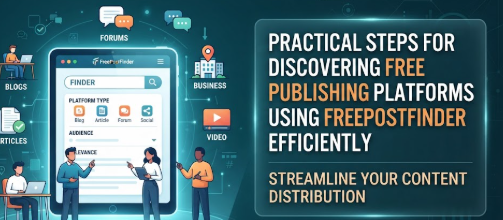
FreePostFinder is an organized directory and research tool designed to simplify how creators discover and evaluate publishing opportunities. Instead of forcing users to rely on static, unverified blog lists, the platform provides a structured environment where you can search, filter, and review prospective publishing sites based on clear criteria.
The platform was built to solve a simple problem: the hours wasted on manual discovery, broken links, and hidden submission rules. By organizing platforms into clear content categories and highlighting crucial operational details—such as registration steps, moderation policies, and supported content types—it gives users a clear overview of their publishing options before they draft a single word.
Rather than acting as an automated posting tool or mass-submission engine, FreePostFinder acts as an informational catalog. It helps you make informed choices about where your content belongs, ensuring you maintain high standards of quality and relevance across all distribution channels.
Types of Free Publishing Platforms You Can Discover
Understanding the main categories of free public posting platforms helps you tailor your content format to the correct distribution channel.
Free Article Posting Sites
These platforms cater to structured, educational, or opinion-based pieces. They are ideal for in-depth guides, industry analyses, original tutorials, and long-form essays. Viewers visit article sites specifically to read comprehensive content, making clear structuring and actionable advice essential.
Free Blog Posting Sites
Blog platforms focus on storytelling, personal insights, professional updates, and ongoing content series. They allow writers to build a consistent voice over time. They are particularly effective for creators who want to share practical experiences, case studies, or niche industry commentary on a regular schedule.
Free Business Listing Sites
Business listing platforms allow companies, startups, and service providers to create structured profiles containing basic business information, locations, service offerings, and official contact details. For local and growing businesses, maintaining accurate, consistent details across these directories helps consumers verify legitimacy and find official communication channels.
Free Forum Posting Sites
Forums and discussion boards thrive on community interaction, technical Q&As, and peer-to-peer knowledge sharing. Success on a forum requires genuine participation. Treating a discussion board as a promotional dump leads to account suspensions and post removals. Responsible forum posting involves answering questions, contributing to ongoing threads, and starting meaningful conversations.
Free Video Posting Sites
Platforms that host visual content suit short tutorials, software walkthroughs, visual presentations, and live event summaries. Video platforms complement written text by offering visual learners a direct, highly engaging way to consume complex information.
Other Free Content Publishing Platforms
Beyond traditional articles and videos, the publishing landscape includes specialized destinations such as:
- Digital story platforms and literary archives
- Independent newsletter networks
- Image and visual infographic repositories
- Professional slide and document sharing hubs
- Public event calendars and community boards
- Code snippet directories and repository platforms
How to Choose the Right Free Posting Site
Choosing where to publish should be a deliberate, step-by-step evaluation process rather than a quick guess.
- Check Content Type Compatibility: Verify that the platform natively supports your layout, formatting, images, or media embeds.
- Assess Audience Intent: Ask whether the users on this platform are actively seeking the information you plan to share.
- Review Publishing Rules: Carefully read the site’s terms of service. Pay attention to guidelines regarding promotional language, disclosure requirements, and author bios.
- Evaluate Registration Needs: Determine if the site requires basic account creation, domain-level verification, or manual editorial review before publishing.
- Observe Moderation Activity: Check if recent posts are manually reviewed and high quality, or if the platform shows signs of unmoderated spam.
- Gauge Overall Site Health: Look at site usability, layout cleanlines, and mobile responsiveness. Avoid platforms cluttered with invasive pop-ups or deceptive ads.
- Ensure Community Value: Make sure your contribution genuinely helps, educates, or entertains the platform’s active users.
- Identify Potential Risks: Avoid platforms that engage in questionable network practices, hide user policies, or display broken security certificates.
Step-by-Step Guide to Finding and Utilizing Free Posting Sites
To build a reliable content distribution workflow, follow this structured ten-step process:
Step 1: Define What You Want to Publish
Clearly identify the purpose of your piece. Is it a technical tutorial, a brand update, an opinion essay, or an informational guide?
Step 2: Choose Your Target Audience
Define who benefits most from this information. Are you reaching out to junior developers, small business owners, hobbyists, or industry executives?
Step 3: Select the Appropriate Platform Category
Match your format with the correct channel. Educational text fits free article posting sites, while interactive discussions belong on forums.
Step 4: Search for Relevant Publishing Platforms
Use search criteria or a directory tool to compile a list of active, domain-relevant publishing options.
Step 5: Check Platform Requirements
Review technical criteria such as word count minimums, image dimensions, bio limits, and file format restrictions.
Step 6: Read Publishing and Moderation Rules
Locate the platform’s guidelines page. Pay close attention to rules about original content, self-referential links, and permitted topics.
Step 7: Compare Suitable Platforms
Side-by-side comparisons of two or three prospective sites help you select the one with the strongest community engagement and best policy fit.
Step 8: Prepare Original Content
Draft custom content tailored specifically to the chosen platform’s audience tone and layout preferences. Avoid copy-pasting the exact same article across multiple sites.
Step 9: Publish Responsibly
Format your post clearly, fill in all required author information, select accurate categories, and submit your content following the platform’s guidelines.
Step 10: Monitor and Maintain Your Published Content
Track community responses, answer comments promptly, and periodically update time-sensitive information to keep your post accurate over time.
How FreePostFinder Makes Platform Discovery Easier
Using a dedicated directory like FreePostFinder transforms manual research into an organized, efficient workflow.
When researching potential channels, the platform allows you to search through indexed opportunities using custom filters tailored to your specific project needs. Rather than manually clicking through dozens of unfamiliar homepages to figure out their submission guidelines, you can review structured profile summaries directly.
These summaries highlight critical decision-making details, including:
- Supported content formats (articles, listings, forum threads, media)
- Account creation and identity verification requirements
- Pre-publication moderation standards and community rules
- Category classifications and niche alignment
- Flagged platform risks or known account restrictions
By consolidating these factors into a single searchable interface, you reduce research overhead, eliminate guesswork, and focus your energy on writing valuable, platform-appropriate content.
How to Use FreePostFinder for Different Content Goals
Different creators require vastly different publishing strategies. Here is how various roles can approach platform discovery:
- For Bloggers: Identify secondary article platforms and community blogs where syndicating summaries or publishing original companion pieces helps introduce your writing to new readers.
- For Writers: Locate literary, essay, or opinion-focused networks that value high-quality prose, thoughtful commentary, and long-form analysis.
- For Marketers: Discover websites to post content for free that accept educational guest contributions, allowing you to build brand awareness without spamming irrelevantly.
- For Businesses: Pinpoint authoritative local and regional free business listing sites to keep public contact details, operating hours, and business summaries accurate.
- For Developers: Find active technical communities, code repositories, and Q&A boards where sharing practical code solutions and troubleshooting guides naturally builds professional credibility.
- For Startups: Identify launch boards, product news hubs, and industry-specific blogs to publish educational updates about the problems your product solves.
- For Video Creators: Locate complementary visual and video-hosting platforms to cross-publish video transcripts, tutorials, and short clips.
Real-Life Scenarios
Scenario 1: A New Blogger
- Problem: A writer recently launched a personal blog on productivity techniques but currently lacks steady reader traffic.
- Research Process: Instead of posting link-only promotions across social channels, they look for high-traffic productivity platforms and article networks.
- Suitable Platform Type: Dedicated article platforms and productivity forums accepting long-form submissions.
- Responsible Publishing Approach: They adapt a comprehensive guide into a unique companion article formatted specifically for the chosen host site, inviting interested readers to visit their primary blog for additional resources.
Scenario 2: A Small Business
- Problem: A local home renovation company needs to make sure potential local clients can easily confirm their operating hours and phone number.
- Research Process: The business owners search for verified regional and industry-specific business directories.
- Suitable Platform Type: Business listing platforms and regional trade directories.
- Responsible Publishing Approach: They submit verified company profiles featuring consistent business names, official addresses, accurate phone numbers, and brief descriptions of their services.
Scenario 3: A Technical Writer
- Problem: A developer writes a detailed troubleshooting guide for a niche programming language error but lacks a platform to reach affected peers.
- Research Process: They filter for developer-centric forums and developer article platforms that support code syntax highlighting.
- Suitable Platform Type: Technical developer forums and open tech blogs.
- Responsible Publishing Approach: They post the full code breakdown directly within the forum or technical platform, actively answering community follow-up questions in the comments.
Scenario 4: A Content Marketer
- Problem: A SaaS marketing manager wants to share an educational case study on remote work workflows without appearing overly sales-driven.
- Research Process: They seek out B2B publications and educational blog networks with strict moderation policies.
- Suitable Platform Type: Professional article posting platforms and industry-specific blogs.
- Responsible Publishing Approach: They author a completely objective article focusing entirely on practical workflow frameworks, including only neutral, contextually helpful references.
Scenario 5: A Video Creator
- Problem: An educator creates animated educational videos on basic economics but relies on a single distribution platform.
- Research Process: They search for secondary video-hosting sites and educational visual media hubs.
- Suitable Platform Type: Video posting networks and media-sharing directories.
- Responsible Publishing Approach: They upload their videos along with custom-written descriptions, episode summaries, and full transcriptions tailored to each platform’s layout requirements.
Common Mistakes to Avoid
Even with the best tools, content creators can make strategic mistakes that undermine their publishing efforts.
- Publishing the Same Content Everywhere: Copying and pasting identical text across dozens of sites causes duplicate content issues and often triggers automated spam filters. Alternative: Write unique variations or companion pieces for each platform.
- Ignoring Platform Rules: Submitting promotional copy to a platform that strictly prohibits promotional material results in instant account bans. Alternative: Read every site’s submission policy before drafting your piece.
- Focusing Only on Backlinks: Treating publishing sites merely as link repositories results in poor-quality, unreadable posts that get removed during moderation. Alternative: Focus on providing genuine informational value to the target audience.
- Posting Promotional Content in Forums: Dropping sales messages into technical or discussion communities burns community trust instantly. Alternative: Answer questions thoughtfully and participate in existing threads before starting new topics.
- Automated Mass Submissions: Using software tools to post automatically across hundreds of low-quality platforms risks severe domain blacklisting. Alternative: Hand-select relevant platforms and publish manually.
- Choosing Quantity Over Relevance: Posting on fifty completely unrelated websites yields far worse results than publishing on two well-moderated, highly relevant platforms. Alternative: Prioritize audience alignment over raw submission volume.
Free Posting Sites vs. Relevant Publishing Platforms
| Feature | Low-Quality Bulk Sites | Relevant Publishing Platforms |
| Audience Reach | Inactive or bot-heavy readers | Engaged, topic-specific communities |
| Content Quality | Unmoderated, spam-filled archives | Curated, high-value educational content |
| Moderation | Non-existent or fully automated | Active human editorial oversight |
| Brand Impact | Associated with low-quality content | Builds credibility and domain authority |
| Content Lifespan | Sites frequently go offline | Stable long-term web presence |
The fundamental rule of modern content distribution is clear: The goal is not to publish everywhere; the goal is to publish in the right places.
Types of Free Publishing Platforms
| Platform Type | Suitable Content | Typical Users | Main Purpose |
| Article Posting Sites | Educational guides, long-form tutorials, essays | Writers, educators, domain experts | Deep topic exploration and reader education |
| Blog Posting Sites | Personal stories, updates, ongoing commentary | Bloggers, creators, niche thought leaders | Personal brand building and community connection |
| Business Listing Sites | NAP data (Name, Address, Phone), service profiles | Local businesses, service providers, startups | Public business verification and accurate contact mapping |
| Forum Posting Sites | Discussion threads, detailed Q&As, technical feedback | Developers, hobbyists, specialized peers | Community troubleshooting and peer collaboration |
| Video Posting Sites | Walkthroughs, interviews, visual product demos | Video creators, educators, brands | Visual engagement and multi-format distribution |
| Community Platforms | Short updates, announcements, curated links | Broad digital audiences, casual readers | Rapid content sharing and immediate feedback |
How to Evaluate a Free Posting Site
| Factor | What to Check | Why It Matters |
| Audience Alignment | Recent comments, discussion topics, member activity | Ensures your content reaches people interested in your field |
| Content Rules | Policies on self-promotion, disclosure, exterior links | Prevents account penalties, rejections, and post removals |
| Moderation Quality | Ratio of informative posts to obvious promotional spam | High moderation standards preserve your content’s credibility |
| Registration Requirements | Email confirmation steps, domain verification, admin approval | Helps you estimate the effort required before starting |
| Platform Health & Security | Valid HTTPS security, clean layout, working site links | Protects user safety and ensures reliable content availability |
| Content Formatting | Support for rich text, image uploads, code blocks, media | Confirms the platform can display your content correctly |
Practical Examples of Platform Discovery
Example 1: A Beginner Tech Blogger
- Initial Challenge: A new writer created a blog about open-source software tools but struggled to get initial readers.
- Discovery Process: Instead of posting links across social channels, they used a structured directory to locate active developer article sites and tech blogs open to external contributions.
- Outcome: They identified two well-moderated tech publishing platforms, wrote unique tutorials for each, and successfully introduced their writing to a pre-existing community of open-source enthusiasts.
Example 2: A Local Service Business
- Initial Challenge: An independent bicycle repair shop noticed prospective customers kept finding outdated contact information across search engines.
- Discovery Process: The owner searched specifically for regional and trade-focused business directories to manage their public business listings.
- Outcome: By systematically claiming and updating their profiles across five verified listing platforms, they ensured their business hours, address, and phone details remained accurate across the web.
Benefits of Using a Content Publishing Platform Finder
Utilizing a structured tool like FreePostFinder offers several concrete advantages for creators and marketers:
- Eliminates Manual Research: Saves hours of tedious manual web searches and trial-and-error submissions.
- Organizes Opportunities by Category: Allows you to filter instantly by article sites, forums, business listings, or video hubs.
- Clear Terms & Requirements: Provides upfront clarity regarding account verification, approval processes, and posting limits.
- Highlights Quality Factors: Helps you spot active, human-moderated sites while avoiding unmoderated spam boards.
- Promotes Responsible Distribution: Encourages creators to adapt custom content for specific communities rather than mass-posting duplicate text.
- Reduces Reliance on Outdated Lists: Replaces static, unverified blog lists with structured, easily reviewable platform data.
Frequently Asked Questions
What are free posting sites?
They are online channels, platforms, directories, or discussion hubs that allow users to publish text, media, or business details without paying submission fees.
Where can I post content for free?
Depending on your format, you can publish on article platforms, blogging hubs, industry discussion forums, open Q&A sites, video networks, and specialized business directories.
What are free article posting sites?
These are structured web platforms designed for long-form educational pieces, guides, essays, and tutorials written for a general or industry-specific readership.
Are free blog posting sites useful for beginners?
Yes. They allow new writers to hone their voice, format content professionally, and reach an established audience without needing to construct or host a standalone website first.
What are free business listing sites?
These are structured online directories where businesses create public profiles displaying their official name, physical address, contact info, operating hours, and service overviews.
What are free forum posting sites?
They are topic-driven discussion boards where users ask questions, share answers, and discuss niche technical or creative subjects with peers.
Can I publish the exact same article on multiple websites?
It is not recommended. Duplicate content can trigger search engine filtering and lead to immediate rejection by platform moderators. Always write unique versions tailored to each specific channel.
How do I choose the right publishing platform?
Evaluate the platform’s audience alignment, moderation quality, publishing rules, registration steps, and content formatting options before submitting your work.
Is every free posting site safe or useful?
No. Many unmoderated sites are filled with low-quality spam or aggressive advertising. Always assess a site’s moderation policies and clean layout before posting.
What is a content publishing platform finder?
It is a structured search tool or directory that organizes publishing opportunities, helping users locate, evaluate, and compare platforms based on clear requirements.
How does FreePostFinder help users find publishing platforms?
It provides a searchable database that categorizes publishing channels by niche, format, registration rules, and moderation standards, saving creators significant research time.
Should I focus on quantity or relevance when publishing content?
Always prioritize relevance. Publishing a single high-quality post on an active, relevant platform yields far better long-term engagement than posting bulk text across dozens of unmoderated sites.
Conclusion
Finding the right distribution channels for your content does not have to be an exercise in frustration. While the web offers thousands of publishing options, success relies on audience relevance, platform quality, and responsible publishing practices—not raw posting volume.
By taking the time to define your content goals, understand platform policies, adapt unique material for specific audiences, and avoid mass-submission tactics, you protect your brand’s reputation and ensure your work reaches the right readers. Utilizing a structured platform finder like FreePostFinder simplifies this research, helping you quickly identify reliable, format-appropriate channels so you can spend less time searching and more time creating valuable content.
Before uploading your next post, spend a few minutes researching prospective publishing platforms to ensure your content finds the home it deserves.