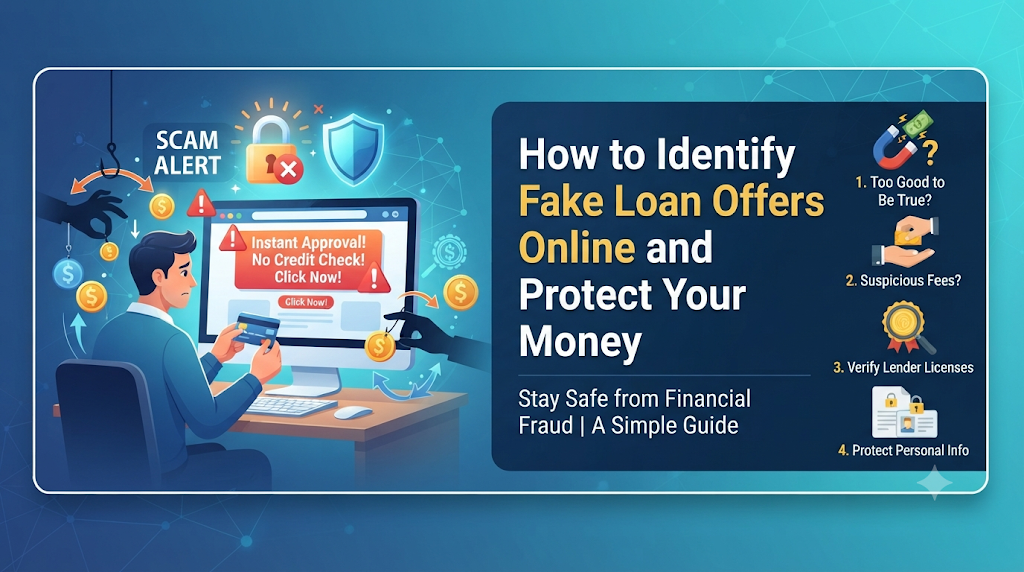
Introduction
Finding yourself in urgent need of money is stressful. Whether you are dealing with an unexpected medical bill, a sudden home repair, or a family emergency, financial pressure makes fast cash look appealing. Criminals know this vulnerable moment well. They launch polished websites, post deceptive social media advertisements, and send unsolicited text messages offering fast, painless credit.
Borrowers rarely fall for these schemes out of carelessness. Modern loan scams look credible. They use clean logos, formal approval paperwork, and customer service portals that resemble legitimate banking platforms.
Falling for an online loan scam causes severe fallout beyond losing a few hundred dollars in fees. It can compromise your banking credentials, expose your government identity documents, and leave your original financial emergency unresolved. This guide explains how fake lenders operate, how to verify real lending companies, and how to protect yourself before sharing private data.
What Is a Fake Loan Offer?
A fake loan offer is an advance-fee fraud scheme where an impostor promises credit but requires you to pay upfront fees or share private credentials first.
In normal commercial borrowing, financial institutions assume credit risk. They review your profile, decide you can handle the debt, and disburse their own capital to you. A fake loan offer flips this relationship. The operator has no intention of issuing money. Their entire goal is to extract upfront fees from you under deceptive legal or administrative labels.
These schemes generally operate in two distinct forms:
- Advance-Fee Loan Scams: The scammer asks for out-of-pocket money to clear “processing,” “insurance,” or “regulatory stamp duties.” Once paid, they cut off contact or invent another fee.
- Identity and Data Theft Portals: The operator uses a fake application to harvest identity numbers, bank account details, and employment records. They sell this information on illicit forums or use it to compromise your existing accounts.
How Illegitimate Lending Schemes Operate
Understanding the typical pattern behind online loan fraud makes it easier to spot inconsistencies before you send funds:
First, scammers purchase search ads or social media promotions targeting phrases like “instant bad credit loans” or “guaranteed cash approval.” These ads lead to clone websites designed to look like authentic commercial banks or financial brokers.
Second, the platform offers immediate approval. Genuine underwriting involves assessing credit scores, income stability, and outstanding debt. Fake portals skip this review entirely. They display an automated approval confirmation within seconds of receiving your basic details to build false confidence and lower your defenses.
Third, the scammer invents an administrative hurdle. They inform you that your money is ready, but cannot be transferred until you clear a mandatory fee. They may call this an origination charge, out-of-state transfer tax, or loan protection insurance.
Fourth, they demand untraceable payment channels. You are instructed to pay via wire transfer, gift cards, or personal peer-to-peer apps. Once you make the payment, the promised loan never arrives. The scammer either demands more money under a new pretext or shuts down communication.
Primary Red Flags of an Online Loan Scam
Authentic credit practices follow clear regulatory and consumer protection standards. Look out for these major signs of fraud:
- Demands for Upfront Payments: A real lender charges administrative and origination fees, but they deduct these expenses directly from your final loan payout. If you borrow $5,000 with a $200 processing fee, a real lender sends you $4,800. A fake lender demands that you send $200 out of pocket to release the funds.
- Guarantees of Approval Without Credit Checks: Lenders must manage risk. Any business advertising guaranteed approval without evaluating your income, debt load, or repayment history is deceptive. Even lenders specializing in poor credit still assess income to determine if you can manage monthly payments.
- Untraceable Payment Methods: Chartered banks disburse and collect funds through audited payment networks. A lender asking for payment through retail gift cards, cryptocurrency, or peer-to-peer money transfers is operating outside legal consumer protections.
- Extreme Urgency and Short Deadlines: Scammers often claim an offer expires within hours to force quick decisions. Authentic lenders provide reasonable windows to review loan disclosures and terms calmly.
- Unregistered Physical Addresses: Legitimate lenders list verified corporate offices. Fraudulent websites often display fake addresses, empty lots, or shared post office boxes.
- Unprofessional Email Domains: Legitimate credit companies send emails from secure corporate web domains. Scammers frequently operate through free services like Gmail, Yahoo, or domains with minor misspellings of established bank names.
Verifying a Lender: Legitimate vs. Fake
Before you enter personal information on an unfamiliar platform, compare its practices against these operational standards:
| Verification Feature | Legitimate Lenders | Fake Loan Operators |
| Credit Assessment | Reviews credit score, debt levels, and recurring income. | Claims no credit check or income verification is needed. |
| Fee Collection | Deducts fees directly from the approved loan payout. | Demands upfront cash payments before disbursing money. |
| Licensing Status | Registered with official state or national financial regulators. | Operates without a license or shows fabricated credentials. |
| Website Security | Uses secure encryption protocols and official corporate domains. | Uses basic templates, recent domain registrations, or free webmail. |
| Contractual Terms | Provides clear disclosures of the annual percentage rate (APR) and total cost. | Provides vague estimates and hides full contract terms. |
| Customer Support | Operates verified business phone lines and physical office locations. | Relies solely on mobile messaging apps or disconnected numbers. |
Step-by-Step Lender Verification Process
Follow this sequential four-step procedure to inspect any online lender before sharing personal records:
1. Check Domain Age and Registration History
Fraudulent sites rarely stay active for long before complaints force them offline. Use a public WHOIS lookup service to check when the website was registered. If a lender claims decades of financial service experience but registered its website three months ago, the platform is unsafe.
2. Search Regulatory Financial Databases
Consumer credit providers must hold valid licenses to operate legally.
- In the United States, look up the lender’s name or license ID on the Nationwide Multistate Licensing System (NMLS) consumer access site.
- In the United Kingdom, search the Financial Conduct Authority (FCA) Financial Services Register.
- In other regions, check the official database of your national central bank or financial regulatory authority.
3. Verify the Listed Office Location
Enter the listed headquarters address into public mapping tools with satellite views. Confirm whether the building displays visible business signage or corporate offices. If the address matches an abandoned warehouse, a residential home, or an unrelated business, stop all communication.
4. Require Written Truth-in-Lending Disclosures
Lenders are legally required to provide written disclosures detailing interest rates, the annual percentage rate (APR), total finance costs, and the repayment schedule before signing an agreement. Refusal to provide these documents in writing is an immediate indicator of an illegitimate lender.
What to Do If You Have Fallen for a Loan Scam
If you have transferred funds or submitted sensitive records to an illegitimate lender, take immediate action to protect yourself:
- Cut Off All Communication: Stop replying to the operator immediately. Do not send further payments to recover earlier fees. Scammers often use secondary scripts to exploit victims who attempt to negotiate.
- Notify Your Financial Institution: Call the fraud department of the bank or card issuer you used to send money. Report that you were targeted by an advance-fee scam, dispute unauthorized charges, and request updated account numbers or replacement cards.
- Place a Security Freeze on Your Credit: If you shared your government identification number, date of birth, or income records, contact the primary credit reporting bureaus immediately. A credit freeze stops third parties from opening new credit accounts in your name.
- Preserve Communication Records: Save clear records of all correspondence, including application confirmation emails, text logs, website links, payment confirmations, and sender details.
- Report the Incident to Authorities: File a formal fraud complaint with your national trade or financial regulatory agency, consumer protection bureau, and local police department. In the US, report the scam to the Federal Trade Commission (FTC) via its official portal.
Common Mistakes Borrowers Make
- Confusing Clean Design with Legal Authenticity: A clean, professional website does not prove a company is legitimate. Anyone can purchase an attractive template. Always confirm licensing through official state or national databases.
- Believing Payment Screenshots: Scammers often send edited screenshots showing a large loan balance marked as “pending payment.” Commercial banks do not require money transfers from recipients to release incoming wire deposits.
- Overlooking Small Verification Fees: Scammers sometimes ask for a modest $15 to $30 charge to verify your identity. Paying this signals that you are willing to send money, leading to much larger demands later. Never pay out-of-pocket charges.
- Confusing Lead Aggregators with Direct Lenders: Some websites collect consumer details and sell them to multiple third-party marketing networks. This can result in dozens of unvetted loan offers in your inbox. Apply directly with reputable, established financial institutions whenever possible.
Pre-Application Verification Checklist
Before providing personal or banking details to an online loan provider, ensure you can verify every item below:
- The website address uses secure encryption and matches the company’s real name without misspellings.
- The lender’s name and registration number appear in an official national or state regulatory database.
- You received a complete written breakdown of the annual percentage rate, borrowing fees, and repayment timeline.
- The physical headquarters address is verified through independent corporate registries and street-level mapping.
- The lender confirms in writing that all processing and origination costs are deducted from the final payout, not collected upfront.
- The lender assessed your income, employment, and credit background before offering final loan terms.
Key Terms Explained
- Annual Percentage Rate (APR): The total annual cost of borrowing money, including standard interest and mandatory administrative fees, shown as a percentage.
- Underwriting: The process where a lender assesses your income, credit history, and debt load to determine your ability to repay a loan.
- Advance-Fee Scam: Fraud where a scammer promises money or credit but demands upfront cash before releasing it.
- Credit Freeze: A security safeguard that restricts access to your credit report, stopping unauthorized parties from opening credit accounts using your identity.
- Truth-in-Lending Disclosures: Mandatory written legal documents outlining total borrowing costs, interest, fees, and payment deadlines before you finalize a loan.
- Phishing: A deceptive practice where criminals build fake websites, emails, or messages to trick individuals into sharing private financial data.
- Escrow Account: An account where a neutral third party holds funds until specific contractual terms are completed. Scammers often invent fake escrow portals to request payments.
- Origination Fee: An administrative charge that real lenders collect to set up your loan account, which is subtracted directly from the disbursed loan balance.
Frequently Asked Questions
Can a legitimate lender ever ask for money before disbursing a loan?
No. Regitimate commercial lenders do not demand upfront fees through gift cards, money wires, or personal payment applications. While legitimate lenders charge processing fees, these are deducted directly from the loan amount before it is deposited into your bank account.
Why do fraudulent lenders request payment via retail gift cards?
Gift cards function like cash. They do not require identity verification to redeem, cannot be easily frozen, and do not offer transaction reversal protections. Once you share the card numbers, the money is gone permanently.
Does checking an online loan quote harm my credit score?
A standard preliminary rate check uses a soft credit inquiry, which does not affect your credit score. If you proceed with a formal application, legitimate lenders perform a hard credit pull, which temporarily lowers your score by a few points. Fake loan portals do not check your credit report at all.
Is an instant loan approval always a sign of a scam?
Not always. Legitimate lenders often use automated underwriting software to issue quick conditional pre-approvals. However, these are never unconditional guarantees. A real lender still verifies your income and identity before transferring funds.
What should I do if a fake lender has my government ID and personal details?
Contact the major consumer credit reporting bureaus right away and place a security freeze on your credit profile. This prevents anyone from opening new credit cards or loans using your details. You should also report the theft to your local identity theft authority.
Are peer-to-peer (P2P) lending platforms safe?
Established and properly regulated P2P platforms are safe to use. Authentic P2P networks comply with national consumer credit regulations, perform standard credit underwriting, disclose all fees clearly, and transfer capital through regular banking systems.
How can I tell if a loan approval letter is real?
Check the document for an official business registration number, a verified physical address, and a complete breakdown of borrowing costs, including the APR. Documents with generic government logos, vague administrative seals, poor grammar, or demands for upfront fees are fraudulent.
Can law enforcement recover money lost to a loan scam?
Recovering funds sent to loan scammers is difficult because the money is typically routed quickly through international accounts, cryptocurrency wallets, or non-refundable payment apps. However, filing a report is necessary to establish an official record for disputing unauthorized accounts and identity theft.
Conclusion
A legitimate loan is a formal financial contract supported by verified underwriting, complete fee transparency, and proper regulatory licensing. Authentic lenders review your ability to repay, disclose every cost in writing, and deduct their fees directly from your loan payout. Checking national regulatory registries and rejecting any request for upfront payments will help keep your money and identity safe from online loan fraud.