Introduction
A change in fuel prices, a new rule from a regulator, or a technology company’s new pricing plan can reach you as five headlines from five websites. Most of them say nearly the same thing. A few add something new. Sorting out which is which takes time, and a quiet but useful report can slip past while you read the repeats.
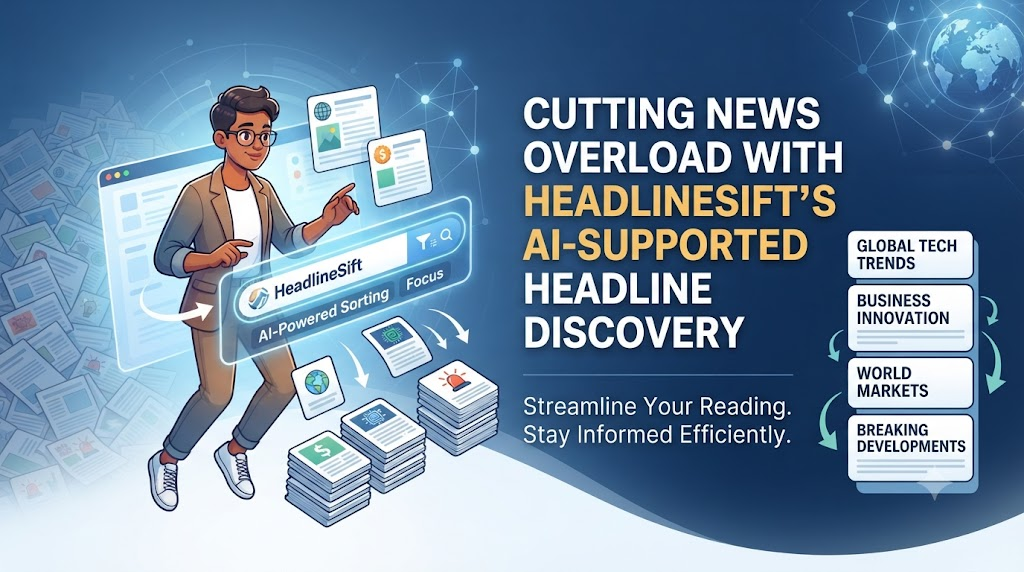
Organized news discovery is meant to lighten that load. Headlines from many publishers are placed together, similar stories are joined, and a short summary helps you decide what to open. HeadlineSift works in this way. It is an AI-powered platform that gathers headlines from hundreds of news sources and arranges them by country and category.
This article looks at how such a platform works, what AI summaries can and cannot do, and how careful readers can use them. It pays special attention to news that touches money, work and daily decisions, where a rushed reading can lead to costly mistakes.
What HeadlineSift Is and What It Is Built For
HeadlineSift is a news discovery platform. It does not publish its own reporting. Its job is to bring headlines from different publishers into one place, use AI to combine duplicate coverage, and place stories in order of how significant they seem. Readers can choose a country, pick a category, and switch between views such as top-ranked stories and the latest ones. Categories include technology, business and economy, finance and stock market, health, science and space, education and careers, and breaking news.
Several kinds of readers may find this useful:
- Working people who want a short daily view of their industry
- Small business owners who follow prices, rules and market changes
- Students preparing for exams or interviews
- Families who like to stay informed without spending hours online
Three separate actions are involved, and each has a different purpose:
- Spotting a story. The headline shows what the topic is.
- Reading a summary. A few lines explain the central point and help you decide how much attention the story needs.
- Opening the original report. The publisher’s full article holds the facts, quotes and context.
HeadlineSift keeps the publisher’s name on each story and links to the original piece. It also has pages that explain the limits of its AI summaries and how it credits sources. Everything in this article about the platform stays within what it states in public.
Why Following the News Can Feel Like Too Much
Not everyone feels this way, but plenty of people do, and the reasons are easy to recognize.
- One event, many pages. A single announcement can fill a whole screen of near-identical headlines.
- Short headlines leave gaps. “Prices set to rise” does not tell you which prices, by how much, or from when.
- News does not stop. Something read in the morning may have changed by evening.
- Comparing takes effort. Two reports can stress different facts, and spotting the difference means reading both carefully.
- Everything looks urgent. When each story is presented as important, choosing what to read first gets harder.
Picture someone who wants to know whether a new rule changes how they file their business paperwork. A search returns dozens of pages. Most repeat the same opening lines. Only a couple explain what a small business must actually do. Finding those two takes patience that busy people rarely have.
Inside AI-Supported News Discovery: What Happens Behind the Headlines
How Artificial Intelligence Pulls Many Sources Into One View
An AI news aggregator collects headlines from many publishers and places them where a reader can browse them together. The software may group items by subject, by country, by how new they are, or by whether they describe one shared event. When several outlets cover the same development, the system can join them so the reader sees one story instead of many repeats. HeadlineSift states that it tracks hundreds of sources and uses AI to merge duplicate coverage.
One caution is important. Seeing a claim on many websites does not prove it is true. Many publishers start from the same press release or the same agency report. Ten pages repeating one statement still carry one statement. A platform can make stories easier to find, but it cannot do your checking for you.
Understanding the Main Points of a Long Report With AI
An AI news summarizer reads a long article and reduces it to the points that matter most. Think of a lengthy report about changes at an airport. A useful summary would keep three facts: what is changing, which terminal or area is affected, and when the change takes place.
That saves real time. You can scan several summaries and open only the ones that apply to you.
Summaries also come with limits:
- Conditions and exceptions may be dropped to keep things short.
- Doubt can disappear. A phrase such as “the figures have not been verified” is easy to lose.
- Background that explains the reason behind an event may be left out.
- Automated tools can make errors.
HeadlineSift is open about this. Some stories on the platform carry a note saying that AI analysis is still pending. A summary should be treated as a first look, and the original report should be opened whenever the details affect a decision.
How Important Headlines Get Sorted and Presented to Readers
Curated news headlines are headlines chosen and arranged on purpose, not shown in a random flow. A platform may arrange them using factors such as relevance, how recent they are, details about the source, and how significant the story appears to be.
A popular story and an important story are not always the same. A story about a famous person’s holiday may attract huge numbers of clicks. A change to a public health rule may touch far more people but be read by fewer. Clicks measure attention, not value.
HeadlineSift says it ranks stories by significance, though this article cannot describe the exact method. No ranking system is free from bias. Use the order as a helpful guide, then rely on filters and your own judgment to choose what to read.
Keeping Track of a Story as It Develops
Some events keep changing for hours or days. The first reports are often partial. Figures get corrected, officials add statements, and early assumptions sometimes prove wrong.
A breaking news aggregator lets a reader see how several publishers are covering one developing event, side by side. That makes it easier to notice which details appear in every report and which appear in only one. It does not guarantee that any report is correct, and nothing here should be read as a promise of live alerts or guaranteed updates.
Good habits matter more than any feature:
- Look at the time a story was published or last updated.
- Watch for careful wording such as “reportedly” or “according to officials.”
- Return to the original source later to see if corrections were added.
- Hold off on sharing until the main facts are confirmed.
Reading About Events in Other Parts of the World
Events in other countries often reach us through prices, travel, jobs and technology. A global news aggregator helps by placing reports from different regions in one view. HeadlineSift allows readers to browse by country, including India, Japan, the United Kingdom and the United States, along with a global option.
Local context changes meaning. The same new law or price rise can affect people differently depending on the economy, the rules in force and daily habits. A headline written for local readers may skip background that outsiders need.
One report rarely gives a full view of an international event. When the subject is serious or disputed, compare reliable sources from more than one country.
Staying Current With Technology and AI Developments
Technology changes fast, and its news can be hard to follow. A technology news aggregator helps readers keep an eye on artificial intelligence, cybersecurity, software, cloud services and consumer devices from one place.
It helps to know what kind of information you are reading:
- A company’s announcement shows what the company wants to share.
- A research result reports what a study found under certain conditions.
- An independent review shows how something performed when an outside person tested it.
- Expert commentary offers an informed opinion.
If a company says its new software is “twice as fast,” that is a claim until someone else measures it. Readers who separate claims, reported facts, expert views and independent evidence will understand technology stories more clearly.
Following Company News and Industry Shifts
Business coverage includes company announcements, leadership changes, mergers, new products and the wider economy. A business news aggregator gathers these stories so a reader can follow one industry or see how different publishers describe the same announcement.
The headline rarely holds the whole story. “Company restructures operations” might mean a small internal change or a large cut to jobs. The answer sits in the full article, in the numbers, the dates and the reasons given.
Business reporting describes events. It does not tell you what will happen next. Read the facts of an announcement first and avoid guessing what it means for any company’s future.
Reading Market and Economic Updates Carefully
Financial news headlines can cover share markets, interest rates, government policy, company earnings, currencies and the cost of everyday goods. They arrive quickly, and they are easy to misread.
Suppose a market index rises after a central bank decision. The decision may be one cause. Strong company results, news from abroad, or simple changes in how traders feel on the day may also play a part. A headline usually points to one reason, while real life often has several.
A summary is not personal advice. It cannot know your income, savings, goals or comfort with risk. HeadlineSift marks its business and finance stories as informational only, and readers should treat them that way. No news source can promise profit or predict where a market will go.
Asking Who Could Be Affected by a Major Event
News impact analysis tries to explain why an event might matter and who may feel its effects. It works best when it helps readers ask clear questions:
- What happened?
- What has been confirmed so far?
- Who could be affected?
- What might happen next?
- What do we still not know?
The most important skill is keeping confirmed facts apart from possible results. “A new import duty on electronics was announced” is a fact. “Phone prices may go up” is a possible result. AI-generated analysis can help with the second kind of statement, but it is an interpretation, not a certainty. HeadlineSift cannot predict the future, and no tool can measure the effect of every event correctly.
Shaping Your News Reading Around Your Interests
News is most useful when it fits your life. A nurse may care most about health policy. A student may follow education and careers. A shop owner may watch fuel prices and local business updates.
A personalized news digest is a set of stories picked to match one reader’s interests. HeadlineSift describes this as a future direction, so it should not be treated as a feature that exists today. In the meantime, readers can get part of the same benefit by choosing a country and a category and coming back to them regularly.
Even if personalization arrives later, it has a downside. A feed built only around what you already like can hide viewpoints you did not know you needed. Personalization may make reading simpler, but it does not remove bias and it does not replace the habit of looking beyond your usual topics.
Why Original Sources and Publisher Credit Matter
A reader should be able to tell who published a story and where to find the full report. Four kinds of content are often confused:
- An original news report comes from a publisher’s own journalists.
- A summary is a short version of someone else’s report.
- An opinion piece presents a writer’s view, not a neutral account.
- An AI-generated explanation is software’s reading of the material and may contain mistakes.
HeadlineSift displays the publisher’s name and a link to the original report with each story, and it has a page about how it handles source attribution. This allows readers to check the facts for themselves.
A link does not make a claim true. Publishers can be wrong, and an important claim may need to be compared with other reports. Credit to the source is where checking begins, not where it ends.
A Simple Process for Reading News More Carefully
Five short steps are enough for most situations.
- Find a headline on your topic. Use the country and category filters to narrow the list. This keeps your attention on what you came for.
- Read the summary. It shows the central point and helps you decide if the story deserves more time.
- Check the date and the source. Old stories can look new, and unfamiliar publishers need a closer look.
- Compare reliable reports when it matters. This is most useful for disputed or fast-moving events.
- Open the full article before acting. Never change a plan, share a claim or make a payment decision based on a summary alone.
Mistakes to Avoid When Reading AI-Summarized News
- Taking a summary as the whole story. Use it to choose what to read, then open the article for details.
- Trusting a headline without the report. Headlines are short by design, so read the text underneath.
- Mixing up AI interpretation and confirmed fact. Ask whether a statement came from a publisher’s report or from analysis.
- Counting repeats as confirmation. Check whether the websites all rely on one original source.
- Overlooking dates and later changes. Look at when the story was published or last updated.
- Reading finance news as personal advice. News tells you what happened. Choices about your money should fit your own situation.
- Passing on a developing report too soon. Wait until the main facts are confirmed.
A Realistic Hypothetical Example
Imagine Ravi, who runs a small design studio and pays for several online tools. One afternoon he notices a headline saying that a well-known software company is changing the pricing of its business plans.
He reads the AI summary. It says prices for some business plans will go up soon. That gives him the main idea quickly, but it does not say which plans are affected or how large the increase is.
Ravi opens the original article from the publisher. The full report explains that only the largest team plans are changing, and that the company will share final figures later. This detail was not in the summary.
Next, he looks for a second reliable report on the same announcement. It agrees on which plans are affected but adds that existing customers may keep their current price for a limited period. Ravi sees that both reports rely on the same company statement, so he treats the announcement as one source with two readings.
He now separates what is known from what is not. The company has confirmed a pricing change for large plans. The exact amount, the start date and the offer for existing customers are not final. Ravi decides to check again when more details appear and avoids changing his tools in a hurry. He used the summary to save time and the original reports to stay accurate.
Frequently Asked Questions
Is HeadlineSift a news publisher?
No. It collects and organizes headlines, offers AI-generated summaries, and links to the original reports. The reporting itself belongs to the publishers.
Does the first story in a list mean the most accurate one?
Not necessarily. A story’s position reflects how it was ranked, and ranking is not the same as accuracy. Check the source and compare other reports.
How often should I look at a story that is still developing?
There is no fixed rule. Check again when new information is likely, and always look at the time of the latest update before relying on a detail.
Can finance headlines tell me what to do with my money?
No. They describe events. Decisions about savings, spending or investing depend on your own situation, and a licensed professional can help with those.
What does “informational only” mean on a financial story?
It means the story is there to inform, not to recommend a purchase, sale or other action. HeadlineSift places this kind of notice on business and finance stories.
Why might two summaries of one event look different?
Each publisher may stress different facts, and summaries depend on the article they are based on. Reading the original reports helps you see where the differences come from.
Is a personalized news digest available now?
HeadlineSift describes it as a future direction, not a current feature. Readers can use country and category choices in the meantime.
What is one habit that makes news reading safer?
Open the original source before you act on anything important. A few extra minutes can prevent a costly or embarrassing mistake.
Final Thoughts
News helps most when it leads to a clear understanding, not a quick reaction. A single place for headlines, brief summaries and links back to the publishers can save time, and careful habits keep that time well spent. HeadlineSift offers one way to reach that kind of reading by organizing stories from many sources and pointing readers to the original reports. Whatever tool you use, the safest approach stays the same: read the summary for direction, confirm the details at the source, and take your time before acting on what you have read.