Introduction
Managing money often feels complicated because modern life constantly blurs the line between what is essential and what is optional. Fifty years ago, a phone was a basic landline plugged into a wall. Today, a smartphone is a pocket computer, a navigation tool, a work device, and a bank branch all at once. Is it a need or a want?
When the boundaries become blurry, budgeting breaks down. Many people find themselves earning more money than ever before yet wondering why their savings account remains empty. This usually happens not because of low income, but because lifestyle creep has quietly turned yesterday’s luxuries into today’s perceived necessities.
Understanding the real difference between needs and wants is the bedrock of all personal finance. Without it, savings plans fail, investments stall, and financial stress grows. This guide breaks down how to identify needs versus wants in the modern world, why separating them is difficult, and how to build a simple decision-making system to take control of your financial life.
What Are Needs in Personal Finance?
In personal finance, a need is an expense that is fundamentally required to sustain life, maintain health, earn an income, and fulfill basic legal or civic obligations.
Why Needs Matter
Needs form the non-negotiable baseline of your budget. If you fail to pay for your needs, your physical health, your ability to work, or your basic stability is immediately threatened.
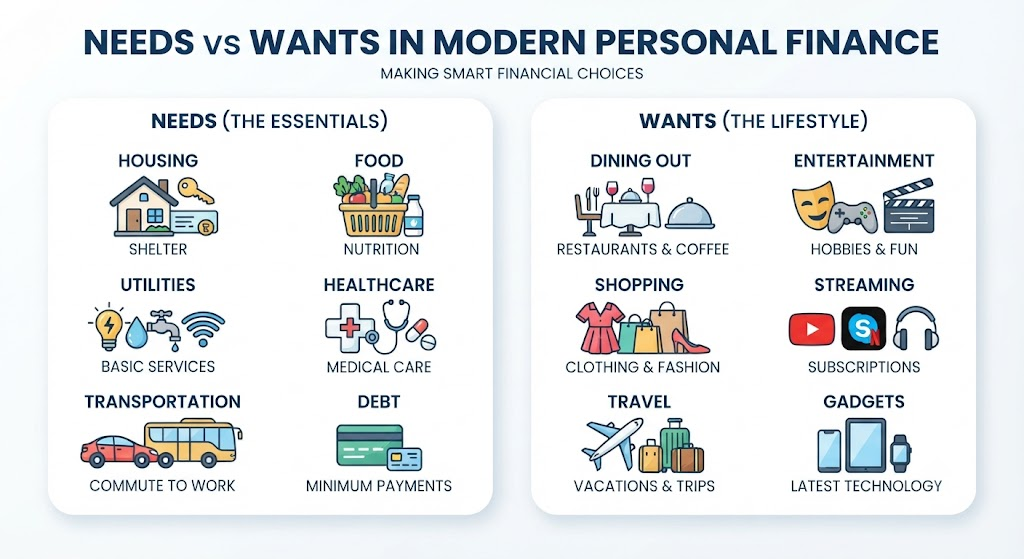
Core Categories of Needs
- Housing: A safe, stable place to live. This includes rent or mortgage payments and basic property taxes.
- Food: Basic, nutritious groceries required to maintain health. It does not include fine dining or specialty imported ingredients.
- Utilities: Essential services required to keep a home functional, including water, electricity, heating, and basic internet if required for employment.
- Healthcare: Essential medical care, doctor visits, necessary prescription medications, and basic health insurance.
- Transportation: Reliable travel to and from work or school. This can be public transit fare or the maintenance and fuel costs of a reliable, affordable car.
- Debt Obligations: Minimum payments on existing debts to protect your credit score and avoid legal penalties.
What Are Wants in Personal Finance?
A want is a discretionary expense. It represents a good, service, or experience that improves your comfort, entertainment, or social status, but that you could live without if your financial survival depended on it.
Why Wants Matter
Wants are not inherently evil. Humans are social, emotional beings, and spending money on things you enjoy is part of a fulfilling life. The problem arises not from having wants, but from mislabeling them as needs and funding them at the expense of your future security.
Common Examples of Modern Wants
- Dining Out: Ordering takeout, going to restaurants, or buying daily premium coffee.
- Entertainment: Cinema tickets, video games, concert admissions, and hobby supplies.
- Subscriptions: Multiple streaming services, digital magazine subscriptions, and premium app memberships.
- Upgraded Goods: Buying brand-name clothing, luxury vehicles, or the latest smartphone model when your current one works perfectly fine.
The Modern Gray Area: When Wants Disguise as Needs
In today’s digital economy, the traditional boundary between a need and a want has dissolved into a complex gray area. Marketers and subscription business models excel at convincing consumers that optional comforts are mandatory utilities.
The Smartphone and Internet Dilemma
- The Old View: A telephone and internet were optional luxuries.
- The Modern Reality: A reliable internet connection and a smartphone are often required to apply for jobs, log into work portals, pay bills, and access banking services.
- The Trap: While a basic smartphone and standard internet plan are modern needs, the latest flagship phone costing over one thousand dollars and a multi-gigabit fiber connection are wants.
The Transportation Trap
- The Old View: Any car that gets you to work safely is a need.
- The Modern Reality: Social pressure, comfort, and status often dictate vehicle purchases.
- The Trap: A reliable, fuel-efficient used car satisfies the need for transportation. A brand-new luxury SUV financed with a high monthly payment satisfies the want for status and comfort, while quietly draining your monthly cash flow.
Why Is It So Hard to Separate Needs from Wants?
If the definitions are simple, why do so many people struggle to apply them? Several powerful psychological and economic forces are at play.
Lifestyle Creep
Lifestyle creep is the tendency to increase your spending as your income increases. When you get a raise or a new job, your definition of a “basic need” expands. Your apartment upgrade, your new car, and your more expensive grocery store trips suddenly feel like standard requirements rather than luxury choices.
Social Comparison and Peer Pressure
Humans naturally compare their living standards to those of their peers, colleagues, and curated profiles on social media. When everyone around you appears to upgrade their lifestyle, baseline expectations shift. Purchases that were once considered extraordinary treats begin to feel like minimum social requirements.
Frictionless Digital Spending
Paying with cash or writing a physical check creates psychological friction; watching physical money leave your hand hurts. Modern digital wallets, contactless cards, and one-click online checkouts remove this friction. When spending money feels effortless, evaluating whether an item is a true need becomes an afterthought.
Practical Examples: Needs vs. Wants in Daily Life
| Expense Category | Need | Want |
| Housing | Modest apartment or affordable home with working utilities. | Oversized luxury home or apartment in an expensive zip code. |
| Food | Basic ingredients, vegetables, grains, and proteins from the grocery store. | Daily lattes, premium food delivery apps, and gourmet dining. |
| Clothing | Durable, weather-appropriate clothing for work and daily life. | Designer labels, fast-fashion trend hauls, and excessive wardrobe duplicates. |
| Technology | A functional computer and phone required for work or essential communication. | The newest flagship smartphone upgraded every single year. |
A Simple Decision-Making Framework: The 50/30/20 Rule
One of the most practical ways to operationalize the difference between needs and wants is the 50/30/20 budget framework, popularized by financial expert Elizabeth Warren.
This framework divides your after-tax income into three distinct buckets:
[ After-Tax Income ]
 ├── 50% ──> Needs (Housing, groceries, bills, debt minimums)
 ├── 30% ──> Wants (Dining out, hobbies, entertainment, vacations)
 └── 20% ──> Savings & Debt Payoff (Emergency fund, retirement, extra debt payments)
How to Apply It
- Calculate Take-Home Pay: Determine your exact net monthly income after taxes and deductions.
- Cap Your Needs at 50%: If your essential needs consume more than half of your income, you may need to look at housing choices or transportation costs.
- Limit Wants to 30%: Allocate this portion to the discretionary items that bring you joy without compromising your future.
- Secure 20% for the Future: Treat savings and wealth building as a non-negotiable bill paid to your future self.
Common Mistakes When Categorizing Expenses
1. Labeling Discretionary Habits as Fixed Bills
Many people make the mistake of treating variable lifestyle choices as fixed needs. Subscriptions, gym memberships, dining out budgets, and regular shopping habits are often grouped alongside rent and utilities. Because they are categorized as fixed expenses in the mind, people fail to audit them when financial pressure arises.
2. Failing to Factor in Future Needs
Treating your entire surplus income as disposable cash for wants is a dangerous trap. If you do not proactively save for irregular needs—such as car repairs, annual medical expenses, or home maintenance—those unexpected events will force you into high-interest debt when they arrive.
3. All-or-Nothing Restrictive Budgeting
Treating all wants as forbidden enemies leads to financial burnout. When budgets are too strict, people often rebel against their own rules, leading to impulsive binge spending that wipes out months of discipline.
Risks of Failing to Distinguish Needs from Wants
Failing to maintain a clear boundary between essential needs and discretionary wants creates severe financial vulnerability over time.
- Zero Emergency Resilience: Without surplus cash flow directed toward savings, a single job loss or medical emergency can trigger a financial crisis.
- Compound Debt Accumulation: Using credit cards to fund lifestyle wants leads to compounding interest charges that make future financial goals much harder to achieve.
- Delayed Long-Status Milestones: Money spent on low-value wants today steals directly from your ability to buy a home, achieve financial independence, or retire comfortably in the future.
Checklist: How to Evaluate a Purchase Before Buying
Before making a non-essential purchase, run it through this practical evaluation checklist:
- [ ] Is this item required for my physical survival, health, or primary income generation? If no, it is a want.
- [ ] Can I afford to buy this with cash right now without touching my emergency fund? If you need to finance a discretionary want, pause immediately.
- [ ] What is the opportunity cost? Ask yourself what else that money could achieve if invested or saved toward a higher-priority goal.
- [ ] Can I apply a 48-hour cooling-off period? Wait two days before buying online items to let emotional impulse spending fade.
- [ ] Does this purchase align with my long-term values? Ensure the item genuinely improves your life rather than just providing a temporary dopamine boost.
Key Terms
- Discretionary Income: The money remaining from your paycheck after paying for taxes and essential living needs, available for saving or spending on wants.
- Opportunity Cost: The loss of potential gain from other alternatives when one alternative is chosen. Every dollar spent on a want is a dollar that cannot be invested.
- Lifestyle Creep: The gradual increase in spending that happens when income rises, turning previous luxuries into perceived necessities.
- Emergency Fund: A pool of liquid cash set aside specifically to cover unexpected financial shocks, such as job loss or major medical bills.
- Fixed Expenses: Regular monthly bills that remain relatively stable in amount, such as rent, insurance premiums, and loan payments.
FAQs
What is the easiest way to separate needs from wants?
Ask yourself a simple question: What happens if I do not buy this today? If the answer involves losing your home, your health, your job, or your ability to eat, it is a need. If the answer is inconvenience, boredom, or missing out on a trend, it is a want.
Are streaming services considered needs or wants?
Streaming services, cable television, and premium digital memberships are classified as wants. While they provide entertainment and relaxation, they are not strictly required for survival or income generation.
Can a want ever become a need?
As technology and social standards evolve, certain items shift categories. For example, owning a personal computer was once considered a luxury want for most households. Today, basic digital access is practically required for education and employment, making it a modern need.
How do I handle sudden peer pressure to spend money on wants?
Be honest with your friends about your financial boundaries and savings goals. True friends will support your financial health, and proposing lower-cost alternatives—such as cooking dinner at home instead of dining at expensive restaurants—often benefits everyone involved.
What should I do if my essential needs cost more than 50% of my income?
If your housing, utilities, and grocery bills consume the majority of your earnings, you are facing a structural income or expense problem. Focus on major life expenses first by looking for ways to reduce housing costs, optimize transportation, or increase your primary income through career growth or side projects.
Conclusion
Distinguishing between needs and wants is not about living a life of deprivation or refusing to enjoy your hard-earned money. It is about awareness and intentionality. When you know exactly where your money goes and why you are spending it, you take control of your financial direction rather than letting impulses drive your decisions. Start small by auditing your recent bank statements, separating your expenses into clear categories, and directing the difference toward the future you actually want to build.