Introduction
Starting a business is exciting, but keeping it alive is the real challenge. Many founders focus only on sales and marketing, hoping that more revenue will solve every financial problem.
However, money often leaks out of a business through quiet channels. Unused software subscriptions, high office rent, expensive shipping fees, and messy vendor contracts can quietly drain a bank account. When revenue drops unexpectedly, these hidden costs cause serious trouble.
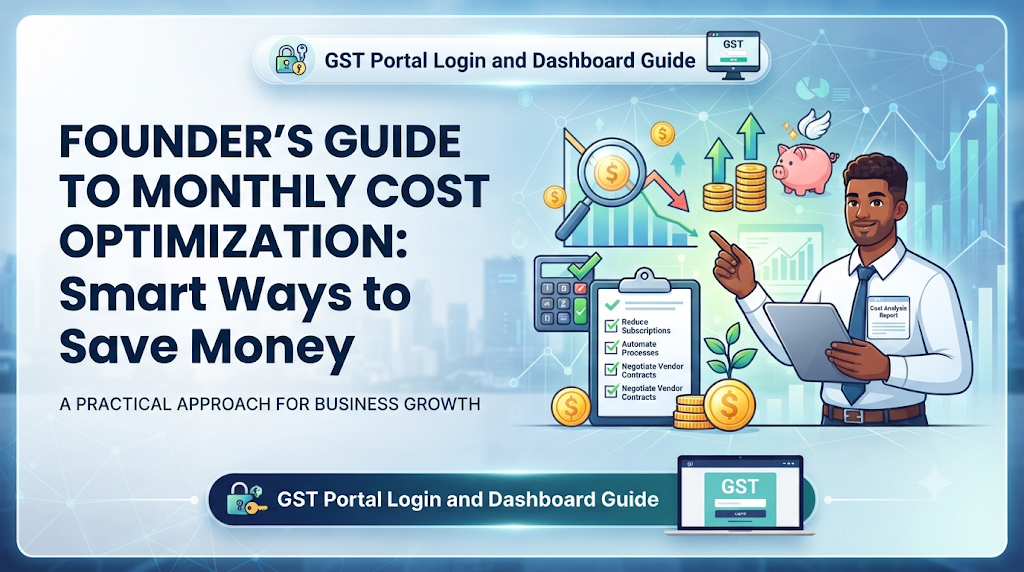
Cost optimization is not about being cheap. It is about making sure every dollar spent brings a clear return. This guide will help founders understand how to review monthly expenses, spot waste, and protect their profits without hurting the team’s ability to work.
What Is Monthly Cost Optimization?
Monthly cost optimization is an ongoing habit of checking every recurring business expense to see if it provides real value.
Think of it like tuning a car engine. If the car burns too much fuel, it does not mean you should stop driving. It means you need to clean the parts, fix leaks, and make the engine run efficiently.
Why Does It Matter?
Cash is the oxygen of any business. If a company runs out of cash, it shuts down, no matter how great the product is. Optimizing monthly costs extends your “runway”—the number of months your business can survive with its current cash reserve.
Example
Imagine a small marketing agency paying $500 a month for project management software. If the team only uses two basic features that a cheaper $100 tool can provide, the agency is wasting $400 every single month. Over a year, that waste adds up to $4,800—money that could be used to hire an extra writer or run a new ad campaign.
How Monthly Cost Optimization Works
Optimizing costs is not a one-time event that happens only when the business is in trouble. It is a regular system.
- Audit: List every single expense that leaves the business account each month.
- Categorize: Group expenses into fixed costs (like rent) and variable costs (like server hosting or marketing ads).
- Evaluate: Ask whether each expense directly helps make money, save time, or reduce risk.
- Negotiate or Replace: Talk to vendors for better rates or switch to cheaper, reliable alternatives.
- Monitor: Check the expense reports every month to make sure old habits do not return.
Important Factors to Understand
Before cutting any expense, a founder must understand the difference between good spending and bad spending.
- Good Spending (Investment): Money spent that directly helps the business grow, such as hiring a great salesperson, buying reliable equipment, or investing in security.
- Bad Spending (Waste): Money spent on things nobody uses, duplicate software tools, or fancy perks that do not improve output.
- The Danger of Deep Cuts: Cutting too deeply can backfire. For example, firing your customer support team to save money might lower your monthly costs, but it will destroy your customer loyalty and ruin your reputation.
Detailed Explanation of Key Expense Categories
To optimize costs effectively, founders must look at the main areas where businesses spend money every month.
Software and SaaS (Software as a Service)
Most modern businesses rely heavily on cloud software. Over time, teams sign up for new tools and forget to cancel old ones.
- The Problem: Paying for five different tools that all do the same thing.
- The Fix: Run a quarterly software audit. List every tool, find out who uses it, and cancel anything that has been inactive for 30 days.
Vendor and Supplier Contracts
Companies often sign yearly contracts with suppliers and never look at them again.
- The Problem: Price creeping up over time or paying for services you no longer need.
- The Fix: Set a calendar reminder one month before every contract renews. Use that time to renegotiate rates or look at competitor pricing.
Office and Remote Work Overhead
Physical office space is one of the largest fixed costs for a business.
- The Problem: Paying rent for a massive office when half the team works from home.
- The Fix: Consider downsizing, moving to a shared co-working space, or offering a flexible hybrid schedule to reduce square footage needs.
Practical Examples
Example 1: The SaaS Trap
A software startup had 15 employees. The founder discovered they were paying for three different design tools (Figma, Canva, and an enterprise suite) because different departments preferred different apps. By standardizing on one primary tool and canceling the rest, the company saved $650 per month instantly.
Example 2: Cloud Server Costs
An e-commerce business noticed their monthly cloud hosting bill kept growing every time traffic spiked. Instead of just paying the higher bill, the technical lead optimized the database queries and set up automated rules to turn off test servers during the night. The hosting bill dropped by 40%.
Real-World Considerations
When you start cutting costs, human psychology plays a big role. Employees might worry about job security if they hear the company is cutting budgets.
As a founder, communication is vital. Explain that optimization is about being smart and efficient, not a sign of failure. Involve your team in the process—ask employees to suggest cheaper tools or better ways to run daily operations. They are often the ones who know where waste happens.
Common Mistakes
- Mistake: Cutting marketing budgets first when sales drop.
- Why it happens: It feels like the easiest expense to turn off.
- Why it causes problems: Stopping marketing usually causes sales to drop even further.
- What to do instead: Pause low-performing ad campaigns, but keep investing in channels that bring a proven return on investment.
- Mistake: Ignoring small recurring charges.
- Why it happens: A $20 monthly fee looks harmless.
- Why it causes problems: Ten forgotten $20 fees turn into $2,400 of wasted money every year.
- What to do instead: Review bank and credit card statements line by line every month.
Risks and Limitations
Cost optimization carries real risks if handled poorly:
- Lower Employee Morale: Taking away basic tools or office snacks to save tiny amounts of money can make employees feel unvalued.
- Operational Slowdown: Moving to a cheaper software tool that is slow or hard to use can frustrate your team and waste valuable work hours.
- Hidden Transition Costs: Switching vendors often requires training time and migration fees that can cost more than the money you hoped to save.
Decision-Making Framework
Use this simple step-by-step framework before cutting any monthly expense:
- Identify the Expense: What is the exact tool, service, or resource?
- Measure the Impact: Does this directly help generate revenue, save time, or protect the business?
- Check Usage: Is this expense actually being used regularly by the team?
- Explore Alternatives: Is there a cheaper or better option available in the market?
- Decide: Keep it as is, negotiate a lower price, switch to a cheaper alternative, or cancel it completely.
Cost Optimization Checklist
Use this quick checklist to review your monthly expenses:
- Review all bank and credit card statements from the last 30 days.
- Make a list of all active software subscriptions and user seats.
- Identify any tool that has not been used in the past 30 days.
- Check upcoming contract renewal dates for vendors and office rent.
- Talk to department heads to find hidden inefficiencies.
- Set a recurring monthly calendar reminder to repeat this review.
Key Terms
- Burn Rate: The speed at which a company spends its available cash before becoming profitable.
- Fixed Costs: Expenses that stay the same every month, such as office rent or base insurance.
- Variable Costs: Expenses that change based on business activity, such as server hosting fees or shipping costs.
- Runway: How many months your business can keep operating before running out of money.
- SaaS: Software that you access over the internet and pay for on a monthly or yearly subscription basis.
- ROI (Return on Investment): A measure of how much profit or value you get back compared to the money you spent.
FAQs
What is the fastest way to reduce monthly business costs?
The fastest way is reviewing software subscriptions and canceling unused tools. After that, look at vendor contracts, office space, and recurring marketing spend that does not bring results.
Does cost optimization mean I have to fire employees?
No. Cutting staff should always be a last resort. Smart cost optimization focuses on eliminating waste, reducing software bloat, and negotiating better vendor rates before touching the team.
How often should a founder review monthly expenses?
You should do a quick review of your bank statements every month and a deep audit of all software and vendor contracts every three to six months.
Is it safe to use free software tools to save money?
Sometimes, but be careful. Free tools often lack security features, customer support, or data privacy controls. Make sure free tools meet your business standards before trusting them with important data.
How do I cut costs without hurting business growth?
Protect spending that brings direct revenue or keeps your core team productive. Cut spending on redundant software, unused office perks, and inefficient advertising channels.
Conclusion
Monthly cost optimization is a vital habit for any founder who wants to build a strong, lasting business. By regularly checking your expenses, eliminating hidden waste, and negotiating better rates, you can protect your cash flow without slowing down growth. Keep your spending purposeful, involve your team in finding smart solutions, and make cost review a normal part of how you run your company.