Introduction
Most people check their bank accounts with a mix of hope and worry. They swipe their cards all month, try not to look at the total, and feel a sudden shock when the bill arrives. This cycle happens because checking money usually feels like a chore or a punishment.
When you do not have a regular system to check your expenses, small costs pile up quietly. A forgotten subscription here, extra takeout meals there, and suddenly your savings goal feels impossible to reach.
The solution is not a strict budget that makes you miserable. The solution is a calm, predictable habit called a monthly spending review routine. This guide will show you how to set up this routine, why it matters, and how to turn looking at your numbers into a helpful tool instead of a stressful task.
What Is a Monthly Spending Review?
A monthly spending review is a dedicated time—usually 30 to 45 minutes at the end of or start of a month—where you look back at all the money you spent.
Think of it like a sports team watching game tape. They do not watch to yell at the players; they watch to see what worked, what failed, and how to play better next time.
During this review, you gather your bank statements, look at your categories (like food, housing, and entertainment), and compare your actual spending against what you planned to spend.
Why Does It Matter?
Without a review, your money slips away on autopilot. Habits form without your permission. A monthly review wakes you up. It turns hidden financial leaks into visible choices, letting you decide if a past purchase was actually worth the cost.
How a Monthly Spending Review Works
A good review follows a clear, step-by-step process. You do not need an expensive finance degree or a complex computer program. A simple notepad, a spreadsheet, or a budgeting app is enough.
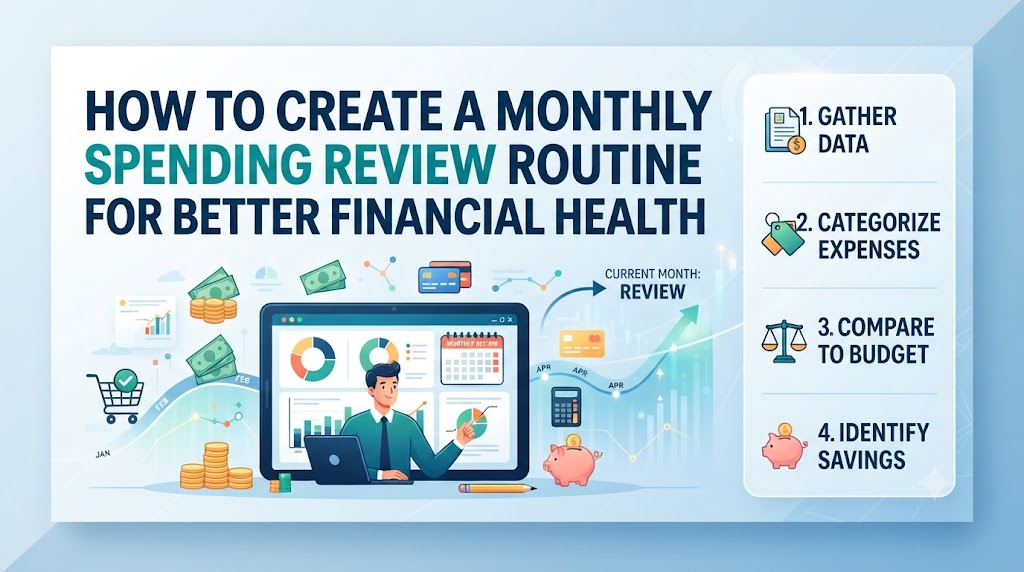
Step 1: Gather Your Numbers
Collect every statement from the month. This includes checking accounts, credit cards, digital wallets, and cash apps. If you use multiple cards, bring all their data into one place.
Step 2: Categorize Your Expenses
Group your spending into clear buckets:
- Fixed Needs: Rent, mortgage, utility bills, insurance, loan payments. These stay mostly the same every month.
- Variable Needs: Groceries, gas, public transport, basic household items. These change slightly based on your choices.
- Wants and Desires: Dining out, entertainment, shopping, hobbies, subscriptions. This is where most adjustments happen.
- Savings and Debt Payoff: Money moved toward your future goals or paying down balances.
Step 3: Compare and Analyze
Look at the totals in each group. Ask yourself simple questions:
- Where did I spend more than expected?
- Are there subscriptions running that I did not use?
- Does my spending match what is important to me?
Step 4: Adjust for Next Month
Use what you learned to make a realistic plan for the upcoming month. If groceries cost more than expected because food prices rose, adjust your target upward slightly so you do not set yourself up to fail.
Why Monthly Reviews Fail: Common Mistakes
Even with good intentions, people often stop doing their monthly reviews because of a few common mistakes.
1. Waiting Until the End of the Year
What people do: They ignore their spending for twelve months and try to fix everything in December. Why it fails: Memories fade, receipts are lost, and the sheer volume of data is overwhelming. What to do instead: Keep your reviews short and monthly. It takes less than an hour and keeps your mind clear.
2. Treating the Review Like a Punishment
What people do: They sit down with a harsh attitude, ready to scold themselves for every cup of coffee or fun purchase. Why it fails: When a task feels like an emotional punishment, your brain will find ways to avoid it. What to do instead: Approach your numbers with curiosity, not guilt. Spending money on things you love is fine, as long as it is a conscious choice.
3. Making Categories Too Complicated
What people do: They create fifty different spending categories, making data entry feel like a full-time job. Why it fails: Tracking too many details leads to burnout. What to do instead: Keep your categories broad. Five to eight main categories are usually enough for most people.
Risks and Limitations to Keep in Mind
While a spending review is a powerful habit, it has limits. Knowing these limits helps you avoid false confidence.
- Looking backward, not forward: A review only shows you where your money went. It cannot stop you from spending impulsively tomorrow unless you use those lessons to guide your future choices.
- Income variability: If your income changes every month (like freelancers or commission-based workers), a fixed monthly review might need extra buffers, such as an emergency fund, to smooth out lean months.
- Data blind spots: If you rely on cash for many purchases and forget to track them, your review will paint an incomplete picture of your financial habits.
Tools and Methods for Your Review Routine
You do not need complicated tools to succeed. Choose a method that fits your personality:
- The App Method: Automated budgeting apps connect to your accounts and auto-sort your purchases. Best for: People who love automation and hate manual data entry.
- The Spreadsheet Method: A simple sheet with columns for dates, categories, and amounts. Best for: People who want full control over their data without linking bank passwords to third-party apps.
- The Paper and Pen Method: Writing down totals in a dedicated notebook. Best for: People who find physical writing helps them stay mindful and focused.
Simple Decision Framework for Adjusting Spending
When your review shows that you overspent in a certain area, use this framework to decide what to do next:
- Step 1: Identify the leak. Find the specific category where money leaked out.
- Step 2: Ask why. Was it an emergency (like a broken car part), a seasonal cost (like holiday gifts), or a behavioral habit (like ordering food when tired)?
- Step 3: Choose your fix.
- If it was an emergency, build your safety fund.
- If it was a habit, set a clear boundary (e.g., cooking dinner at home three extra nights next month).
- Step 4: Test and refine. Check next month to see if your adjustment worked.
Spending Review Checklist
Before you finish your monthly review session, run through this quick checklist to ensure nothing was missed:
- Gathered statements from all active bank accounts and credit cards.
- Checked for any hidden or forgotten monthly software or streaming subscriptions.
- Verified that all automatic savings transfers went through as planned.
- Categorized total expenses without judging past mistakes.
- Set a realistic spending target for the upcoming month.
Key Terms
- Budget: A written plan for how you will allocate your income across spending, saving, and giving over a specific period.
- Fixed Expenses: Regular bills and costs that stay the same amount every month, such as rent or insurance.
- Variable Expenses: Costs that change from month to month depending on your daily choices, like groceries or entertainment.
- Subscription Creep: The slow, often unnoticed accumulation of small recurring monthly charges for services you rarely use.
- Financial Leak: Small, unconscious daily or weekly purchases that slowly drain your available money over time.
Frequently Asked Questions
How long should a monthly spending review take?
Once you build the habit, a review should only take about 30 to 45 minutes. If you try to track every single penny down to the exact cent, it might take longer, but broad category tracking is usually fast and effective.
What day of the month is best to do a review?
The best day is usually the last day of the outgoing month or the first weekend of the new month. Pick a quiet time when you are relaxed and free from distractions.
Do I need to cut out all fun spending during my review?
No. The goal of a review is awareness, not deprivation. If you love dining out, keep it in your budget, but make sure it fits alongside your long-term savings goals.
What if I miss a month of review?
Do not panic or quit. Simply pick up where you left off. Review the missed month quickly or just start fresh with the current month. Consistency matters more than perfection.
Should I review my spending alone or with a partner?
If you share finances with a spouse or partner, doing the review together keeps both of you on the same page and prevents hidden financial stress. Keep the tone collaborative rather than critical.
What if my expenses are higher than my income?
This is a warning sign that requires immediate attention. Look closely at your variable wants and find areas to pause temporarily until you can balance your income and outflows.
Is an app required to do a spending review?
Not at all. Many people successfully review their spending using paper statements and a calculator. Use whatever method you are most likely to stick with consistently.
Conclusion
A monthly spending review routine is one of the simplest habits you can build to take control of your financial life. By looking at your numbers without judgment, you stop money from managing you and start managing your money. Start small, keep your categories simple, and use what you learn to make clearer choices next month.