Introduction
Managing money is rarely just about how much you earn. Often, it is about how much you manage to keep.
You might check your bank account, see a stable balance, and assume your finances are healthy. However, money has a quiet way of slipping through the cracks. It does not always leave with a dramatic emergency or a major purchase. Instead, it leaks out in small, silent amounts every single day.
These small losses add up over time. What starts as a five-dollar monthly charge here or an avoidable fee there can quietly drain thousands of dollars over a few years.
This guide explores the subtle warning signs that you are losing money without realizing it. You will learn why these leaks happen, how to spot them, and what practical steps you can take to plug them.
What Is Financial Leakage?
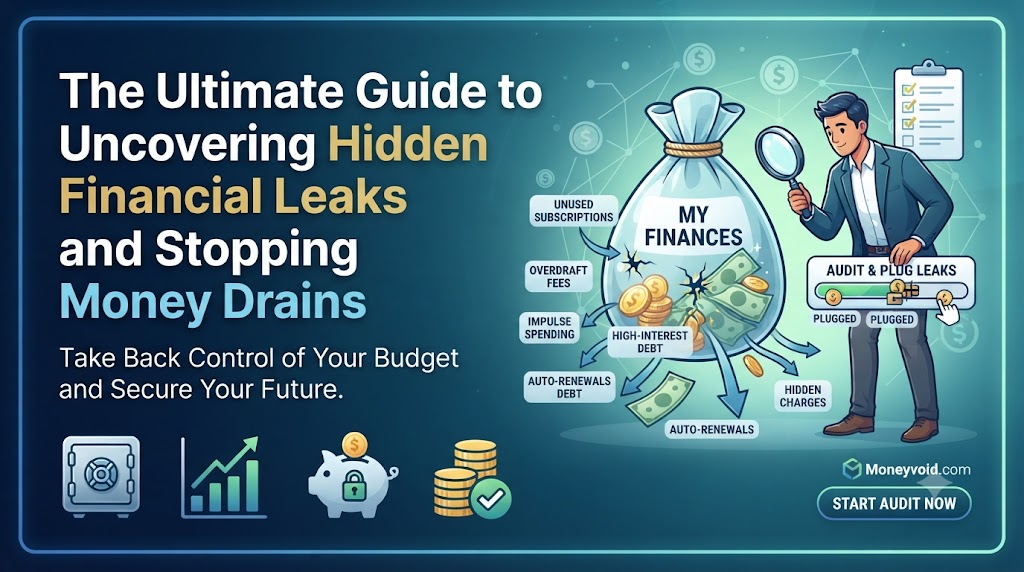
Financial leakage refers to the slow, often unnoticed loss of money from your accounts due to minor inefficiencies, forgotten expenses, and poor financial habits.
In simple words, it is money that leaks out of your wallet without giving you any real value in return.
Why It Matters
When money leaves your account in large chunks—like paying rent or buying groceries—you notice it immediately. But when money leaves in tiny, automatic increments, your brain ignores it. Over months and years, these unnoticed losses prevent you from saving, investing, and reaching your financial goals.
For example, spending three dollars a day on convenience items might not feel like much today. Over the course of a year, however, that habit quietly costs over a thousand dollars.
Signs You Are Losing Money Without Realizing It
1. You Pay for Subscriptions You No Longer Use
Subscription models are everywhere today. From streaming services and software apps to gym memberships and delivery clubs, businesses love recurring payments because they are reliable.
The Problem: Once you enter your credit card details, billing often happens automatically. Many people sign up for a free trial, forget to cancel, and spend months paying for a service they opened only once.
How to Fix It: Review your bank and credit card statements line by line every month. If you have not used a service in the last thirty days, cancel it immediately. You can always sign back up later if you genuinely miss it.
2. You Ignore Bank Fees and Interest Charges
Banks make billions of dollars every year simply by charging small fees to inattentive customers.
The Problem: Overdraft fees, monthly maintenance fees, out-of-network ATM charges, and credit card interest pile up quickly. Many people accept these charges as normal, viewing them as minor annoyances rather than active losses.
How to Fix It: Switch to a bank that offers no-fee checking and savings accounts if you currently pay monthly maintenance fees. Furthermore, pay your credit card balance in full every month to avoid paying high interest rates.
3. Lifestyle Creep Has Taken Over Your Budget
Lifestyle creep is the tendency to increase your spending as your income increases.
The Problem: When you get a raise or a new job, it feels natural to upgrade your lifestyle. You might move to a more expensive apartment, buy a nicer car, or eat out at higher-end restaurants. Suddenly, your new expenses match your new income, leaving your savings rate exactly where it was before.
How to Fix It: When your income increases, save a major portion of the raise before you ever see it in your checking account. Treat future raises as an opportunity to build wealth faster, not just spend more.
4. You Fall for Convenience Pricing
Modern technology makes spending money remarkably easy. With a single tap on your phone, you can order food delivery, book a rideshare, or buy household items instantly.
The Problem: Convenience almost always comes with a hidden markup. Delivery apps often inflate menu prices, add service fees, and charge delivery fees on top of tips. Paying extra for convenience on small, daily transactions can double the true cost of goods over time.
How to Fix It: Pause before making a convenience purchase. Ask yourself if the extra fee is truly worth your time savings, or if a little advance planning could save you significant cash.
5. You Let Food Go to Waste
Grocery shopping is a necessity, but what happens after you bring the food home matters just as much.
The Problem: Buying fresh produce, bulk items, or restaurant leftovers with good intentions, only to throw them away later, is a direct loss of cash. When you throw away food, you are literally throwing away money.
How to Fix It: Plan your meals for the week before you go to the supermarket. Shop with a list, check your refrigerator before buying duplicates, and freeze leftovers so they do not spoil.
6. You Settle for Automatic Renewals on Insurance and Utilities
Many service providers—such as car insurance companies, internet providers, and home security services—rely on customer inertia.
The Problem: Companies often raise their rates gradually over time, hoping you will not notice or will be too lazy to switch. If you stay with the same provider for years without checking competitor pricing, you are likely paying a loyalty penalty.
How to Fix It: Set a calendar reminder once a year to review your recurring utility, insurance, and internet bills. Shop around for competing quotes to see if you can secure a better rate for the exact same service.
7. You Pay Impulse Purchases on Emotion
Shopping is often an emotional activity rather than a rational one.
The Problem: Boredom, stress, excitement, or sadness can trigger the urge to buy things you do not need. Online shopping platforms make this worse by saving your credit card information, allowing you to complete a purchase in seconds without thinking.
How to Fix It: Implement a cooling-off rule. When you feel the urge to buy a non-essential item, wait at least forty-eight hours before checking out. Often, the emotional impulse fades, and you realize you do not want or need the item at all.
8. You Keep Too Much Cash in a Low-Interest Checking Account
Keeping your money safe is important, but where you keep it matters.
The Problem: Traditional checking accounts and many brick-and-mortar savings accounts pay close to zero percent interest. Meanwhile, inflation quietly reduces the purchasing power of your cash every single year. If your money just sits there, you are losing value over time.
How to Fix It: Keep only what you need for monthly expenses in your checking account. Move your emergency fund and extra savings into a high-yield savings account where your money can earn a meaningful return.
9. You Pay ATM Fees and Foreign Transaction Fees
Using the wrong financial infrastructure can drain your funds in small, avoidable increments.
The Problem: Using out-of-network ATMs often incurs double fees—one from the machine owner and one from your own bank. Similarly, using standard credit cards while traveling abroad can trigger foreign transaction fees on every single purchase.
How to Fix It: Plan ahead to use your bank’s in-network ATMs. If you travel internationally, use a credit card that explicitly offers zero foreign transaction fees.
10. You Ignore Small Warranties, Refunds, and Rebates
Small administrative tasks take effort, but ignoring them costs real money.
The Problem: Returning an ill-fitting online purchase, submitting a manufacturer rebate, or utilizing a warranty replacement takes time. When people let these tasks slide due to laziness, they forfeit money that rightfully belongs to them.
How to Fix It: Treat returns and refunds with the same urgency as paying bills. Set a designated box near your door for items that need to go back, and handle return shipping promptly.
11. You Do Not Track Where Your Money Goes
The ultimate root cause of financial leakage is a lack of visibility.
The Problem: If you do not look at your spending habits, you cannot fix them. Many people have a general idea of what they earn, but have no idea where every dollar actually lands at the end of the month.
How to Fix It: Track your spending for just thirty days using a budgeting app, a spreadsheet, or a simple notebook. Seeing every transaction in one place instantly reveals where your financial leaks are hiding.
Practical Checklist to Stop Financial Leaks
Use this quick checklist to audit your finances and plug hidden leaks starting today:
- Review bank statements: Check the last three months of transactions for forgotten subscriptions or recurring fees.
- Audit utility and insurance bills: Compare current rates with competitor pricing to ensure you are not overpaying.
- Optimize cash storage: Move excess savings out of low-interest checking accounts and into high-yield accounts.
- Enforce a cooling-off rule: Wait forty-eight hours before making non-essential purchases.
- Streamline grocery habits: Plan meals weekly to minimize food waste and reduce impulse supermarket buys.
Key Terms
- Financial Leakage: The subtle, continuous loss of money through minor, often unnoticed expenses and inefficiencies.
- Lifestyle Creep: The habit of spending more money as your income increases, preventing your savings rate from growing.
- High-Yield Savings Account: A type of savings account that pays a much higher interest rate than traditional bank accounts.
- Subscription Model: A business model where customers pay a recurring fee at regular intervals for access to a product or service.
Frequently Asked Questions
How often should I check my bank statements for hidden fees?
You should review your bank and credit card statements at least once a month. Catching unauthorized charges or forgotten subscriptions early prevents them from compounding over multiple billing cycles.
What is the most common place people lose money without realizing it?
Forgotten subscription services, automatic renewals, and convenience markups on food and delivery are among the most common hidden money drains for modern consumers.
Does tracking my expenses really make a noticeable difference?
Yes. Simply becoming aware of where your money goes naturally changes your spending behavior. When you see your habits written out clearly, you make more conscious choices.
How can I stop impulse buying online?
Remove your saved credit card information from shopping websites and apps. Forcing yourself to manually type in your card details creates enough friction to help you pause and rethink the purchase.
Is it safe to move my money to an online high-yield savings account?
Yes, as long as the institution is insured by government agencies such as the FDIC in the United States, your deposits are protected up to legal limits, making them just as safe as traditional banks.
Conclusion
Losing money rarely happens all at once. Usually, it happens in tiny, quiet drops that escape your notice until your monthly balance feels lower than expected.
By auditing your subscriptions, checking for avoidable fees, reigning in impulse purchases, and keeping a close eye on your monthly statements, you can seal these leaks. Protecting your money does not require drastic sacrifices; it simply requires paying attention to where your cash goes.