Introduction
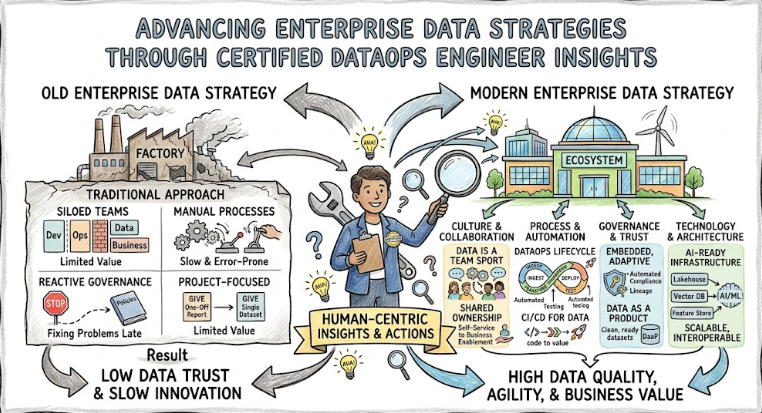
In the current technological era, data is often referred to as the new oil. However, raw data is useless unless it is refined, processed, and delivered to the right people at the right time. Traditional data management methods are frequently found to be slow and prone to errors. This is where DataOps enters the picture.
DataOps is an automated, process-oriented methodology used by analytic and data teams to improve the quality and reduce the cycle time of data analytics. While DevOps revolutionized software development, DataOps is doing the same for data pipelines. A mastery of these principles is required for any professional looking to lead in the data space. This guide explores the most recognized credential in this field: the CDOE – Certified DataOps Engineer.
What is CDOE – Certified DataOps Engineer?
The CDOE – Certified DataOps Engineer is a professional designation that validates an individual’s ability to implement DataOps principles within an organization. It is not merely a theoretical certificate; it is a practical roadmap for building agile, automated, and high-quality data workflows.
By pursuing this certification, a deep understanding of the data lifecycle is gained. The focus is placed on communication, collaboration, and integration between data scientists, data engineers, and IT operations. Automation of data integration and the elimination of silos are the primary objectives of a certified professional. It ensures that data is treated as a product that must be delivered with high reliability and speed.
Why It Matters Today?
The complexity of data environments is increasing at an exponential rate. Most companies are no longer dealing with a single database; they are managing vast data lakes, real-time streaming platforms, and multi-cloud environments. Without a structured approach like DataOps, these systems become unmanageable.
- Speed of Delivery: Insights are needed by businesses in real-time. Manual data processing is being replaced by automated pipelines to meet this demand.
- Data Quality: Business decisions are only as good as the data they are based on. DataOps introduces automated testing and monitoring to ensure data integrity.
- Reduced Rework: A significant amount of time is often wasted by data teams on fixing broken pipelines. These bottlenecks are removed through the implementation of CDOE principles.
- Scalability: As the volume of data grows, the processes used to manage it must be able to scale without a proportional increase in headcount.
Why CDOE – Certified DataOps Engineer Certifications are Important?
Professional recognition is essential in a crowded job market. The CDOE certification serves as a beacon for employers who are looking for specialized talent.
- Standardization of Skills: It provides a common language and framework for data professionals across the globe.
- Career Advancement: Higher salary brackets and leadership roles are often unlocked once this level of technical expertise is demonstrated.
- Organizational Trust: When a team is led by a Certified DataOps Engineer, stakeholders feel more confident in the reliability of the data being produced.
- Operational Efficiency: The techniques learned during the certification process are directly applicable to reducing operational costs and improving team productivity.
Why Choose DataOpsSchool?
Selecting the right platform for professional growth is a critical decision. DataOpsSchool is recognized for its commitment to practical, industry-aligned education.
- Curriculum Depth: The courses are designed by industry veterans who understand the real-world challenges faced by data teams.
- Hands-on Focus: Theoretical knowledge is balanced with intensive practical labs, ensuring that skills are not just memorized but mastered.
- Community Support: Access is provided to a global network of data professionals, fostering an environment of continuous learning and collaboration.
- Global Recognition: The certifications issued are respected by major enterprises, making them a valuable addition to any professional portfolio.
Certification Deep-Dive: CDOE – Certified DataOps Engineer
What is this certification?
The CDOE certification is a comprehensive program focused on the automation of data pipelines and the improvement of data quality through agile practices. It is designed to transform traditional data engineers into modern DataOps practitioners.
Who should take this certification?
This program is intended for Software Engineers, Data Engineers, DevOps Professionals, and Engineering Managers who wish to master the art of operationalizing data workflows.
Certification Overview Table
| Track | Level | Who it’s for | Prerequisites | Skills Covered | Recommended Order |
| DataOps Foundation | Entry | Beginners / Analysts | Basic Data Knowledge | Core Principles, Agile, Collaboration | 1 |
| DataOps Professional | Intermediate | Data Engineers | 2+ years in Data | CI/CD for Data, Automation, Testing | 2 |
| CDOE – Certified Engineer | Advanced | Senior Engineers | Professional Track | Pipeline Orchestration, Monitoring | 3 |
| DataOps Architecture | Expert | Architects | CDOE Certified | System Design, Security, Compliance | 4 |
| DataOps for Managers | Leadership | Managers / Leads | Management Experience | Team Scaling, ROI, Strategy | Optional |
Skills You Will Gain
Upon completion of the CDOE program, a wide array of technical and process-oriented skills will be acquired:
- Pipeline Automation: The ability to build fully automated data ingestion and transformation workflows.
- Data Quality Monitoring: Implementation of automated checks to catch data anomalies before they reach downstream users.
- Version Control for Data: Mastering the use of tools to track changes in data schemas and code.
- Orchestration: Advanced knowledge of tools used to manage complex dependencies in data tasks.
- Collaborative Governance: Developing frameworks that allow teams to work together without compromising security or compliance.
Real-World Projects Post-Certification
Practical application is the true test of any certification. Successful candidates will be equipped to handle projects such as:
- Automated Data Lake Provisioning: Creating scripts that deploy a full data infrastructure in a cloud environment automatically.
- CI/CD for Data Pipelines: Setting up a system where every change to a data transformation script is tested and deployed without manual intervention.
- Real-time Anomaly Detection: Building a monitoring system that alerts the team the moment a data source starts sending corrupt information.
- Self-Service Data Portals: Designing platforms where business users can access processed data without needing to wait for a manual extraction process.
Preparation Plan
7–14 Days Plan (The Crash Course)
- Days 1-4: Focus on the core definitions of DataOps and the Agile Manifesto for Data.
- Days 5-10: Study the official documentation and complete basic automation labs.
- Days 11-14: Take practice exams and review the areas where mistakes were made.
30 Days Plan (The Standard Approach)
- Week 1: Deep dive into the history of DataOps and its relationship with DevOps.
- Week 2: Master the technical tools used for data orchestration and testing.
- Week 3: Focus on security, compliance, and data governance within a DataOps framework.
- Week 4: Extensive lab work and final review of all certification modules.
60 Days Plan (The Master’s Path)
- Month 1: Detailed study of each phase of the DataOps lifecycle, including planning, development, and monitoring.
- Month 2: Implementation of a full-scale capstone project that mimics a real-world enterprise data environment. Final month dedicated to polishing exam techniques.
Common Mistakes to Avoid
- Ignoring Culture: Many believe DataOps is only about tools. The cultural shift in how teams collaborate is equally important.
- Over-complicating Pipelines: Starting with complex automation can lead to failure. Simple, incremental improvements are recommended.
- Neglecting Data Quality: Automation is dangerous if it is used to move bad data faster. Testing must be prioritized.
- Lack of Documentation: Even automated systems need clear documentation so that other team members can understand the workflow.
Best Next Certification After This
- Same Track: Certified DataOps Architect (CDOA)
- Cross-Track: Certified DevSecOps Professional (for data security)
- Leadership / Management: Certified DataOps Leader
Choose Your Learning Path
- The DevOps Path: Best for engineers coming from a software background who want to apply CI/CD to data.
- The DevSecOps Path: Ideal for security-conscious professionals focusing on protecting data throughout the pipeline.
- The SRE Path: Designed for those who want to ensure the high availability and reliability of data platforms.
- The AIOps / MLOps Path: Tailored for professionals who are managing data specifically for machine learning models.
- The DataOps Path: The primary route for data engineers focusing on pure operational excellence.
- The FinOps Path: Best for those focused on managing the costs of cloud data processing.
Role → Recommended Certifications Mapping
| Role | Recommended Primary Cert | Secondary Goal |
| DevOps Engineer | CDOE | DevSecOps |
| SRE | CDOE | AIOps |
| Platform Engineer | CDOE | Cloud Security |
| Cloud Engineer | CDOE | FinOps |
| Security Engineer | DevSecOps | CDOE |
| Data Engineer | CDOE | MLOps |
| FinOps Practitioner | FinOps | CDOE |
| Engineering Manager | CDOE (Foundation) | DataOps Leadership |
Next Certifications to Take
Same-Track Certification
The Certified DataOps Architect program is the logical next step. It allows for the transition from building pipelines to designing entire organizational data ecosystems.
Cross-Track Certification
A Certified DevSecOps Engineer credential should be considered. This ensures that as data pipelines are automated, they remain secure against modern cyber threats.
Leadership-Focused Certification
The Certified DataOps Leader program is designed for those moving into senior management. It focuses on team dynamics, budgeting, and aligning data strategy with business goals.
Training & Certification Support Institutions
- DevOpsSchool: A leading institution that offers extensive training programs across various operational disciplines. It is known for its high-quality labs and expert instructors.
- Cotocus: This organization provides specialized consulting and training services. It focuses on enabling digital transformation through modern engineering practices.
- ScmGalaxy: A popular community-driven platform that provides a wealth of resources for software configuration management and DevOps professionals.
- BestDevOps: Known for its simplified approach to complex technical topics, this institution helps professionals quickly gain the skills needed for career growth.
- devsecopsschool.com: A dedicated site for those looking to integrate security into their automated workflows.
- sreschool.com: The primary resource for learning about site reliability engineering and system uptime.
- aiopsschool.com: This platform focuses on the intersection of artificial intelligence and IT operations.
- dataopsschool.com: The official home for CDOE training and certification, providing a clear path to data operational mastery.
- finopsschool.com: A specialized training provider focused on cloud financial management and cost optimization.
FAQs Section
Here’s a numbered Q&A for this latest set of CDOE certification questions:
- What is the difficulty level of the CDOE exam?
It is considered a professional-level exam requiring a solid understanding of both data engineering and automation. - How much time is typically required to prepare?
Most professionals spend 30 to 60 days preparing, depending on their existing experience. - Are there any strict prerequisites?
A basic understanding of data structures and at least one programming language is highly recommended. - In what sequence should I take the certifications?
Best sequence: Foundation level → CDOE → Architect level. - What is the career value of this certification?
It significantly increases marketability for roles such as DataOps Engineer, Data Architect, and Senior Data Engineer. - Will this help in getting a job in India?
Yes, demand for DataOps professionals in India is growing as companies adopt cloud technologies. - Is the certification recognized globally?
Absolutely. The CDOE is designed to meet international standards and is respected by multinational corporations. - Does it cover specific tools like Jenkins or Airflow?
Yes, the program includes orchestration and CI/CD concepts using industry-standard tools. - Is there a practical component to the exam?
Yes, the certification emphasizes practical scenarios and real-world problem-solving. - How long does the certification remain valid?
Typically valid for two to three years, after which renewal or advanced certification is recommended. - Can an Engineering Manager benefit from this?
Yes, it provides the technical context needed to effectively lead data teams. - Is training mandatory before the exam?
Training is highly recommended to ensure all areas of the curriculum are covered, though not strictly mandatory.
Specific CDOE FAQs
- What exactly does a Certified DataOps Engineer do daily?
They build automated data pipelines, monitor data quality, and identify/remove bottlenecks in the data delivery process. - How does CDOE differ from a standard Data Engineering certification?
CDOE focuses on the operational aspects — automation, testing, and DataOps culture — rather than just ETL or query writing. - Are cloud-specific tools covered in the CDOE program?
The program teaches general principles applicable to AWS, Azure, and Google Cloud, making skills transferable across platforms. - Can a beginner in tech take the CDOE?
Beginners are better off starting with the DataOps Foundation program before attempting CDOE. - What programming languages are most useful for this?
Python and SQL are the primary languages emphasized in the CDOE curriculum. - Does the CDOE cover data governance?
Yes, ensuring that data is handled securely and in compliance with regulations is a core part of the program. - What is the passing score for the exam?
The passing score is typically 70%, ensuring candidates demonstrate a high level of competency. - Are there community groups for CDOE students?
Yes, students get access to private forums and study groups provided by DataOpsSchool.
Testimonials
Aarav The clarity provided by this program regarding the data lifecycle was exceptional. My confidence in managing complex pipelines has grown immensely since I completed the certification.
Elena A fresh perspective on automation was gained through this course. The real-world projects helped me implement similar solutions at my workplace immediately.
Karthik The curriculum is very well-structured and easy to follow. It helped me transition from a traditional role into a modern engineering position with much more clarity.
Sanya I finally understood how to bridge the gap between our data scientists and IT operations. The skills learned here have made our team much more efficient.
Marcus The focus on data quality and testing was exactly what our organization needed. This certification is a must for anyone leading a technical team in the data space.
Conclusion
The CDOE – Certified DataOps Engineer certification is a powerful tool for any professional looking to excel in the data-driven world. By mastering the principles of automation, collaboration, and quality, a path to long-term career success is established. As the industry continues to evolve, those who have the foresight to certify their skills will be the ones who lead the next wave of technological innovation. Strategic planning and a commitment to continuous learning are the keys to a rewarding career in DataOps.